
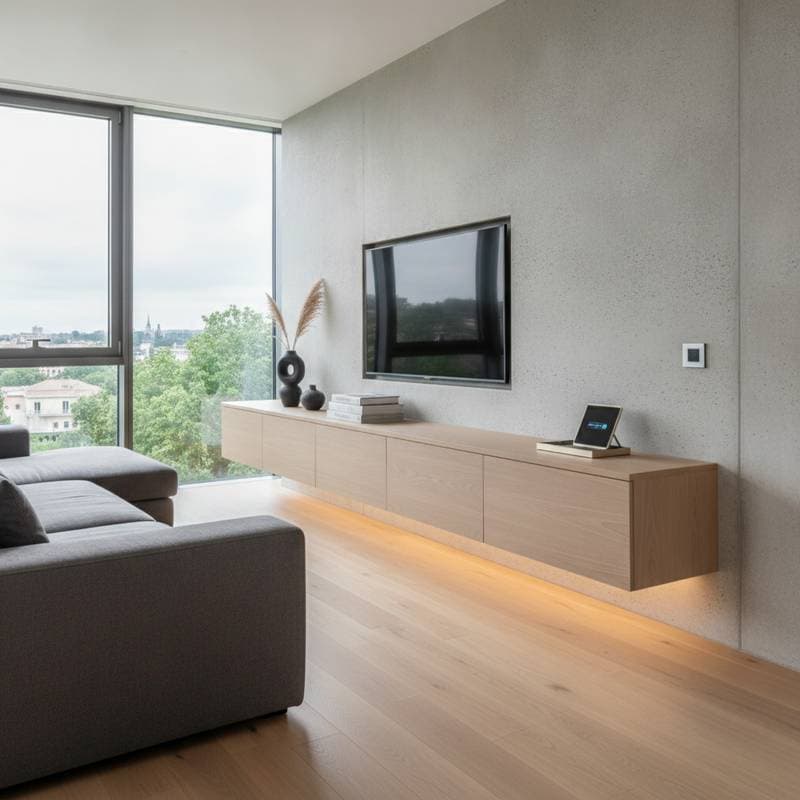
Cable Management and Built-In Features
Floating credenzas incorporate routed channels and rear grommets that organize power cords without visible clutter. LED strips offer dimmer control or motion activation for subtle illumination. Push-latch doors, continuous grain veneers, and matte painted panels create seamless fronts. Adjustable shelves or shallow drawers fit interiors that measure 10 to 12 inches high. Finishes range from natural wood oil that adds warmth to high-gloss lacquer that increases reflectivity.
Architect Yara Kim noted the importance of planning. "We plan reinforcement in the wall before drywall goes up. It ensures the piece looks weightless but feels solid."
Alignment with Current Design Preferences
Minimalist interiors and open layouts have shifted expectations around storage. The floating format supports smoother transitions between zones and keeps more floor visible, which enlarges the sense of space in compact rooms. Builders appreciate reduced material use and easier cleaning because the design eliminates legs and toe kicks that collect dust. Clearance underneath also benefits radiant heating systems and robotic vacuums.
The horizontal emphasis pairs well with wall-mounted shelves or artwork. Designer Lauren Chen observed that the credenza provides a visual anchor without interrupting movement through the room.
Advances in Materials and Construction
Workshops rely on hybrid builds that maintain strength while controlling weight. Plywood cores wrapped in hardwood veneer resist sagging over extended lengths. Improved edge banding produces clean profiles on lighter panels. Cerused oak and smoked walnut continue as popular choices, yet matte black and soft white lacquers appear more frequently. Solid surface or stone tops add durability against heat and moisture, which suits dining and bath applications.
Hardware remains understated. Push-latch doors preserve a flush surface, and recessed pulls add quiet texture without breaking the floating effect.
Technology Integration and Lighting Details
Credenzas now conceal charging docks, ventilated router compartments, and soundbar mounts. Under-cabinet LED lighting serves both accent and task purposes. A one-inch reveal below the cabinet edge conceals the fixture and softens the light output. Color temperatures between 2700K and 3000K complement wood tones.
In open-plan rooms, motion sensors can link to the lighting so the credenza activates gently upon entry. This approach guides movement without creating harsh glare.
Installation and Selection Guidance
Solid or reinforced walls provide the best support. Locate studs or install a plywood backer before mounting. Standard height places the unit 14 inches above the floor to allow airflow and access for cleaning tools. Length selection should leave at least six inches of wall margin on each side for visual balance.
Prefinished panels and concealed bracket kits assist do-it-yourself projects. Professional fabricators can add custom channels for wiring and lighting during construction.
Practical Storage Adjustments
- Bundle cables inside a rear chase fitted with removable access panels.
- Install adjustable shelves that adapt to new equipment.
- Line drawers with felt to reduce noise during use.
- Select finishes that resist fingerprints and daily wear.
Floating credenzas supply organized storage that integrates with architecture rather than standing apart from it. The approach maintains warmth and order while supporting the practical needs of contemporary living spaces.