
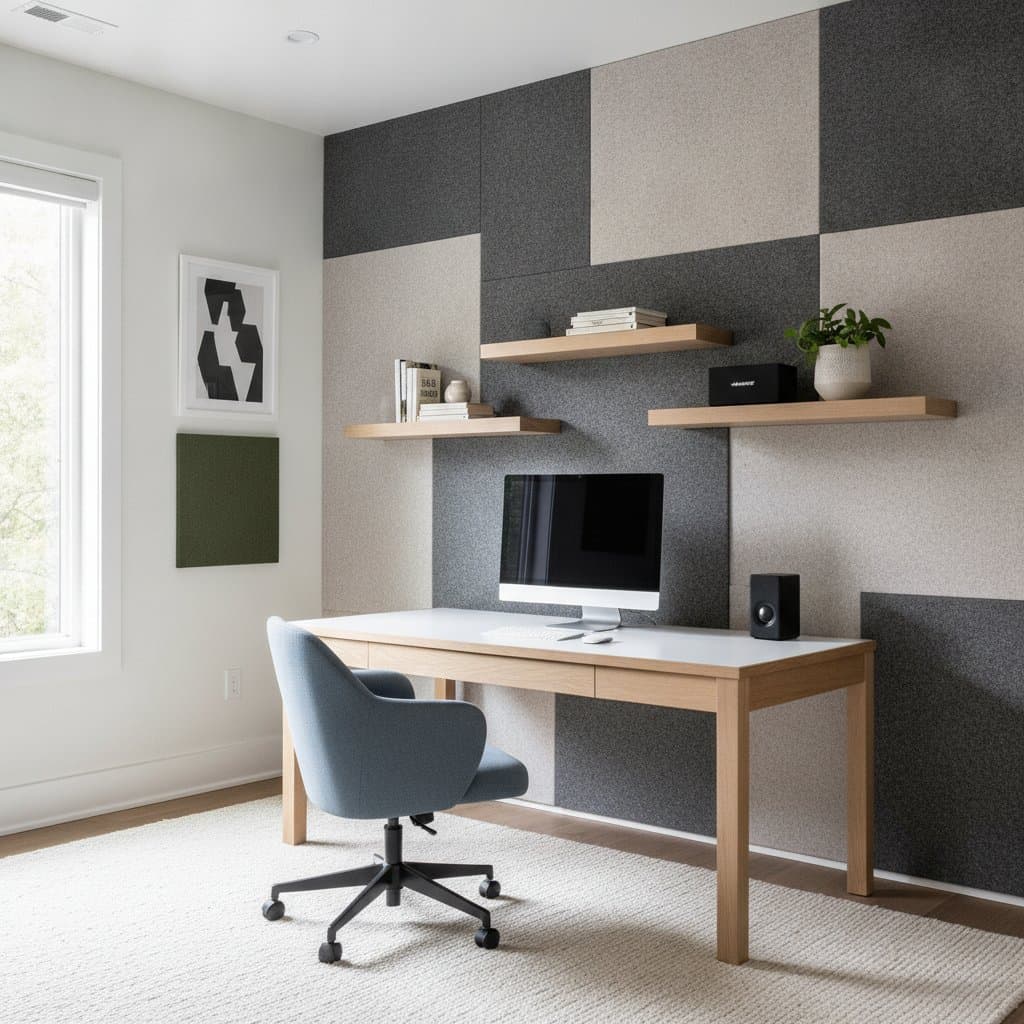
Acoustic Felt Panels Blend Style With DIY Soundproofing
Acoustic felt panels have moved from recording studios into homes and workshops. Style now meets sound control in these applications. You install them yourself with simple tools. They look like finished wall art instead of technical gear. The result is quieter rooms that still feel warm and designed.
At a Glance
Who: Homeowners and makers seeking quieter, better looking workspaces
Where: Various home offices, studios, and open plan living areas
Size: Typical applications range from 80 to 300 square feet (7.4 to 27.8 square meters)
Design Teams: Independent craftspeople and small fabrication studios
Photography: Courtesy of featured designers and homeowners
Before
Many home workshops and offices share one complaint. Hard surfaces bounce sound. Every saw, keyboard tap, or phone call becomes an echo. One homeowner said the space felt like working inside a drum. The challenge was to reduce noise without losing light or covering walls with bulky foam panels.
Common constraints included limited wall area, budget sensitivity, and a desire to maintain a clean, finished look. Standard soundproofing often required construction level changes that were out of reach for most DIYers.
After
The solution came in the form of modular acoustic felt panels. Designers began using dense polyester felt sheets cut into geometric tiles or full wall panels. The change is immediate in photos. Walls once blank now have soft texture, subtle shadow lines, and calmer sound levels.
In one small woodshop, panels in natural gray and charcoal were mounted in a chevron pattern above the main bench. They absorb tool noise while doubling as a design statement. In another home office, a set of light beige panels wraps around a video backdrop. This creates professional looking acoustics for calls.
Designer Maria Chen said, The goal was to make sound control look intentional, not technical. Her team used 9 millimeter (0.35 inch) recycled felt tiles with adhesive backing. They trimmed each piece to fit around outlets and shelves. The result was a balanced wall that reads as decor first and sound solution second.
Design Details
- Material: Recycled PET felt in 9 to 12 millimeter (0.35 to 0.47 inch) thickness
- Installation: Peel and stick backing or concealed clips for removable mounting
- Pattern Options: Hexagon, chevron, linear ribbed, and random mix layouts
- Acoustic Performance: Reduces mid to high frequency reflection by up to 35 percent
- Light Interaction: Softens glare from task lighting and adds visual depth
- Maintenance: Vacuum or wipe with mild soap solution, no repainting required
These panels can be cut with a utility knife and straightedge. You can cover an 8 by 10 foot (2.4 by 3 meter) wall in a single afternoon. For renters, removable clips prevent wall damage.
Key Takeaways
Acoustic felt panels show that practical sound control can look refined. The right pattern can anchor a wall much like wood slats or wainscoting. Designers suggest balancing hard and soft surfaces across the room. If you have a concrete floor, add felt panels on two facing walls rather than all four to maintain liveliness.
For best results, position panels behind monitors or along the wall facing your main sound source. Combine them with fabric curtains or rugs for layered absorption. Lighting also matters. Downlights or wall washers emphasize the texture of felt. This turns a functional upgrade into a design feature.
Practical Benefits in Daily Use
Homeowners say the biggest change is comfort. Conversations are clearer. Tools sound quieter. The space feels calmer. The panels double as pinboards for sketches or project notes. This keeps desks uncluttered. In multiuse rooms, they help separate work and rest zones by controlling sound spill.
For anyone balancing aesthetics with acoustics, felt panels deliver a win on both fronts. They are a straightforward DIY project that can refresh a wall and restore peace to busy spaces.
Sources or Credits
Designers: Maria Chen Studio, Oakline Workshop Collective
Photography: Courtesy of Maria Chen and Oakline Workshop Collective.