
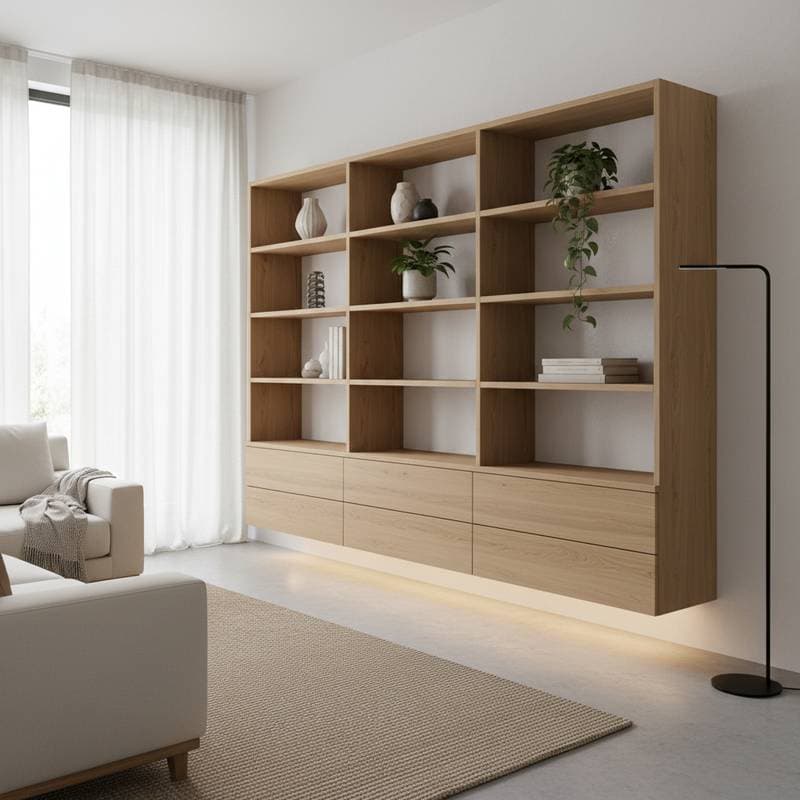
Why Japandi Redefines Floating Shelf Cabinet Hybrids
A cluttered wall drains a room of its calm. Japandi design addresses this issue with quiet precision. This style blends Japanese restraint and Scandinavian warmth to create furniture that appears light, balanced, and intentional. Floating shelf cabinet hybrids exemplify this approach. These pieces combine open display areas with hidden storage compartments, which makes them suitable for small homes, studios, or any space that requires visual order.
Establishing Minimal Storage Standards
Japandi floating cabinets transcend basic shelving. They integrate the clean lines of a floating shelf with the utility of an enclosed cabinet. This hybrid configuration conserves floor space and maintains clutter-free surfaces. Homeowners benefit from both display options and concealed organization within a single, compact unit.
A standard unit spans approximately 48 inches in width and 12 inches in depth, providing ample room for dishes, books, or electronics. Construction typically employs birch plywood, white oak, or bamboo veneer, finished with a matte sealant. Hardware remains concealed to sustain the illusion of weightless suspension.
The effectiveness of this design stems from the Japandi principle of visual quiet. Each line fulfills a functional role. Although nothing appears ornamental, the craftsmanship conveys premium quality. Light wood tones capture and reflect natural light, which enlarges the perceived size of small rooms.
To illustrate, consider a kitchen installation where the hybrid unit holds everyday dishware behind closed doors while showcasing select pottery on open shelves. This arrangement promotes accessibility without sacrificing serenity. The matte finish resists fingerprints, ensuring the surface stays pristine with minimal upkeep.
Action Step: When planning a custom hybrid, begin by sketching the open and closed sections. Target a balanced proportion, such as 60 percent cabinet space and 40 percent shelving, to optimize both utility and aesthetics.
Budgeting for Costs and Materials
Anticipate expenses ranging from $450 for a basic pine hybrid to $1,200 for bespoke constructions in oak or walnut. Specialized finishes increase the total. For instance, a hand-rubbed oil application requires about $80 in materials, and soft-close hardware adds roughly $50 per set.
Several factors influence pricing:
- Material selection. Solid hardwoods command higher costs yet offer superior resistance to warping.
- Wall preparation. Drywall installations often necessitate reinforcement with plywood backing for stability.
- Finish application. Natural stains and matte lacquers demand additional labor for even coverage.
- Integrated features. LED lighting strips contribute $100 to $200 per unit, enhancing visibility in low-light areas.
Individuals pursuing a do-it-yourself project can reduce costs by approximately 40 percent through sourcing lumber and assembling frames independently. This method demands a full weekend commitment. Professional carpenters guarantee precise joints and accurate leveling, which minimizes long-term adjustments.
Beyond initial purchase, factor in maintenance supplies like wood conditioner, which costs around $20 annually to preserve the finish. For larger installations, bulk material purchases yield savings of up to 15 percent.
Action Step: Allocate at least 10 percent of the budget for post-installation refinements, such as hardware tweaks or minor touch-ups, to achieve a flawless result.
Installation Essentials and Pitfalls to Sidestep
Proper installation ensures longevity and safety. Begin by locating wall studs using a stud finder, then mark positions for mounting brackets. Secure the unit with at least four heavy-duty anchors rated for 75 pounds each. Level the piece meticulously, as even a slight tilt affects visual harmony.
Common errors undermine the design:
- Neglecting wall reinforcement. Standard drywall lacks the strength to support loaded cabinets, risking collapse.
- Exceeding load capacities. Limit weight to under 15 pounds per linear foot to prevent sagging or detachment.
- Overlooking environmental factors. Apply finish to all wood surfaces to guard against humidity-induced warping.
- Inharmonious wood tone selection. Japandi emphasizes cohesive tones rather than stark contrasts for unified appeal.
Additional considerations include ventilation; ensure gaps behind the unit allow air circulation to deter moisture buildup. Test stability by applying gradual weight before full stocking.
Action Step: Prior to permanent mounting, arrange the layout on the floor. This practice confirms appropriate spacing and alignment, avoiding unnecessary wall damage.
Integrating Hybrids into Daily Life
A Japandi floating shelf cabinet hybrid alters storage dynamics in subtle yet profound ways. Items of personal significance remain visible, while utilitarian objects stay concealed. Consequently, the space feels calmer, more expansive, and simpler to manage.
Initiate with a single unit in a hallway or workspace to experience the transformation. Observe how it enhances the room's atmosphere through reduced visual noise. As comfort grows, expand to a comprehensive wall system, perhaps incorporating varying heights for dynamic interest.
In living rooms, these hybrids display curated books and art alongside hidden media components, fostering a serene entertainment zone. Bedrooms benefit from bedside units that store essentials discreetly, promoting restful environments. The overall result supports mindful living, where functionality aligns with tranquility.
Maintenance proves straightforward: Dust shelves weekly with a soft cloth, and reapply sealant biennially. This routine sustains the wood's natural beauty and prevents wear.
Sourcing Inspiration and Next Steps
Draw from architectural influences like mid-century modern homes adapted with Japandi elements. Visualize installations in narrow entryways, where hybrids maximize vertical space without overwhelming the area.
For further customization, experiment with subtle texture variations, such as ribbed cabinet doors paired with smooth shelves. Consult local woodworkers for sustainable sourcing options, ensuring materials align with eco-conscious values.
Embracing this design invites a shift toward intentional spaces that nurture well-being. The investment yields enduring satisfaction through practical elegance.