
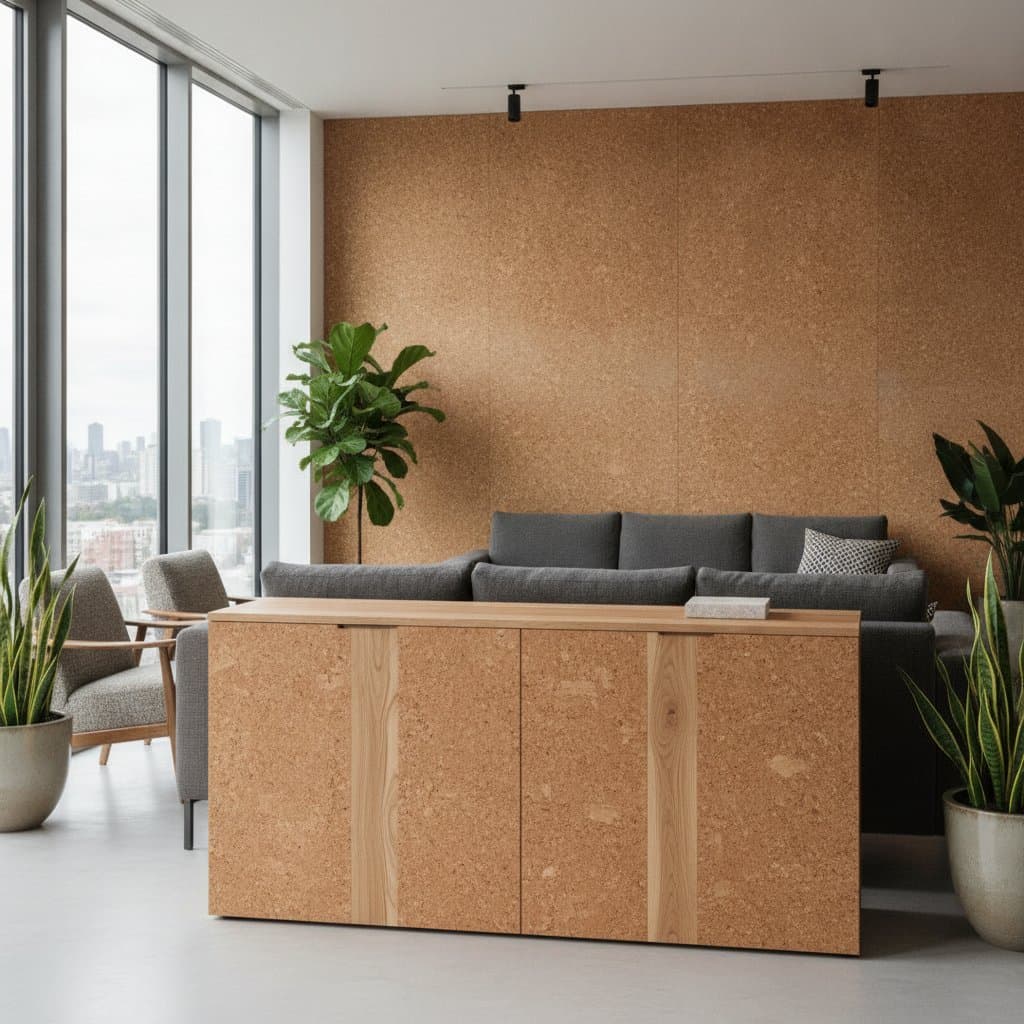
Cork-Backed Veneer Reduces Echo in Modern Furniture
A quiet home feels luxurious. Open plan layouts and hard surfaces often prevent that outcome. Furniture makers now turn to cork backed veneer for noise control that preserves visual appeal. Cabinets, desks, and wall panels built with this material deliver both beauty and acoustic performance.
Key Benefits at a Glance
- Average cost ranges from 18 to 25 dollars per square foot for finished panels.
- Noise reflection drops by up to 40 percent in small rooms.
- Installation for a medium furniture set requires one to three days.
- Moderate woodworking experience suffices for most projects.
Composition and Performance
Cork backed veneer pairs a thin decorative wood layer with a natural cork substrate. The cork absorbs sound while the veneer surface retains the warmth and grain of solid wood. Standard veneer measures less than one millimeter thick. The cork backing adds three to five millimeters that trap air pockets and dampen vibration.
Furniture lined with this material reduces echo by roughly one third compared with standard hardwood. The same layer resists moisture and supplies light thermal insulation. These traits suit home offices, media rooms, and commercial lounges.
Ask suppliers whether the cork layer uses water based adhesives that meet low volatile organic compound standards. This choice keeps the project sustainable and safe for indoor use.
Adoption by Professionals
Cork grows as a renewable resource harvested from oak tree bark without damage to the plant. Builders seeking green certifications find that cork backed veneer satisfies most sustainability requirements. Panels weigh 25 to 30 percent less than solid wood of equal size. Reduced weight eases strain on hinges and lowers shipping costs.
Mid frequency reverberation falls by up to 35 percent in typical living rooms. Voices become clearer and rooms feel calmer. The sound absorption coefficient ranges from 0.25 to 0.35, matching entry level acoustic foam while offering a natural finish.
Apply cork backed veneer first to large cabinet doors and side panels. These surfaces reflect the most sound and show the clearest improvement.
Budget Considerations
Finished panels cost 18 to 25 dollars per square foot. Raw sheets begin near 10 dollars. Material for a full wall unit or entertainment console typically totals 400 to 1200 dollars. Thicker cork raises cost by 10 to 20 percent. Walnut and oak veneers command higher prices than maple or birch. Water based polyurethane finish adds about two dollars per square foot.
Use cork backed veneer only on noise facing surfaces such as cabinet backs and drawer fronts. Reserve standard veneer for remaining areas. Select adhesives rated for both wood and cork to prevent delamination under heat or humidity. Request factory laminated panels rather than gluing layers on site unless a vacuum press and temperature control are available.
Installation Approaches
Skilled woodworkers can complete small projects such as nightstands or wall art panels. Projects exceeding 30 square feet or involving complex joinery benefit from professional cabinetmakers. A medium entertainment unit requires about three days in a professional shop. Labor runs 50 to 70 dollars per hour and may add 600 to 1000 dollars to the total.
Confirm that any shop uses moisture resistant cork backing and supplies a written warranty against delamination for at least one year.
Potential Pitfalls
Open edges absorb moisture and swell. Apply a thin bead of edge sealer on every exposed surface. Fast drying adhesives trap bubbles between layers. Choose products with working time longer than 10 minutes. Cork expands differently than wood, so align sheets in the same grain orientation to avoid warping. The veneer layer is thin. Sand lightly with 220 grit paper before finishing.
Achieving Optimal Acoustic Results
Cork backed veneer delivers measurable quiet without sacrificing style. Proper material selection, careful installation, and attention to edges produce furniture that looks refined and performs acoustically. The combination of sustainability, reduced weight, and sound absorption makes this option practical for both residential and commercial settings.