
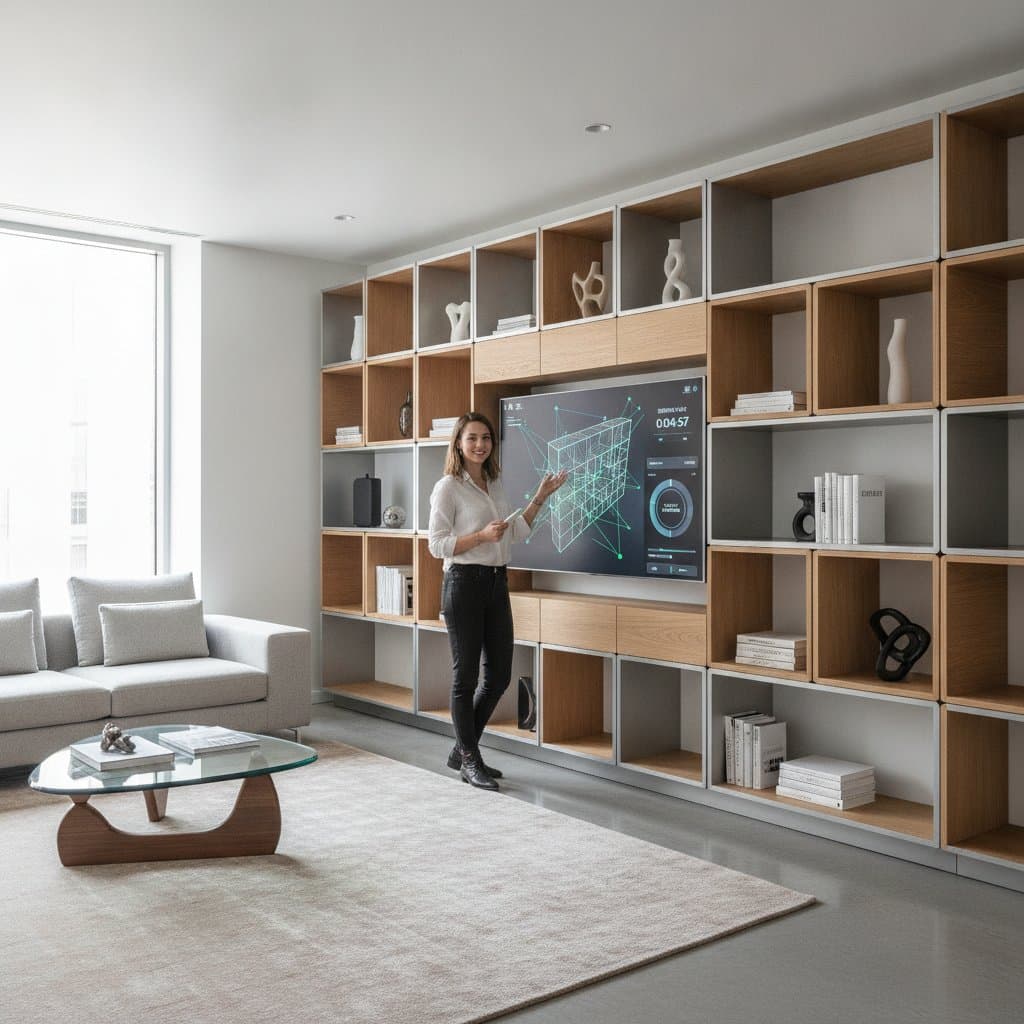
AI Parametric Shelving Makes Custom Storage Mainstream
Custom shelving used to require weeks of design work along with high fabrication costs. Today AI driven parametric tools create a perfect fit for any wall in minutes. Whether you are a furniture maker exploring digital workflows or a homeowner planning a one of a kind storage wall, parametric design changes what custom means and how quickly you can obtain it.
Project Overview
| Factor | Typical Range | Notes |
|---|---|---|
| Cost per linear foot | $120 to $350 | Depends on materials and finish |
| Design time | 30 minutes to 2 hours | AI models generate and adjust instantly |
| Fabrication window | 1 to 3 weeks | Local shops cut parts from digital files |
| Skill level | Intermediate digital skills | Familiarity with CAD or online configurators helps |
How Parametric Tools Alter Shop Workflows
In traditional shops a custom shelving project might require five to ten hours of drawing and layout work before cutting begins. AI parametric tools compress that timeline to under two hours. The digital model doubles as a cut list, a CNC file, and a three dimensional rendering for client approval.
Expect several direct benefits. Visual previews reduce the number of revisions needed. The AI nests parts efficiently on plywood sheets and cuts waste by 10 to 20 percent. Load bearing predictions prevent sagging before any parts are cut. The system also estimates board feet and hardware count instantly for consistent pricing.
A small woodshop using these tools can complete more projects per month with the same crew. Larger operations gain brand consistency through parametric templates while still permitting variation. The AI automates repetitive drafting and layout tasks. This frees designers to focus on aesthetics and keeps data organized for fabrication.
Create one template for your most common shelving configuration. Use it to quote future jobs faster and test variations with different materials.
Choosing Between DIY and Professional Fabrication
You can approach AI parametric shelving as a DIY project or a professional commission. The right choice depends on available tools and comfort with digital fabrication.
For a DIY route you need a table saw or track saw, a drill, clamps, and sanders. Import files from the configurator into a cutting plan. Plan eight to sixteen hours for a mid size wall unit. Accuracy matters when aligning panels, so the difficulty level is moderate.
Hire a professional when the project requires large format CNC cutting or edge banding. The same step applies if the design includes lighting or built in wiring, spans irregular walls, or calls for a factory finish. Professional shops typically charge $60 to $100 per hour for CNC cutting and assembly. Many accept digital files directly from AI configurators, which shortens quoting time.
The shared digital model ensures the final product matches the approved design exactly. It removes communication gaps between designer, maker, and client.
Partner with a local fabrication lab if you are new to CNC or CAD. The lab can produce your parts while you handle assembly and finishing.
Practical Outcomes
Savings of 20 to 40 percent compared with traditional custom work are common. Plan one to three weeks from digital design to completed installation. Retain editable files for future modifications or expansions. Combine natural wood veneers with painted panels to achieve a balanced appearance.
A workflow diagram illustrates input parameters, AI generation, and fabrication output. A material efficiency chart compares waste reduction between manual layout and AI nesting.