
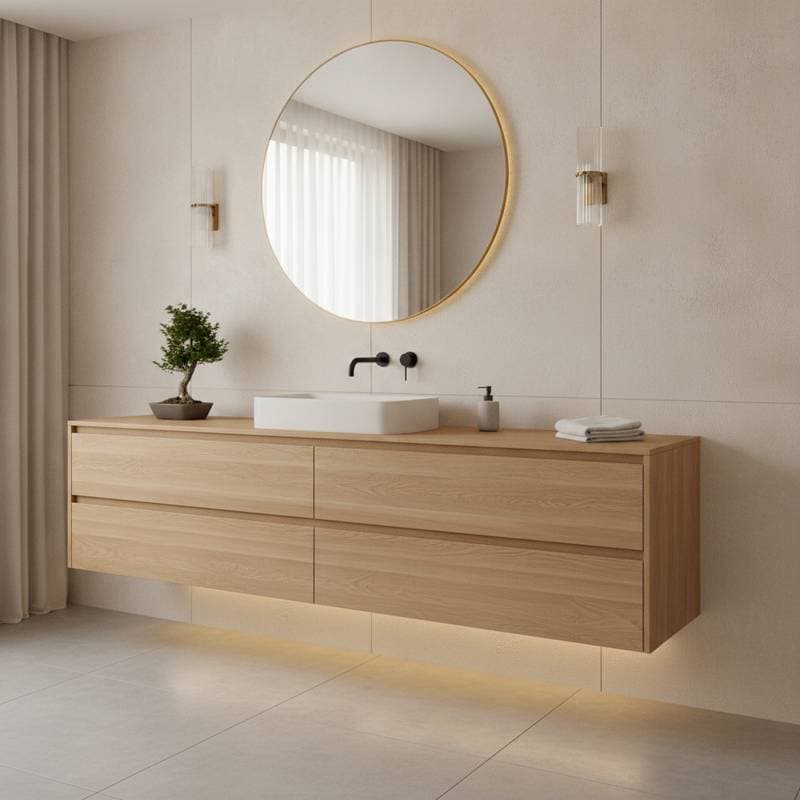
Japandi Floating Vanities Expand Small Bathroom Spaces
Calm and refined, Japandi design merges Japanese minimalism with Scandinavian warmth. The floating vanity serves as the central element in this approach. It converts compact or outdated bathrooms into serene and practical spaces.
Light wood tones, crisp lines, and open floor areas produce a handcrafted yet contemporary appearance. The sections below examine construction methods, performance advantages, and steps to apply the style.
Core Characteristics
- Style emphasis centers on the Japandi floating vanity.
- Essential features include minimalist forms, warm wood tones, layered lighting, and concealed storage.
- Standard dimensions range from 48 to 72 inches wide with 10 to 12 inches of clearance beneath the cabinet.
- Primary objectives involve calm aesthetics, efficient function, and simplified cleaning.
- This solution suits bathrooms that require greater visual openness and organized storage.
Limitations of Traditional Designs
Many bathrooms begin with a full base cabinet that occupies floor area and interrupts light flow. Dark surfaces and thick counters further reduce perceived room size. Fixed plumbing locations often dictate awkward placements that hinder a restful layout.
The core issue lies in how the eye perceives the floor surface. A floor mounted vanity interrupts visual continuity and casts persistent shadows. It also restricts access for cleaning and traps moisture along base edges.
Advantages of the Floating Approach
A wall mounted vanity alters spatial perception immediately. Light travels beneath the cabinet and creates an impression of greater volume. In Japandi applications the unit reads as a sculptural element defined by precise joinery and matte surfaces.
Solid oak, ash, or bamboo veneers pair effectively with soft white or stone tops. Drawer interiors incorporate tiered trays and dividers for organized storage. Integrated outlets and soft close hardware maintain clear counter surfaces.
The suspended position simplifies floor care. A vacuum or mop passes freely underneath. Optional LED strips beneath the cabinet add subtle illumination that enhances depth without glare.
Material and Construction Specifications
Cabinets use plywood carcasses with solid wood frames or veneered fronts finished in low VOC matte lacquer. Counters typically consist of white quartz, honed marble, or sintered stone one inch thick. Hardware remains minimal with finger pulls or recessed grips.
Mounting height places the top surface 34 to 36 inches above the finished floor. Lighting combines ceiling fixtures, mirror integrated task sources, and under cabinet accents. The palette favors warm wood, stone gray, soft white, and matte black details.
Implementation Steps
- Install solid blocking inside the wall during renovation to support approximately 200 pounds of loaded weight.
- Select light oak or ash for Scandinavian influence or darker walnut for Japanese character, always in a matte finish.
- Align vanity edges with tile joints and mirror frames to maintain continuous horizontal lines.
- Allocate deep drawers for towels and shallow compartments for daily items while concealing outlets.
- Combine overhead recessed lights with mirror sconces and low level accent sources to reach at least 50 lumens per square foot.
- Reserve at least 12 inches of clear wall space above the counter before the mirror begins.
Ongoing Care Recommendations
Apply water resistant coatings to interior surfaces to guard against moisture damage. Maintain four air changes per hour through proper ventilation. Clean wood surfaces with a damp cloth followed by immediate drying.
Optional upgrades include motion activated under cabinet lights and concealed charging outlets within drawers. These additions preserve the calm aesthetic while supporting daily routines.
Daily Experience
Once installed the floating vanity alters movement through the room. The open floor allows the eye to travel farther and makes even modest bathrooms feel generous. Cleaning requires less effort and surfaces stay organized because each item has a designated place.
Morning routines become smoother and evening lighting feels balanced. Tactile wood combined with soft illumination converts a utilitarian area into a personal retreat. Woodworkers appreciate the project for its demand on precise joinery and stable finishes while remaining achievable with standard shop equipment.