
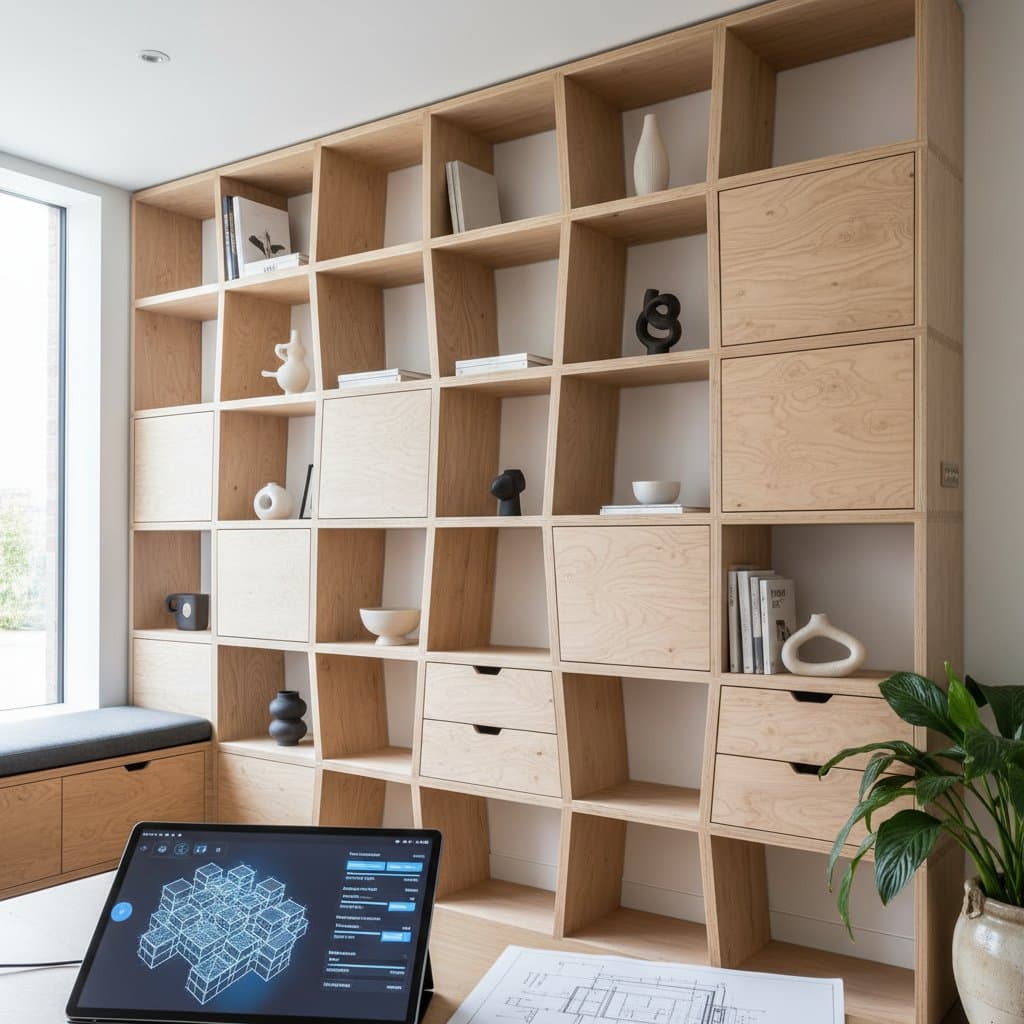
Parametric Shelving: Turn Algorithms into Custom DIY Storage
A sheet of plywood and a few lines of code can now produce furniture that once required weeks of manual modeling. Parametric shelving converts mathematical relationships into physical parts, delivering storage that conforms to the actual dimensions of a room. Adjusting one variable updates every joint, shelf, and support automatically.
How Parametric Shelving Works
Parametric design defines geometric relationships rather than fixed measurements. In practice, a woodworker sets rules such as increasing shelf thickness by two inches whenever overall width exceeds forty-eight inches. The software then recalculates all notches, dowel locations, and panel sizes without further input.
Common tools include Rhino paired with Grasshopper or Fusion 360. After the relationships are established, changing wall height or shelf count regenerates the entire model. Export the updated parts as DXF files for CNC routing or as full-scale templates for track-saw cutting. Begin by listing the essential inputs: overall height, shelf spacing, material thickness, and chosen joinery method. A short, clear parameter list prevents later conflicts in the geometry.
Benefits for Woodworkers
Once a script is complete, the same file serves multiple projects simply by altering the input values. Traditional plans lock a builder into one size; parametric plans adapt to any dimension that respects the original rules. This flexibility reduces redraw time and eliminates measurement errors when room conditions change.
Linking the model to a sheet-nesting routine can lower material waste by as much as twenty percent. The result is repeatable, precise storage that still accommodates individual site conditions.
Budget Considerations
Material costs for a unit six feet tall and four feet wide typically range from one hundred twenty to three hundred fifty dollars. Upgrading to premium plywood adds fifty to one hundred dollars. CNC cutting services charge approximately eighty dollars for a project of this scale, while finishing supplies run twenty-five to sixty dollars.
To manage expenses, select shop-grade plywood with exposed plies for a contemporary appearance. Use a track saw when CNC access is unavailable. Combine open shelves with a few closed boxes to limit the quantity of hinges and hardware required.
Building It Yourself or Hiring Help
Accurate measurements and basic familiarity with parametric software allow most woodworkers to complete the project in one weekend. Required tools include a laptop, clamps, a square, and either a jigsaw or access to a CNC service.
Engage a professional when the unit must carry structural certification or integrate with electrical and HVAC elements. Request editable parametric files from any designer so future adjustments remain possible without recreating the model.
Tips for Reliable Results
- Label every part in the digital model before cutting begins.
- Verify one full-scale joint before processing all panels.
- Apply edge sealant prior to assembly to limit moisture absorption.
- Maintain consistent hardware throughout to simplify later modifications.
Adapting Storage as Needs Change
Because every dimension remains tied to adjustable parameters, new shelves or dividers can be generated and cut whenever requirements evolve. The approach rewards methodical planning and delivers furniture that continues to match both the space and the user over time.