
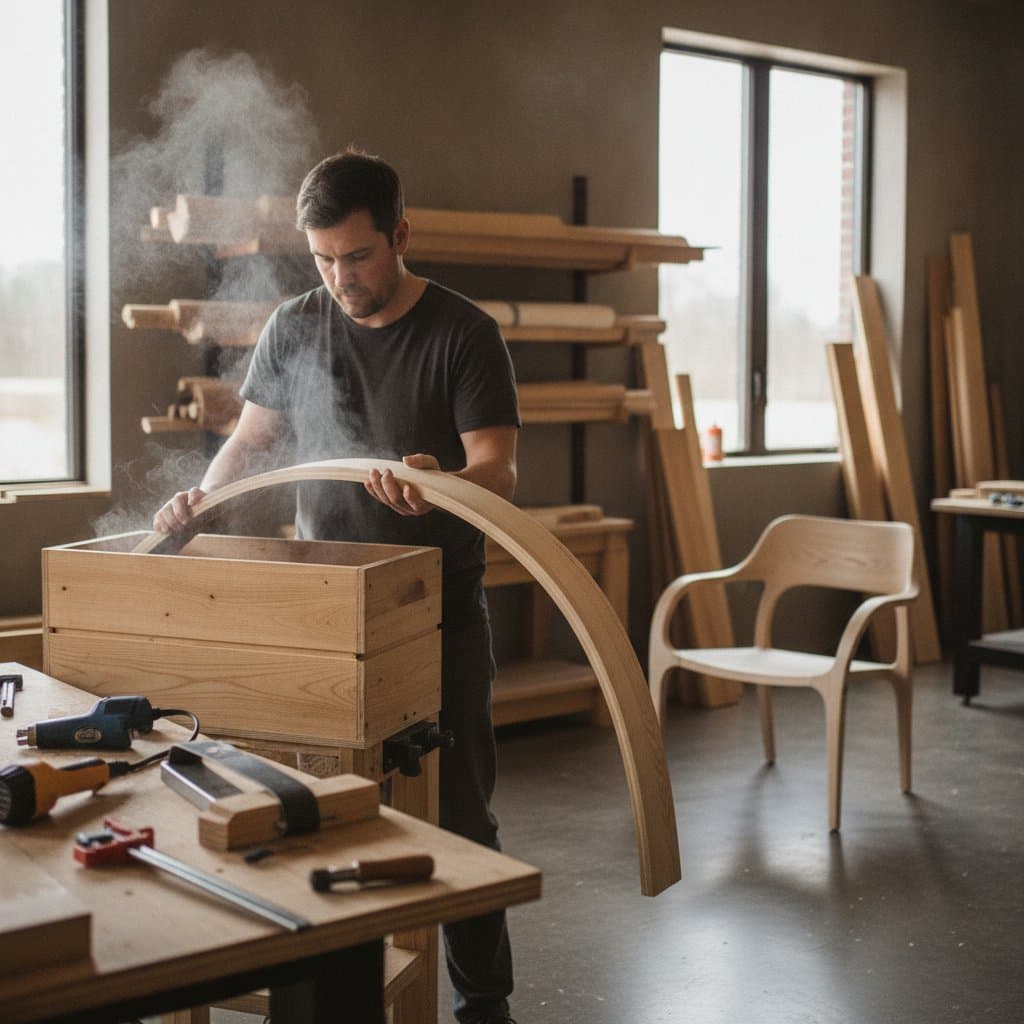
Steam Bending Turns Rigid Boards Into Curved Furniture
Steam bending transforms rigid wood into elegant curves using heat, moisture, and precision. This cost effective technique produces strong, seamless furniture parts with timeless appeal. The following guide covers the best woods, essential tools, and practical steps to master graceful bends.
Why Steam Bending Works
Steam bending uses heat and moisture to make wood pliable. When exposed to steam, the lignin inside the wood fibers softens. That flexibility lets you bend boards around a form before the lignin cools and hardens again. Once dry, the wood holds the new shape with surprising strength.
In most home shops a steam box built from PVC pipe or plywood supplies the heat and moisture. The interior temperature should reach around 212 degrees Fahrenheit to keep steam consistent. Most boards need one hour of steaming for every inch of thickness. For example, a 1 inch oak strip should stay in the steam box for about an hour before bending.
The key benefit is strength. Unlike laminated curves made from glued thin strips, steam bent pieces remain one solid board. This continuity means fewer glue joints and less risk of delamination over time.
Test your setup on scrap wood before shaping expensive boards. This helps you confirm your steam time and bending radius limits.
Choosing the Right Wood
Every species behaves differently under steam. The best candidates combine flexibility and strong fiber cohesion.
Top performers include white oak for reliable bending and tight grain, ash for light color and excellent resilience, hickory for extreme toughness in tool handles or rockers, and beech for smooth texture with moderate bendability.
Avoid woods with brittle grain like maple or cherry. They are prone to cracking even under moderate bends. Kiln dried lumber also resists bending because its internal moisture has been driven out. Air dried stock with 12 to 20 percent moisture content performs far better.
Thickness matters too. Boards thicker than 1.5 inches rarely bend evenly without splitting. For tighter curves start with thinner stock and plan your design around realistic radii. Mark your boards for grain direction and bend with the grain to prevent tension cracks.
Building a Steam Box
You can buy a ready made steam generator for around 250 dollars or build a simple one with a wall steamer and a vented box. A basic plywood version about 6 inches square and 5 feet long fits most chair parts or table aprons. Seal the joints well so steam does not escape.
Drill a small hole near the bottom for the steam hose and another near the top for a pressure vent. Inside add wooden dowels or slats to support the boards so steam circulates evenly. A removable lid or hinged door allows quick loading and unloading.
Keep safety in mind. Steam burns skin instantly. Always wear gloves and eye protection when opening the box. Release pressure slowly and keep your face away from the vent. Use a thermometer to monitor internal temperature for consistent heat.
The Bending Process Step by Step
Once your wood is steamed and flexible you have only a few minutes to shape it. Prepare your bending form ahead of time. It can be made from MDF, plywood, or solid wood depending on the curve.
- Secure the form to a sturdy bench or sawhorse and cover it with packing tape or plastic wrap to prevent sticking.
- Remove the board from the steamer, align it with the form, and clamp from the center outward. Use steel straps on the outside of the curve to prevent tension cracks.
- Keep the wood clamped for at least 24 hours so drying stabilizes the new shape.
- Expect the bend to relax by 10 to 15 percent once unclamped and adjust your form radius slightly tighter to compensate.
Keep a bending journal that records species, thickness, steaming time, and results. Over time you will build a personal reference for consistent outcomes.
Costs and Budget
A small steam bending setup is affordable compared to other woodworking investments. Typical costs include 100 to 250 dollars for a steam source, 50 to 100 dollars for steam box materials, 50 to 200 dollars for bending straps and clamps, and 40 to 80 dollars for a thermometer and safety gear. In total you can expect to spend 200 to 600 dollars to get started.
Professional shops with commercial steam generators can spend 1000 dollars or more, but the precision and capacity increase dramatically. Share a setup with local woodworkers or a community shop to reduce individual expense.
When to Hire Help
Steam bending sits in the middle ground between hobby and professional woodworking. You can do it at home with moderate tools, but precision counts.
DIY is smart when you are making small furniture parts like chair backs or curved drawer fronts, when you already own clamps and a safe workspace, and when you are comfortable handling hot materials.
Hire a professional when the wood pieces exceed 6 feet or need exact radii for production, when the project requires matching multiple bends across identical parts, or when you are working with valuable hardwoods. Professional bending services may charge 75 to 200 dollars per piece depending on size and complexity.
Ask to see previous bends in the same wood species before hiring. Consistency is the mark of experience.
Common Mistakes to Avoid
Even skilled woodworkers can run into trouble with steam bending. Most errors stem from rushing or overlooking moisture control.
Splitting usually results from bending against the grain or not using a compression strap. Uneven bends occur when steam flow is blocked by overcrowding in the box. Springback becomes excessive when the form radius is too wide or the board dries unevenly. Discoloration appears when metal clamps leave marks.
Keep spare blanks ready. Having backups reduces pressure and encourages learning through repetition.
Finishing and Long Term Care
Curved furniture creates movement and warmth that flat panels cannot match. Steam bending lets you shape custom pieces that fit your exact space. Once your bent wood is dry and stable sand it lightly to remove raised grain. Apply oil or lacquer finishes that highlight the natural curves.
Key points to remember include that steam bending costs less than laminating or carving for many shapes, air dried oak and ash produce the most reliable results, and safety gear together with patience remain essential throughout the process.