
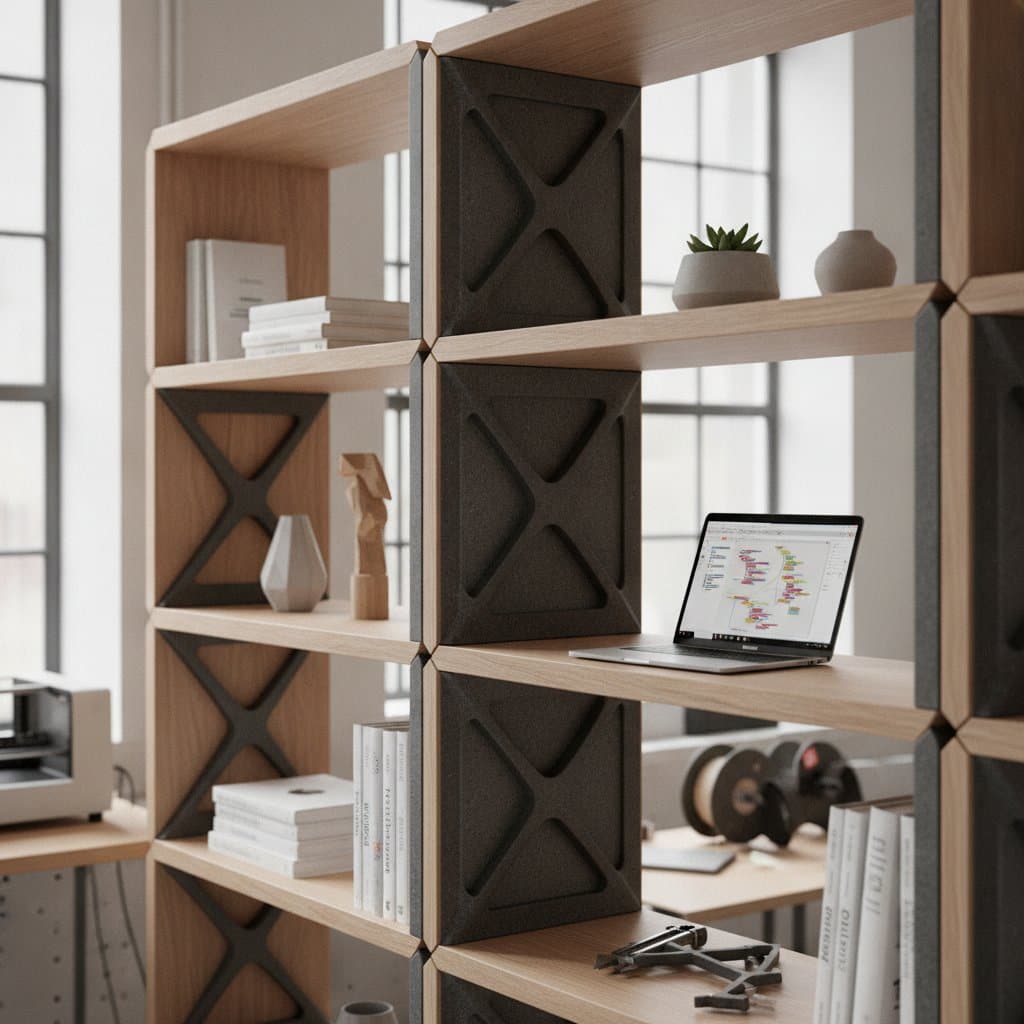
Parametric Shelving Blends 3D-Printed Brackets with Wood
Parametric shelving has moved from concept modeling software into real workshops, where digital precision meets natural texture. The defining move is the fusion of 3D-printed connectors with solid wood panels. This creates modular systems that are both sculptural and functional. Woodworkers and designers gain the ability to scale, reshape, and reconfigure furniture without starting from scratch.
Project Overview
- Homeowner: Private client
- Location: Portland, Oregon
- Size: 320 square feet studio workshop
- Design Team: Studio Koba with fabricator Alex Nguyen
- Photographer: Lena Ortiz
The Challenge
The workshop contained fixed shelving and mismatched brackets that limited layout changes. Every adjustment for new tools or materials required a full rebuild. The homeowner wanted flexibility without losing the warmth of wood. The core task was to design a system that could evolve with changing needs while retaining the handcrafted feel of a woodshop.
The Solution
The finished installation shows how parametric modeling and 3D printing extend the craft of woodworking. Shelves float along a grid of curved printed joints that snap and screw into CNC-cut oak panels. The geometry came from a Grasshopper script that defined angle, spacing, and load paths for each bracket. Storage looks custom yet behaves like a kit of parts.
Light slides through open cells where the printed lattice supports meet the wood. The combination of matte PLA and oiled oak balances precision with warmth. Shifting shelf depths and bracket lengths created niches for tools, books, and display pieces. The overall effect is engineered yet organic.
Materials and Specifications
- Materials: White oak shelves, matte PLA brackets, steel fasteners
- Finish: Tung oil on wood, light sanding on prints for a soft edge
- Dimensions: Each shelf panel 42 inches wide by 12 inches deep
- Bracket count: 48 printed connectors, each tested to hold 30 pounds
- Lighting: Linear LED strip concealed behind the top row for even illumination
- Organization: Adjustable module spacing every 4 inches
Studio Koba's lead designer noted that the parametric script balanced strength and visual rhythm. Brackets were thickened exactly where load required it. Every joint coordinates with shelf thickness and screw placement. This reduces material waste and assembly time.
Implementation Process
The workflow began with a digital model of the wall. Designers defined shelf heights, spacing, and load points. The script generated bracket profiles that adjusted curvature and rib thickness to match expected forces. Once printed, each bracket was labeled and slotted into pre-drilled holes in the wood panels.
Assembly took a single afternoon. The homeowner described it as building with precision puzzle pieces. No glue was needed, only screws that could be removed for reconfiguration. The print finish gave a slight texture that grips the wood without scratching it.
Lessons for Woodworkers
You can apply similar techniques even without advanced modeling software. The key is to think modularly.
- Start with a grid. Define repeatable intervals for bracket placement.
- Use digital fabrication for consistency. Even a simple desktop printer can produce strong connectors if the geometry is sound.
- Combine materials wisely. Let wood handle visual and tactile appeal while printed parts manage flexibility and joinery.
- Plan for light. Open grids and layered lighting make modular shelves look finished, not temporary.
- Test load points. Print small samples, then refine wall thickness before committing to full production.
These steps create a foundation that scales from a single shelf to a full wall system.
Observed Benefits
Parametric shelving redefines how woodworkers approach modular furniture. Instead of cutting each component to a static plan, you generate a structural logic that adapts to space and use. This method reduces prototyping time and produces repeatable accuracy. It also opens new possibilities for custom fabrication in small workshops equipped with consumer-grade 3D printers and CNC routers.
The hybrid system works where traditional joinery meets the limits of flexibility. Wood carries the visual weight and tactile character. Printed joints bring adaptability. Together they allow builders to experiment with geometry that once required complex jigs or manual carving.
Daily Experience
Daily use reveals the strength of the system. The homeowner now rearranges sections seasonally, converting part of the wall from tool storage to display. Dusting is easier because the brackets lift the shelves slightly off the wall and allow air circulation. Built-in lighting reduces shadows on the workbench and improves visibility for fine sanding and assembly.
The tactile meeting of printed curves and wood grain makes the unit feel personal. Each bracket has slight layer lines that catch light differently and echo the grain of the shelves. Over time the wood deepens in tone while the printed parts retain their crisp geometry. It becomes a living record of both digital and manual craft.
Broader Uses
Parametric shelving has moved beyond walls. Designers now use the same logic for freestanding partitions, retail displays, and workshop carts. Changing scale and bracket orientation allows curved structures or corner units that fit irregular rooms. The same script that defines one shelf can generate a room divider or compact desk support.
The concept encourages collaboration between digital modelers and traditional woodworkers. One designs the algorithm. The other tunes the tactile and structural details. The meeting point is where innovation happens, guided by shared curiosity about material behavior.
Care and Longevity
Keep the system performing by tightening fasteners once a season and wiping wood surfaces with oil. If a bracket cracks under stress, reprint a replacement with the same file. Adjust infill percentage for added strength. This repairability makes the setup durable and sustainable.