
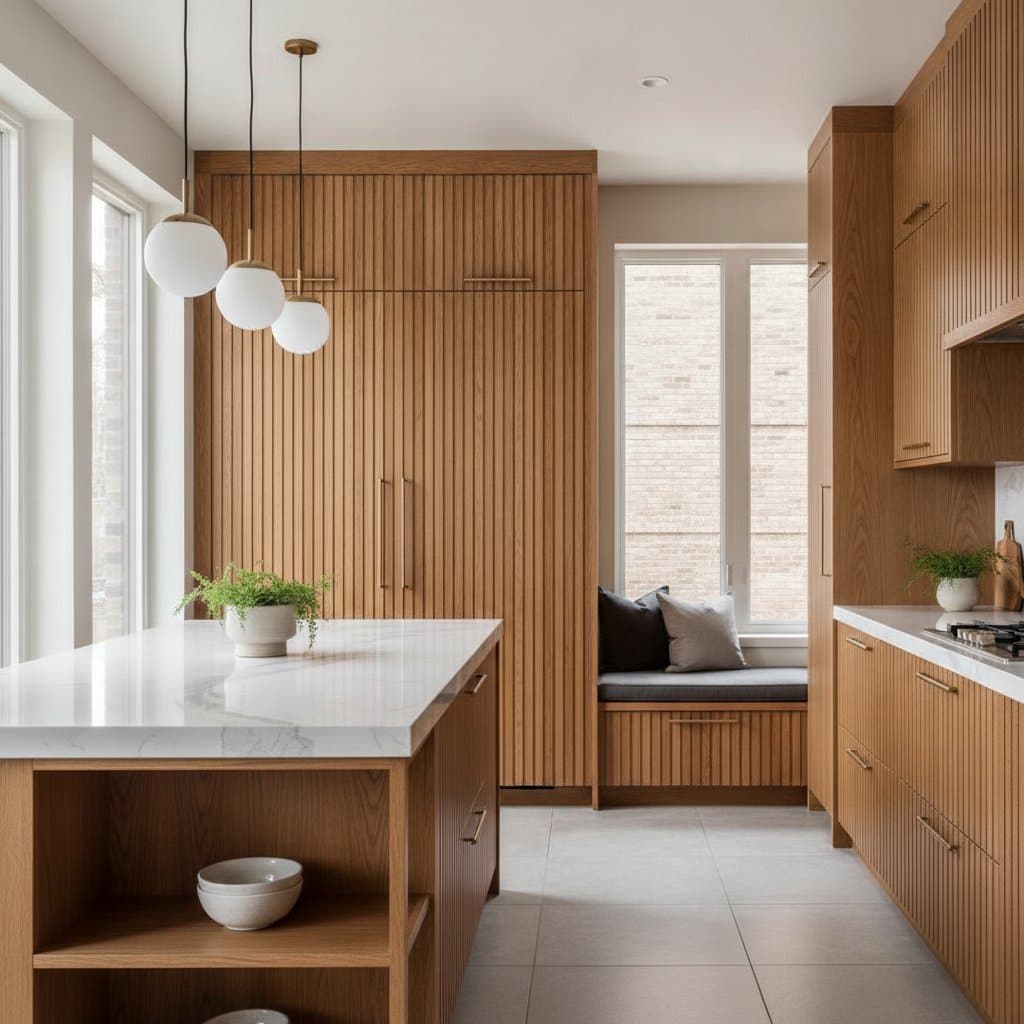
Ribbed Oak Cabinets: 2026's Top Textured Kitchen Trend
Texture has moved from accent to anchor in kitchen design. Ribbed oak cabinetry leads that shift with its tactile grain and rhythmic vertical lines. The look adds depth, catches light, and feels warm to the touch. It reads both traditional and modern depending on the finish and pairing.
For woodworkers and designers, ribbed oak offers a new vocabulary for surfaces that work as sculpture and storage at once.
Project Overview
Who lives here: A couple who cook daily and entertain often
Location: Portland, Oregon
Size: 310 square feet (28.8 square meters)
Design Team: Alder Studio
Photographer: Clara Nguyen
Previous Kitchen Conditions
The old kitchen featured flat white panels that showed every fingerprint and lacked character. Homeowners described the space as bright but bland. Storage proved adequate yet inefficient, with deep lower drawers that collected clutter. The island blocked flow, and ceiling cans flattened everything beneath them. Oak appeared only as a thin floor veneer that had lost its finish near the sink.
Homeowner Rachel Lewis stated the goal clearly. The couple wanted warmth and movement. They sought something that looked handcrafted but still clean.
Updated Design Execution
Alder Studio replaced the smooth fronts with vertical ribbed oak panels finished in a soft matte oil. The oak open grain and shallow grooves add rhythm while breaking up reflections from the quartz counters. The new layout opens the galley into a U-shape. This change increases counter reach by 24 inches and creates a direct line from sink to cooktop.
The island now measures 8 feet long with a fluted oak base that conceals drawers on both sides. Lighting layers define the space. A pair of slim brass pendants over the island cast a warm cone. LED strips under upper cabinets wash light down the ribs to emphasize texture. Recessed fixtures on dimmers bounce light off the matte plaster ceiling and reduce glare.
Lead designer Mia Alder noted that the ribbing brings movement to what would otherwise be a flat field of wood. It reflects craftsmanship even when the lines are machine cut.
Layout Adjustments
The reorganized plan shifted tall storage to one wall. This freed two corners for prep and cleanup. The refrigerator now sits flush behind ribbed oak panels with integrated pulls. A new 42-inch aisle between island and perimeter allows two people to pass easily. The rhythm of the ribs draws the eye upward and makes the 9-foot ceiling feel higher.
Materials and Finish Details
Quarter-sawn oak provides stability and subtle stripe. Grooves measure 3 millimeters deep and sit 10 millimeters apart. This spacing produces fine fluting that catches light without trapping dust. A low-sheen oil finish preserves the tactile feel of raw wood. The studio used solid fronts on high-touch drawers but ribbed veneer on tall doors to balance cost and weight.
Storage and Daily Function
Full-extension drawers replace deep bins inside the cabinets. Pull-outs for spices, recycling, and small appliances keep counters clear. The ribbed pattern hides touch-latch doors that open with a light press. Homeowners report that cleanup feels easier because surfaces read as part of the architecture rather than separate furniture.
Material and Hardware Selections
- Cabinetry: Quarter-sawn white oak, ribbed veneer fronts, oil finish in light honey tone
- Countertops: White quartz composite with subtle gray veining, 1.25-inch thickness
- Backsplash: Hand-glazed zellige tile in warm ivory, 2 by 6 inches
- Hardware: Integrated oak pulls routed into door fronts
- Lighting: LED strip under uppers, two brass pendants, recessed ceiling lights on dimmers
- Flooring: Wide-plank white oak, satin polyurethane finish
- Appliances: Panel-ready refrigerator and dishwasher, stainless steel range
Each element supports the cabinetry texture. Matte finishes reduce contrast so the ribs remain the visual focus. Tile irregular sheen echoes the wood pattern while brass accents punctuate without distraction.
Current Design Appeal
Ribbed oak fits a growing appetite for surfaces that feel crafted but not fussy. Open kitchens that merge with living areas benefit from visual softness and sound diffusion. Vertical texture absorbs light and breaks up echoes. It looks substantial yet can be fabricated from thin veneer or solid stock.
Designers value its flexibility. Vertical ribs read modern with monochrome counters or classic against stone. Oak neutral undertone works with both cool and warm palettes. The finish can shift from pale white oil to deep smoked brown without losing grain clarity.
Cabinetmaker Jose Mendez of Timberline Workshop observed that clients now ask for touchable materials. Flat lacquer feels cold while ribbed oak gives a reason to reach out.
Expanded Uses
Ribbed oak appears in pantries, home bars, and bathroom vanities. Shops mill matching profiles across widths for seamless wall panels and sliding doors. Vertical ribs conceal joints and create continuity between cabinetry and architecture. Some designers wrap range hoods or appliance towers in matching ribbed finishes for a unified effect.
Partial use works well in smaller kitchens. A ribbed island base paired with smooth uppers creates depth without overwhelming the space. In larger rooms, full-height ribbed pantry walls anchor open layouts. Texture scale can vary from fine reedlike lines to deeper fluting.
Fabrication Guidance
Consistent groove depth remains critical to avoid uneven reflections. Many shops use CNC routers with a 3-millimeter ball-end bit at slow feed rates to prevent tear-out. When working with solid oak, orient the grain vertically to reduce cross-grain chipping. Sand lightly along the grain before finishing to maintain crisp edges.
Hardwax oils or penetrating finishes preserve tactility and highlight contrast. Avoid heavy polyurethane that can pool in grooves. Advise clients to dust with a soft brush attachment and wipe spills promptly. Light re-oiling every few years keeps the surface resilient.
When specifying veneer, confirm that the substrate is moisture-resistant MDF or birch ply. Match veneer direction at seams so ribs align perfectly. Miter corners or use solid nosing to protect vulnerable edges.
Budget Considerations
Ribbed oak cabinetry typically costs 15 to 25 percent more than flat-panel oak due to milling time and material waste. Veneered fronts lower cost while maintaining the look. For a mid-size kitchen of 250 square feet, cabinetry budgets range from 18,000 to 28,000 dollars depending on finish and hardware. Custom fluting or deeper profiles can add about 2,000 dollars to fabrication cost.
Many homeowners see value in longevity and tactile appeal. The material shows wear gracefully, and small dents blend into the pattern. That durability makes ribbed oak a smart long-term choice for high-use kitchens.
Practical Benefits
Texture adds depth. Vertical ribs turn simple oak into a statement surface that changes with light. Low-sheen oils keep the material tactile and authentic. Clean sightlines and concealed handles let the pattern stay uninterrupted. Grazing light accentuates shadows and reveals craftsmanship. Regular dusting and occasional re-oiling maintain appearance without fuss.
These points explain why ribbed oak serves as a versatile technique for both artisans and homeowners.
Daily Experience
For the Portland couple, daily use has confirmed the choice. The kitchen feels calm and grounded even during busy mornings. The ribbing softens reflections from nearby windows and makes the oak appear alive. Friends often reach out to touch the panels. Lewis noted that it is the first thing people notice and that it feels like furniture rather than just cabinetry.
Designers say that reaction captures the trend essence. Ribbed oak reconnects people with the materiality of wood. It celebrates grain and handwork at a time when many interiors lean toward smooth minimalism. The texture brings warmth without clutter and modernity without sterility.
For woodworkers, it is an invitation to experiment. Adjusting groove width, spacing, or finish can yield endless variations.