
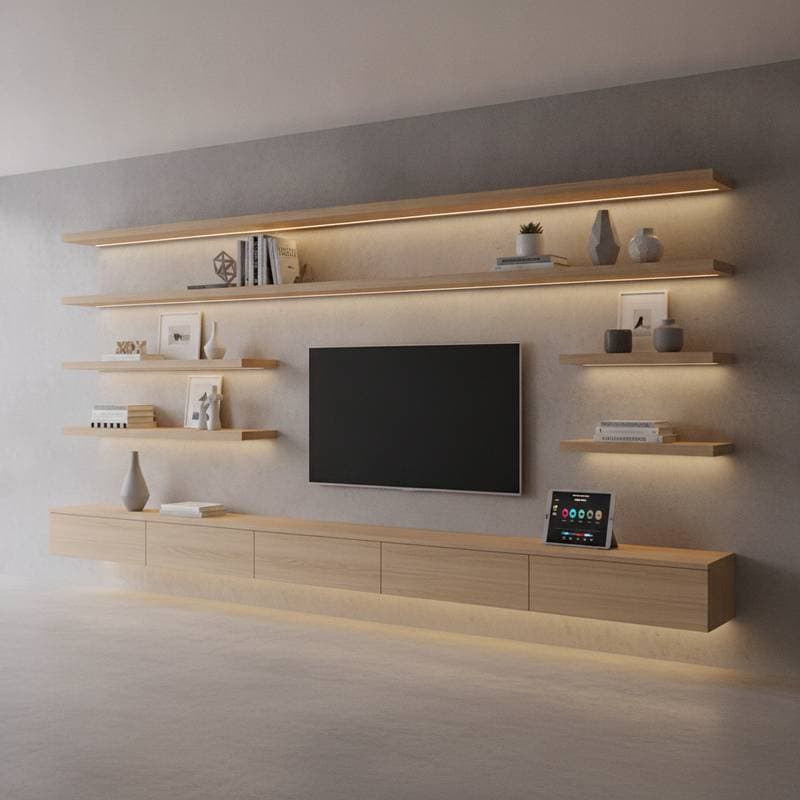
Why Smart LED Shelves Dominate Built-In Designs
Replacing plain cabinetry with light-integrated shelving changes how a room feels and functions. Builders, designers, and homeowners turn to smart LED shelves because these units merge storage, mood lighting, and energy efficiency in one clean system. The installations appear in kitchens, living rooms, home offices, and workshops. Custom smart LED shelving costs between $350 and $900 per linear foot depending on materials, lighting quality, and smart control features. That range appears steep until compared with the layered cost of separate lighting and carpentry, which can exceed $1,200 per linear foot when completed in stages.
Smart LED shelves save money over time. They also deliver a premium finish that looks intentional and modern. The following sections explain why these shelves have become the standard choice in integrated design projects.
The Shift Toward Integrated Lighting
Homeowners move away from bulky fixtures and toward subtle, built-in illumination. Smart LED shelves solve a persistent problem: how to highlight stored objects without adding visible hardware. Each shelf hides a slim LED channel that produces smooth, even light. New smart LEDs connect through low-voltage drivers controlled by apps, dimmers, or voice assistants.
This approach suits open-concept homes where visual clutter distracts from architecture. Designers report that integrated lighting reduces fixture count by up to 40 percent in some projects. Fewer ceiling penetrations result, along with simpler maintenance.
Lighting built into the furniture eliminates shadows and glare. The result feels calm, modern, and expensive. Brightness can shift from task lighting during the day to ambient glow at night. For resale value, integrated systems display craftsmanship that buyers notice at once.
When planning new cabinetry or floating shelves, ask the fabricator to route LED channels before finishing. Retrofits cost roughly 25 percent more because installers must conceal wires and rework surfaces.
Costs and Budget Planning
Smart LED shelf projects vary in price according to customization and control features.
Material and Installation Costs
- Basic floating shelf kits range from $150 to $300 each with plug-in lighting and manual dimmer.
- Custom wall-to-wall units total $2,000 to $8,000 including wiring, drivers, and smart integration.
- Premium hardwood or glass designs reach $900 to $1,200 per linear foot when fully automated.
Price Factors
- Material type. Solid walnut or oak adds 30 percent compared with MDF or laminate.
- Lighting quality. High CRI LEDs cost more yet show truer colors, which matters for kitchens and retail displays.
- Control system. App-based dimmers and tunable white controllers add $100 to $300 per channel.
- Power supply location. Concealed power adds electrician labor, usually $75 to $150 per hour.
Money-Saving Tips
Group multiple shelves on a single driver to reduce hardware costs. Use prefinished channels that match wood tones to avoid custom painting. Plan outlets behind cabinets before drywall installation to save rewiring later.
Avoid cheap LED strips with poor heat management or low CRI ratings. They fade quickly and spoil the clean aesthetic. An extra $50 per shelf often doubles lifespan and maintains consistent brightness.
Common Mistakes to Avoid
Even well-planned LED shelf projects can fail. The most frequent missteps and simple prevention methods follow.
- Inconsistent color temperature. Mixing warm and cool strips makes a space look patchy. Purchase all LEDs from the same batch.
- Visible hotspots. Skipping a diffuser or using narrow channels creates harsh points of light. Apply frosted covers to smooth output.
- Overloaded drivers. Connecting too many feet of LED tape to one power source shortens lifespan. Calculate total wattage and add 20 percent headroom.
- Poor wire management. Loose cords ruin the seamless look. Plan concealed routes through wall cavities or cabinet backs.
- Ignoring heat dissipation. LEDs require minimal airflow. Do not seal them completely in epoxy or tight enclosures.
Before installation, mock up one shelf to test brightness and color. Adjust mounting height or diffuser type before committing to the full run.
Maintaining Your Investment
Smart LED systems require little upkeep, yet a few habits protect the investment.
Clean diffusers with a soft microfiber cloth every few months. Dust buildup reduces brightness by around 10 percent. Inspect connectors yearly to ensure snug fits. Loose connections can cause flicker. Update firmware when the system uses an app. Manufacturers often release patches that improve color control and energy efficiency. Avoid harsh cleaners that may cloud acrylic covers.
If a strip fails, replace only that section without removing the whole shelf. Keep a few extra feet of matching LED tape from the original batch for future repairs.
Planning Your Next Installation
Begin with a site measurement and a simple lighting layout. Select materials and controls that match the room use. Schedule electrical rough-in early so outlets sit behind the finished cabinetry. Test one section before full assembly to confirm color and brightness. This sequence produces reliable results and protects the long-term value of the system.