
Key Project Specifications
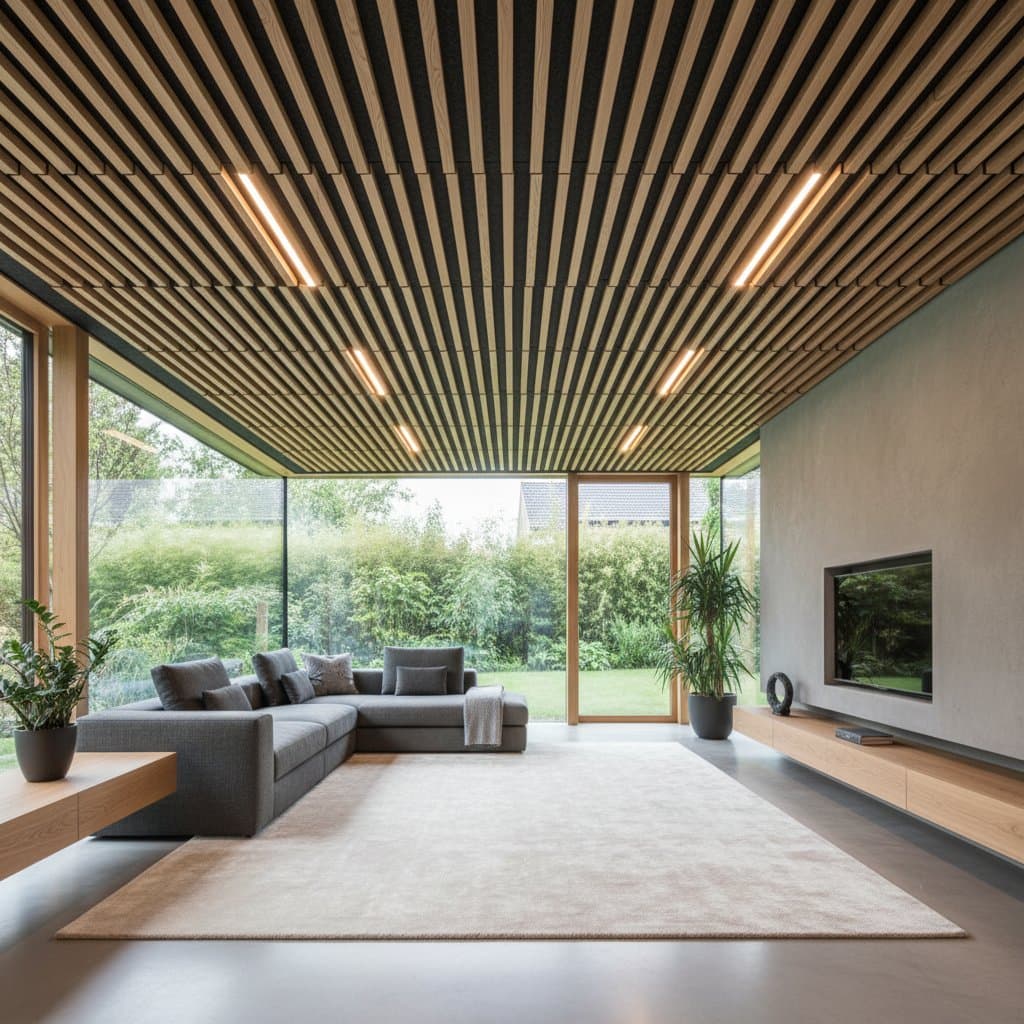
This wood slat ceiling design incorporates specific materials and features for optimal performance.
- Absorption Material: 1-inch (2.54 centimeters) black polyester felt panels with an NRC rating of 0.8 for effective noise reduction.
- Illumination: Low-voltage LED strips embedded in select channels between slats.
- Surface Treatment: Two coats of water-based matte polyurethane for protection and a subtle finish.
- Installation Cost: Around $14 per square foot (0.09 square meter), covering materials and basic tools.
Precise layout supports easy replication. Align slats carefully and end them against hidden blocking to maintain clean, continuous lines.
How Acoustic Principles Drive the Design
The ceiling achieves sound control through a combination of diffusion and absorption. Gaps between slats scatter sound waves to minimize direct reflections, while the felt backing absorbs mid- and high-frequency sounds. An airspace above the felt helps dampen lower frequencies, creating balanced acoustics without excessive muffling.
Independent testing showed a 40 percent reduction in average reverberation time. Speech becomes clearer, and lower background noise reduces listener fatigue. In addition to acoustic benefits, the design hides wiring and ducts for a streamlined appearance.
Step-by-Step Construction Guide
Follow these steps to install the ceiling system. Gather tools including a level, drill, saw, and measuring tape before starting.
1. Plan the Framework Layout
Identify ceiling joists and mark their positions on the surface below. Snap chalk lines to position furring strips at 16-inch (40.64 centimeter) centers. This setup provides uniform support and ensures slats align properly.
2. Attach Suspension Components
Secure resilient channels to the joists with screws placed every 12 inches (30.48 centimeters). These channels isolate the assembly from building vibrations for better sound isolation. Then, bolt 1x3-inch pine furring strips to the channels to add strength and stability.
3. Mount the Absorption Panels
Cut acoustic felt to fit between furring strips and attach it using staples or adhesive for a tight, smooth surface. The black felt creates visual contrast, hides mechanical features, and enhances the overall design.
4. Install the Wood Slats
Cut slats to room length, apply the finish in advance, and label them for sequential placement. Attach slats perpendicular to furring strips with countersunk screws or concealed clips. Use 1-inch (2.54 centimeter) spacers to maintain even gaps, and check levelness at regular intervals.
5. Add Integrated Lighting
Install low-voltage LED strips in chosen channels between slats. Protect them with aluminum profiles to dissipate heat and ensure even light output. Position lights near walls to produce gentle, grazing illumination that highlights the wood grain.
6. Complete Finishing Details
Fill and sand over screw heads for a seamless look. Apply two coats of matte polyurethane with a brush, allowing drying time between layers. This finish protects the wood, reduces glare, and emphasizes natural grain patterns.
Applying the Design to Room Acoustics
Open-plan rooms with hard surfaces like drywall, glass, and concrete often suffer from excessive noise reflection. Soft furnishings help somewhat, but ceilings serve as the main bounce point for sound. This slat system addresses the issue by adding wood mass for damping, felt for absorption, and gaps for diffusion.
In commercial spaces, similar setups meet sound-related building codes. For homes, the method delivers strong results with straightforward execution. Modular elements make it feasible to finish small areas in a weekend or scale up for larger rooms.
Selecting and Customizing Materials
Choose woods based on desired look and performance.
- Pine or Cedar: Lightweight woods that are easy to work with and cost-effective.
- Walnut or Oak: Denser options offering rich colors and long-term durability.
- Plywood Options: Uniform sheets that hold shape well in varying humidity.
For painted surfaces, use sealed MDF slats to avoid swelling from moisture. Apply low-VOC finishes to maintain healthy indoor air quality.
Adjust felt colors to suit the room: black for depth and to hide elements, or grays and tans for a softer blend. Opt for recycled PET felt when prioritizing sustainability and ease of cutting.
Incorporating Practical Storage Solutions
The dropped ceiling creates hidden space for utilities. Include narrow access panels for wiring checks, or a removable section for an attic ladder. Add slim vents or speakers between slats to keep the surface intact.
In a workshop, make one slat detachable for tool access. Label the back discreetly for simple identification during use.
Budget and Maintenance Overview
Materials typically cost $10 to $20 per square foot (0.09 square meter), influenced by wood quality and finishes. DIY installation focuses expenses on lumber and felt, with time investment depending on room size and height. Keep extra slats on hand for future repairs.
Maintain the ceiling by dusting slats with microfiber cloths or lightly vacuuming the felt. The protective finish holds up in 35 to 55 percent relative humidity, needing little ongoing care.
Key Insights from the Installation
A shallow 2.5-inch (6.35 centimeter) drop can reduce echoes by nearly 50 percent. Consistent spacing with solid backing produces a professional result. Built-in lighting and access points make the ceiling highly functional.
Natural materials improve both sound quality and room feel. The design allows removal without damaging the structure, offering flexibility for changes.
This approach fits spaces needing better acoustics and visual appeal, such as home offices, studios, or family areas.
Results in Everyday Use
After completion, the room feels noticeably calmer. Music plays with richer tones, appliances hum less intrusively, and conversations flow without strain. The slats introduce a clean, linear pattern that ties the design together.
Homeowners now use the space for work and leisure without distraction. As one resident noted, "We never realized how much noise affected our energy." This build shows that thoughtful design can refine sound and style without bulky, industrial fixes.