
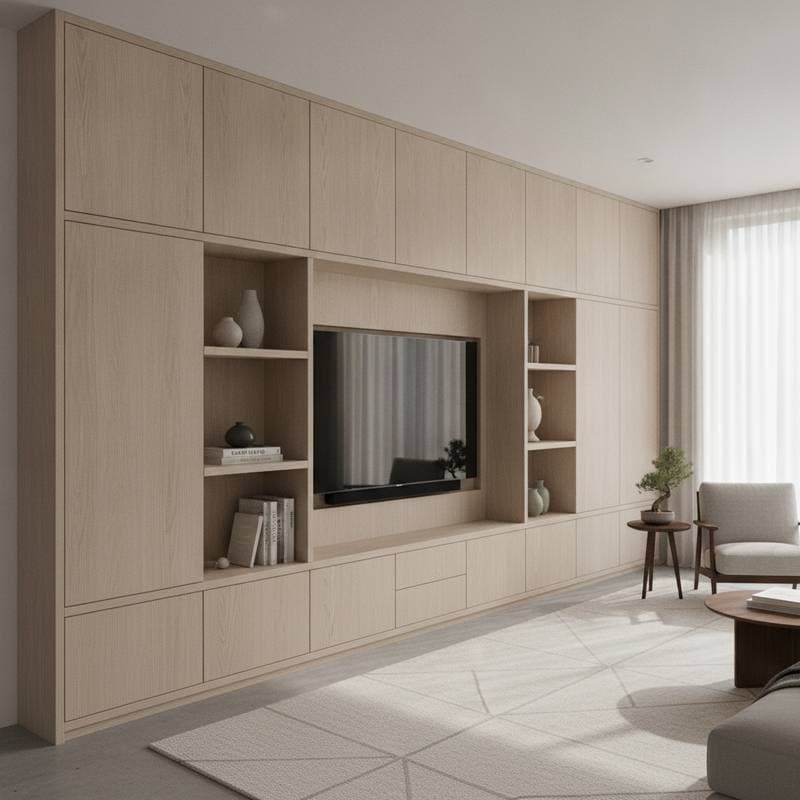
Japandi Built-Ins: Creating Serene Storage for 2026
Picture a living room defined by clean lines, soft wood tones, and hidden compartments that keep every item out of view. Japandi built-ins combine Japanese minimalism with Scandinavian warmth to produce spaces that feel calm, intentional, and highly functional. This approach addresses two current priorities at once: visual simplicity and practical organization.
Key Project Parameters
| Feature | Typical Range | Why It Matters |
|---|---|---|
| Cost per linear foot | $350 to $700 | Quality joinery defines longevity |
| Project timeline | 2 to 5 weeks | Depends on finish and customization |
| Ideal wood types | White oak, ash, bamboo | Light tones fit Japandi color palettes |
| Finish options | Natural oil, matte lacquer | Keeps texture soft and tactile |
Distinctive Elements of Japandi Built-Ins
Japandi style merges precise Japanese carpentry with the cozy restraint of Scandinavian design. Storage units appear effortless yet reflect careful craftsmanship. Surfaces remain uncluttered, edges stay softened, and materials are selected to develop character over time.
These built-ins differ from standard shelving through emphasis on proportion and flow. Cabinets often seem to float while joints stay nearly invisible. Traditional methods such as dovetails, mortise and tenon, and finger joints provide visible reminders of skill without drawing attention.
Simplified environments reduce stress and support better focus. Japandi built-ins preserve warmth so the space never feels cold. Calm tones paired with natural wood grain create balance suitable for both apartments and older homes.
Photograph current storage areas first. Identify clutter zones, then sketch how built-ins could conceal those items. This mapping clarifies priorities before construction begins.
Layout Planning for Proportion
Every Japandi project starts with careful proportion so built-ins read as part of the architecture. Measure wall height and depth accurately. Cabinet depth of 18 inches works well for living areas while 24 inches suits kitchens. Shelf spacing between 10 and 14 inches accommodates most items.
Select a neutral base such as light oak with off-white plaster or pale clay walls. Introduce texture through woven baskets, linen panels, or recessed lighting that highlights grain. Skip heavy hardware in favor of touch-latch or recessed pulls.
Repeating materials and forms quietly makes the room feel larger and more cohesive. Small spaces gain visual calm, which explains the style appeal among urban homeowners.
Build a digital mood board with colors, woods, and joinery references. Include at least three inspiration photos to guide the fabricator.
Budget Expectations
Plan for $350 to $700 per linear foot for custom work. Simpler plywood structures with edge banding fall near the lower end, while solid wood with hand-fitted joinery and lighting can exceed $1,000 per linear foot.
Material choice, joinery complexity, finish type, and added features such as seating or power access all influence final cost. A modest living room wall system typically totals $5,000 to $8,000. A full built-in office may reach $12,000 to $18,000.
Request itemized quotes from at least two local woodshops. Compare solid wood and veneer options to evaluate value per linear foot.
Installation Choices
Japandi built-ins reward precision. Intermediate woodworkers can manage floating shelves or framed nooks. Larger wall systems or integrated seating benefit from professional installation.
A small DIY project requires three to five weekends including finish curing. Professional teams complete a full wall unit in seven to fourteen days.
Hire professionals for projects over 10 linear feet, complex corners, or units that include electrical elements. Confirm liability insurance and request examples of concealed hinges and continuous grain matching.
Visit a completed Japandi installation before hiring. Direct observation of texture and proportion reveals attention to detail.
Errors That Undermine the Look
Visible hardware disrupts visual calm. Dark stains or glossy finishes distract from natural wood. Inconsistent shelf spacing breaks symmetry. Unprepared walls behind shelves reduce overall effect. Closed cabinets near exterior walls require ventilation to avoid moisture.
Keep a laser level on site and check spacing every few feet. Photograph progress to catch issues early. Review surfaces under soft lighting before final sealing.
Daily Experience
Japandi built-ins adapt to changing routines. Their simplicity supports seasonal rotation of items and maintains an uncluttered appearance with little effort. The result is storage that supports both beauty and daily function over many years.