
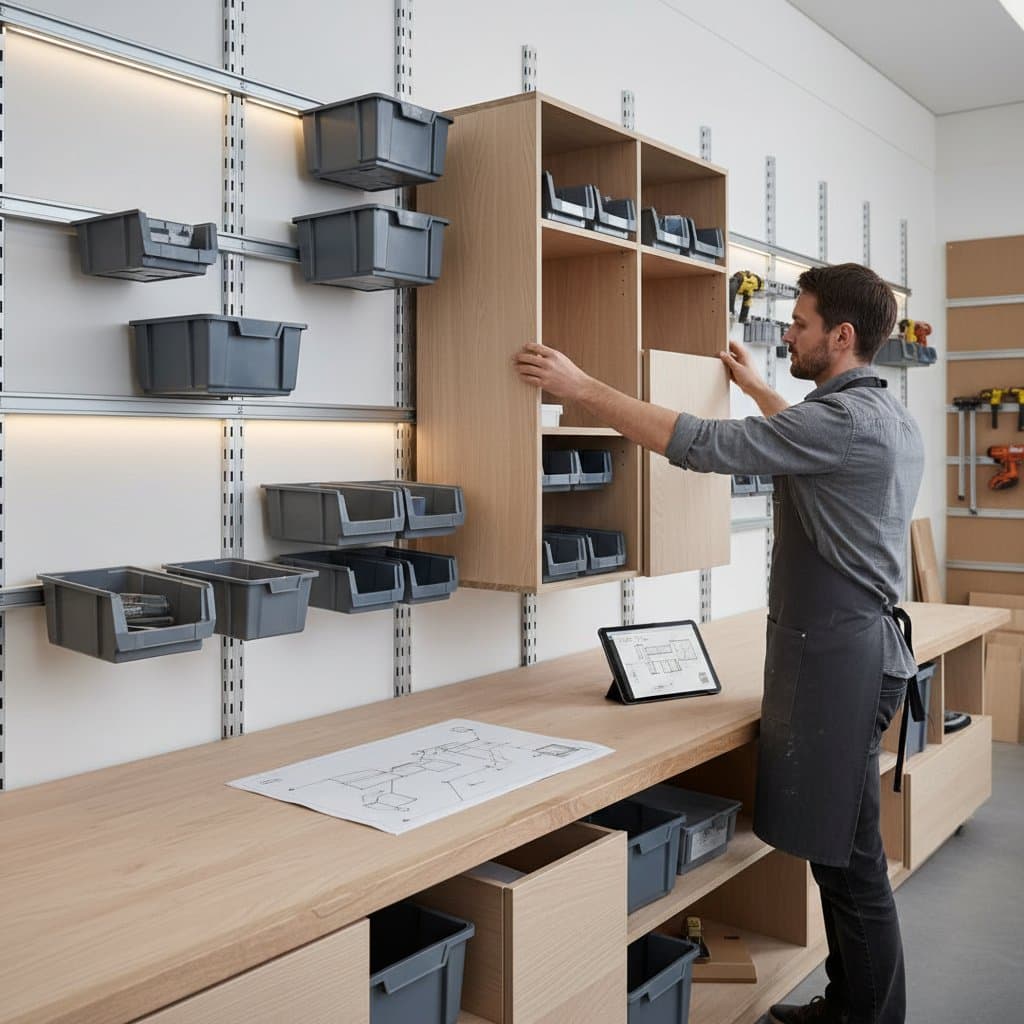
Smart Tracks Revolutionize Modular Cabinet Design
A cluttered workshop hinders productivity and increases expenses. Modular cabinets equipped with smart track systems alter storage management for woodworkers. These systems enable repositioning of shelves, drawers, and tool racks within minutes, eliminating the need to reconstruct entire units. Such adaptability suits small workshops and expansive production areas alike, accommodating evolving workflows and financial constraints.
At a Glance
Typical cost: $45 to $120 per linear foot of track
Install time: 3 to 6 hours for a mid-size wall
DIY difficulty: Moderate
Ideal for: Custom shops, garage workshops, and mobile configurations
How Smart Tracks Work
Smart track systems employ vertical or horizontal rails affixed to a wall or cabinet framework. Adjustable brackets engage with these rails to secure shelves, bins, or face panels firmly. In contrast to traditional fixed cabinetry, configurations adjust readily to accommodate shifting storage demands.
Standard installations feature aluminum or steel tracks positioned every 16 inches on center to ensure structural integrity. Brackets typically support 75 to 125 pounds, varying by manufacturer and material thickness. Integration of drawers, pegboards, or power outlets occurs seamlessly along the rails. Modularity arises from the absence of permanent fasteners, facilitating effortless reconfiguration.
Why It Works
Tracks function as a robust structural core, evenly distributing loads to minimize stress concentrations and extend cabinet durability. Standardized hole patterns and hardware compatibility allow integration of components from multiple suppliers. This versatility accommodates both bespoke constructions and ready-made cabinets.
Action step: Measure wall surfaces in 16-inch intervals, then determine track placements to coincide with stud positions. Initiate with two full-height tracks and scale up according to requirements.
Designing Modular Storage Around Tracks
Planning a modular layout involves defining functional zones. Position heavy equipment, such as routers and sanders, at lower levels; allocate mid-level spaces for drawers of moderate weight; reserve upper areas for lighter items like bins or clamps. Track segments accommodate varying depths from 12 to 24 inches, enabling efficient multilayered organization.
Certain workshops incorporate tracks behind cabinet doors to conceal tool panels. Alternative applications involve mounting tracks on mobile carts, permitting components to relocate between workstations. Incorporation of LED lighting strips within tracks enhances visibility during tasks.
Action step: Create an elevation sketch of the wall space. Designate functions for each section, then select appropriate brackets and shelf depths to match intended purposes.
Costs and Budget
A complete 8-foot wall setup with mid-grade aluminum tracks, brackets, and plywood shelving ranges from $500 to $900. Opting for premium powder-coated steel elevates costs to $1,200 or higher, offering superior longevity in humid environments.
Main price factors include:
- Material: Aluminum provides lightness, while steel handles greater loads.
- Finish: Powder coating prevents rust and abrasion.
- Accessories: Adjustable drawers and power panels contribute $75 to $150 per unit.
Acquire track lengths in bulk and trim to fit for cost savings. Prioritize quality anchors and fasteners to prevent failures. Underinvestment in mounting hardware risks structural compromise and wall damage.
Action step: Allocate 15 percent of the budget for anticipated expansions, ensuring compatibility without subsequent sourcing challenges.
DIY or Professional Installation
Individuals with fundamental carpentry expertise and a level can manage installation independently. A pair of workers completes a modest wall in approximately half a day. Precision in locating studs and maintaining track alignment presents the primary challenges.
Engage professionals when:
- Walls consist of concrete or masonry.
- Electrical outlets or lighting integrate into the system.
- Load certifications satisfy commercial insurance requirements.
Installers charge $4 to $7 per square foot, encompassing anchors and alignment adjustments.
Action step: Verify that professionals employ hardware with specified ratings and furnish documentation of load capacities.
Common Mistakes to Avoid
- Skipping layout checks. Inaccurate alignments result in uneven shelving.
- Overloading brackets. Adhere to manufacturer-specified weight limits.
- Ignoring wall conditions. Vulnerable drywall or dampness invites collapses.
- Mixing incompatible brands. Slot dimensions vary across products.
Anchor tracks directly to framing rather than solely to drywall surfaces. Select corrosion-resistant hardware for all components.
Maintaining Your Investment
Conduct bracket inspections every few months to detect shifts or corrosion. Tighten connections using a hex key as needed. Store reserve clips and screws in an organized container. Adapt configurations to workflow alterations rather than undertaking full rebuilds.
Realizing Long-Term Benefits
Smart track systems deliver enduring value through adaptability and durability. Woodworkers gain optimized space utilization, reduced downtime, and scalable storage solutions. Investing in such infrastructure supports professional growth and operational efficiency across diverse shop environments.