
Introduction to Parametric Shelving
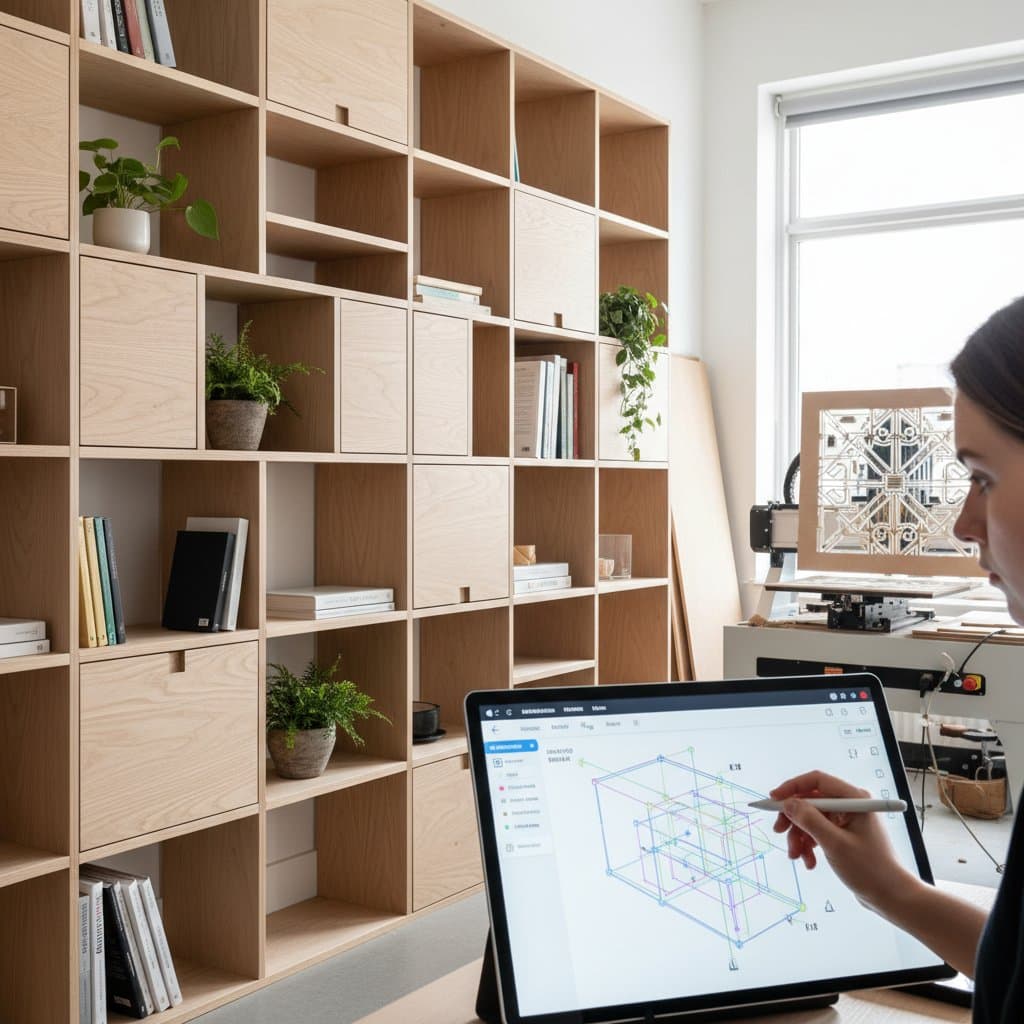
Contemporary builders turn to software like Fusion 360, Grasshopper, or Plasticity for custom shelving designs. These platforms offer sliders and input fields to modify dimensions, material thickness, and joint configurations. Users specify constraints such as minimum shelf depth or maximum unsupported span to maintain structural stability.
Once the design reaches satisfaction, export the model as vector files tailored for CNC routers. Run simulations to review toolpaths and confirm component alignments before committing to material. For manual fabrication, obtain printable templates or comprehensive dimension lists that direct accurate cuts.
Key Design Elements
Parametric models optimize material use through nested layouts that reduce scrap. From a standard 4-by-8-foot plywood sheet, extract an entire shelving side panel plus two complete shelves. This approach maximizes yield while preserving design integrity.
Joinery adapts dynamically: algorithms generate notches, finger joints, or mortise pockets sized to specific router bit diameters. Incorporate finish details by setting veneer grain orientation, edge banding widths, or zones for paint. These elements integrate without disrupting the overall workflow.
Adjust load-bearing features by varying shelf thickness to balance durability and expense. Embed hardware directly, such as mounting holes, bracket locations, and channels for cable routing. Save configurations as presets for quick reuse in future builds.
Benefits for Builders and End Users
In compact workshops, time equates to revenue potential. Parametric methods bypass extensive revisions and mistakes; update a single parameter to regenerate files that uphold proportions and core aesthetics.
Hobbyists and homeowners achieve expert-level accuracy without advanced training. Browser-based tools allow adjustments to width, depth, and finishes via simple sliders, yielding downloadable files for immediate production.
Extend designs to include lighting and storage integration. Use digital previews to place LED strips or verify airflow behind panels. Optimize shelf spacing to accommodate wiring or ventilation paths seamlessly.
Case Study: Studio Apartment Wall System
A parametric script designed a wall-mounted shelving unit for a Portland studio apartment, measuring 144 inches wide by 96 inches tall. The builder produced all parts from five sheets of Baltic birch plywood using one CNC router.
The system featured a central desk nook and two hidden storage areas. Upon the client's request for space to fit a larger monitor, the designer altered one parameter. The software recalculated the layout and output new cut files in minutes.
Photographs show crisp vertical supports, level shelves, and continuous grain across joints. The homeowner remarked, "It feels built-in, but I know I can resize or move it if we relocate."
Core Advantages
- Precision paired with creativity: Algorithms handle calculations, allowing builders to prioritize visual and practical choices.
- Material efficiency: Nested patterns and optimized joinery decrease usage and prevent errors requiring refabrication.
- Scalable adaptability: Designs scale from single pieces to full wall installations with minimal adjustments.
- Accessible tools: Free or low-cost software options accommodate beginners and professionals alike.
- Reliable outcomes: Templates ensure consistent replication or customization for diverse requirements.
These features bridge traditional woodworking skills with digital innovation, enhancing project viability.
Steps to Implement Parametric Designs
Start with a basic project, like a two-shelf end table, to build familiarity. Enter room measurements and test thickness options from 0.75 inch down to 0.5 inch, observing automatic shifts in joints and tolerances.
Utilize CNC access via makerspaces or fabrication partners, which charge reasonable hourly fees. For hand tools, rely on parametric outputs for exact measurements that ensure tight fits and even finishes.
Prepare finishes in advance: define edges digitally for stain, paint, or sealant to achieve uniform grain and avoid post-assembly discrepancies.
Sustaining Value Through Parametric Files
Parametric shelving performs like high-end custom pieces, complete with editable digital files for future updates. To add drawers or lighting, reopen the model, adjust parameters, and fabricate only the modified components.
Community-shared open-source templates invite customization, echoing collaborative woodworking heritage. Algorithms accelerate this exchange, merging personal touches with established techniques.
One designer noted, "The beauty is that every version is both unique and related. You get personal fit with collective knowledge." This ongoing adaptability ensures shelving evolves with user needs over time.