
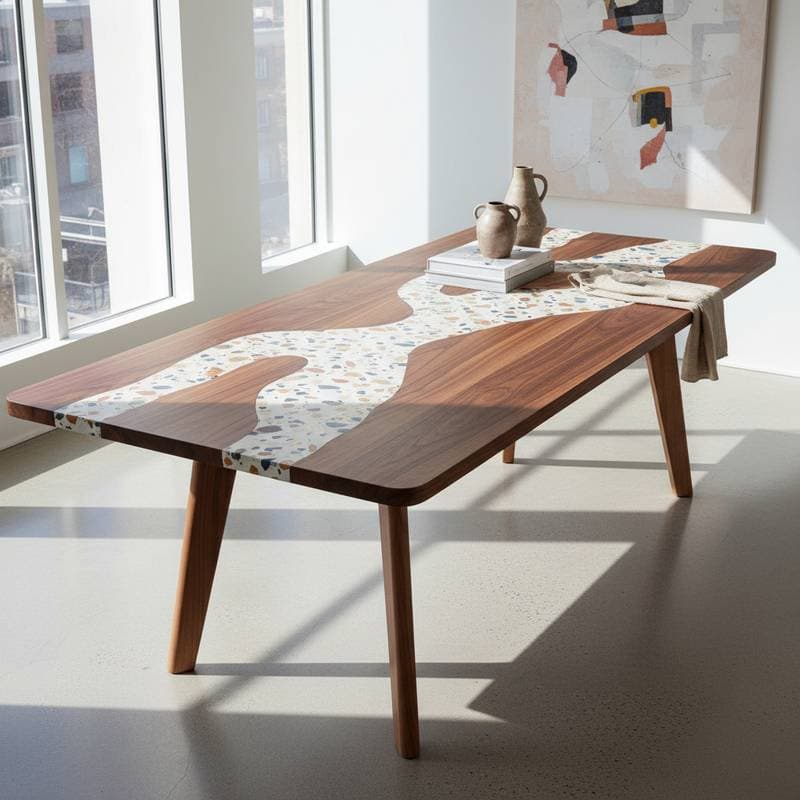
Terrazzo Inlays Are Shaping 2026 Wood Furniture Trends
Terrazzo, once reserved for floors and countertops, now appears inside wood furniture studios. Designers embed chips of marble, glass, and quartz into tabletops, drawer fronts, and cabinet frames. The result is a surface that feels both crafted and contemporary. The defining move is the fusion of character-rich wood with the cool precision of terrazzo inlay.
At a Glance
- Trend focus: Wood furniture with terrazzo inlay surfaces
- Style direction: Hybrid material craft, statement tables, and functional art pieces
- Scale: Most pieces range from 30 to 84 inches (76 to 213 centimeters) wide
- Key players: Independent furniture makers, boutique studios, and restoration shops testing mixed-material design
- Photography: Styled by in-house teams and product photographers specializing in natural light
What Changed and Why It Matters
For decades, terrazzo lived quietly underfoot. Its signature speckles came from leftover stone fragments bound in cement. Today, digital fabrication and small-batch casting allow furniture makers to create terrazzo panels in custom colors and chip sizes. This shift lets woodworkers design tabletops or drawer faces that echo the palette of surrounding finishes.
The mix gives furniture a new texture language. Wood brings warmth, while terrazzo adds a crisp, reflective counterpoint. Together they read as natural yet urban, tactile yet precise. Designer Lena Ortiz said, "A terrazzo inlay lets us bring pattern into wood without paint or veneer. It is a surface that feels alive when light moves across it."
The New Hybrid Aesthetic
The current direction is less about nostalgia and more about balance. Makers insert slender terrazzo bands into walnut or ash tops, or cast terrazzo directly into routed recesses. The look depends on proportion. Narrow inlays read as jewelry, while full terrazzo fields framed by wood rails create bold contrast.
Color control drives the appeal. Instead of traditional gray cement, many use tinted resin bases that match cabinet interiors or hardware finishes. The chips can echo stone countertops or floor colors, linking furniture to the architecture around it. You see this most clearly in dining tables and credenzas. A terrazzo center panel anchors the design, while wood edges soften the visual weight. The combination feels grounded and modern.
Layout and Function
From a functional standpoint, terrazzo inlay adds durability to work surfaces that face daily wear. Wood edges remain gentle to the touch, and the terrazzo resists stains and heat. The technique works best where cleaning and maintenance matter, such as kitchen tables, entry benches, or console tops.
Designers often route recesses between 0.25 and 0.5 inches (6 to 13 millimeters) deep, then cast or fit terrazzo panels flush with the surrounding wood. This precision keeps crumbs and liquids from pooling. It also ensures a continuous surface for writing or serving. The contrast helps organize space visually. A terrazzo band can define a serving zone or highlight an object display. In smaller rooms, the mix of textures draws the eye and makes furniture feel layered rather than bulky.
From Studio to Workshop
Small-scale workshops have driven much of this movement. They rely on hand mixing and local aggregates, so every batch looks unique. That level of craft fits the growing interest in slow furniture and long-term pieces.
Craftsperson Mateo Hines described the process: "We cast our terrazzo panels in reusable molds, then trim them to fit. Each one has its own rhythm of chips. When you pair that with oak or cherry, it feels like two natural materials meeting halfway."
Many shops use recycled stone fragments or glass shards, adding an environmental angle that appeals to conscious consumers. The fusion of reclaimed content with traditional joinery creates a narrative of renewal.
Lighting and Finish
Good lighting reveals the full depth of a terrazzo inlay. Overhead pendants or directional sconces emphasize the subtle differences between chips. When wood has a matte oil finish and terrazzo carries a polished surface, the contrast amplifies.
Designers often layer three light sources around terrazzo furniture. Ambient lighting provides overall glow. Task lighting supports reflection and clarity. Accent lighting highlights texture. This layered approach keeps terrazzo from feeling cold. Instead, the mix of sheen and shadow adds comfort.
Design Details
- Materials: Walnut, ash, oak, or maple paired with terrazzo made of marble, quartz, recycled glass, or metal chips.
- Finish: Matte oil or waterborne lacquer on wood, polished or honed surface on terrazzo.
- Color direction: Warm wood tones set against pale terrazzo bases with muted chips in ochre, sage, or charcoal.
- Scale: Inlays typically measure 2 to 4 inches (5 to 10 centimeters) wide for linear accents, or full panels up to 48 inches (122 centimeters) long for tabletops.
- Edges: Rounded wood corners reduce chipping risk where materials meet.
- Joinery: Floating tenons or domino joints that allow for slight expansion differences.
- Care: Use pH-neutral cleaners and avoid heavy abrasives on terrazzo. Reseal annually for water resistance.
How to Try It at Home
You can explore terrazzo inlay even without a full workshop. Start small with trays, stool tops, or shelf inserts. Precast terrazzo tiles can be cut to size and set into routed recesses. Always measure the recess depth carefully, leaving a 1/16 inch (1.5 millimeter) allowance for adhesive.
If you prefer a lighter approach, consider terrazzo-style resin sheets. They mimic the look with less weight and can be bonded to plywood cores. Choose a sheet with chips no larger than 0.25 inch (6 millimeters) for fine detail. Pairing tip: lighter terrazzo tones make dark wood feel more refined, while darker terrazzo gives pale wood a graphic edge. Keep other finishes quiet to let the pattern stand out.
Styles on the Rise
Linear Band Tables
Long, narrow terrazzo strips run the length of dining or conference tables. They act as visual runners and protect the center from heat. The precision of the inlay shows craftsmanship and makes the table feel architectural.
Framed Terrazzo Panels
Wood rails surround terrazzo tops, a layout inspired by shoji screens and mid-century frames. The wood border keeps the piece warm while terrazzo brightens the center.
Drawer Front Accents
Small terrazzo rectangles replace traditional knobs or serve as inlaid pulls. In kitchens or vanities, the subtle sparkle plays with light and texture.
Sculptural Bases
Some designers flip the concept by placing terrazzo in the base instead of the top. Cast terrazzo legs hold a solid-wood surface, reversing expectations and emphasizing balance.
What the Photos Show
In recent collections, you see walnut tables with terrazzo panels that mirror the speckled backsplash behind them. Studio lighting captures the soft reflection of the chips, while the wood edges frame the surface like a picture. Another image shows a console table with pale oak framing a coral terrazzo slab, its chips catching daylight from a nearby window. The combination feels modern yet approachable.
Photographer Ellis Drake said, "The terrazzo picks up color from everything around it. You can see how the chips echo wall paint, plants, even the flooring tone." The photos emphasize how the inlay interacts with its environment, not just the furniture itself.
Key Takeaways
- Hybrid craft is defining the next wave of wood furniture, combining tactile warmth with mineral strength.
- Customization through chip color and base tint allows seamless coordination between furniture and interiors.
- Durability increases when terrazzo protects high-contact areas like table centers or shelf surfaces.
- Lighting brings terrazzo to life, highlighting its depth and reflective quality.
- Small projects let you test the trend affordably before committing to larger pieces.
Bringing Terrazzo Inlays into Daily Use
Homeowners who add these pieces often notice how the surfaces invite touch and conversation. The combination of wood and stone creates furniture that ages gracefully while staying practical for everyday routines. Over time, the inlays become familiar markers of personal style rather than fleeting trends.