
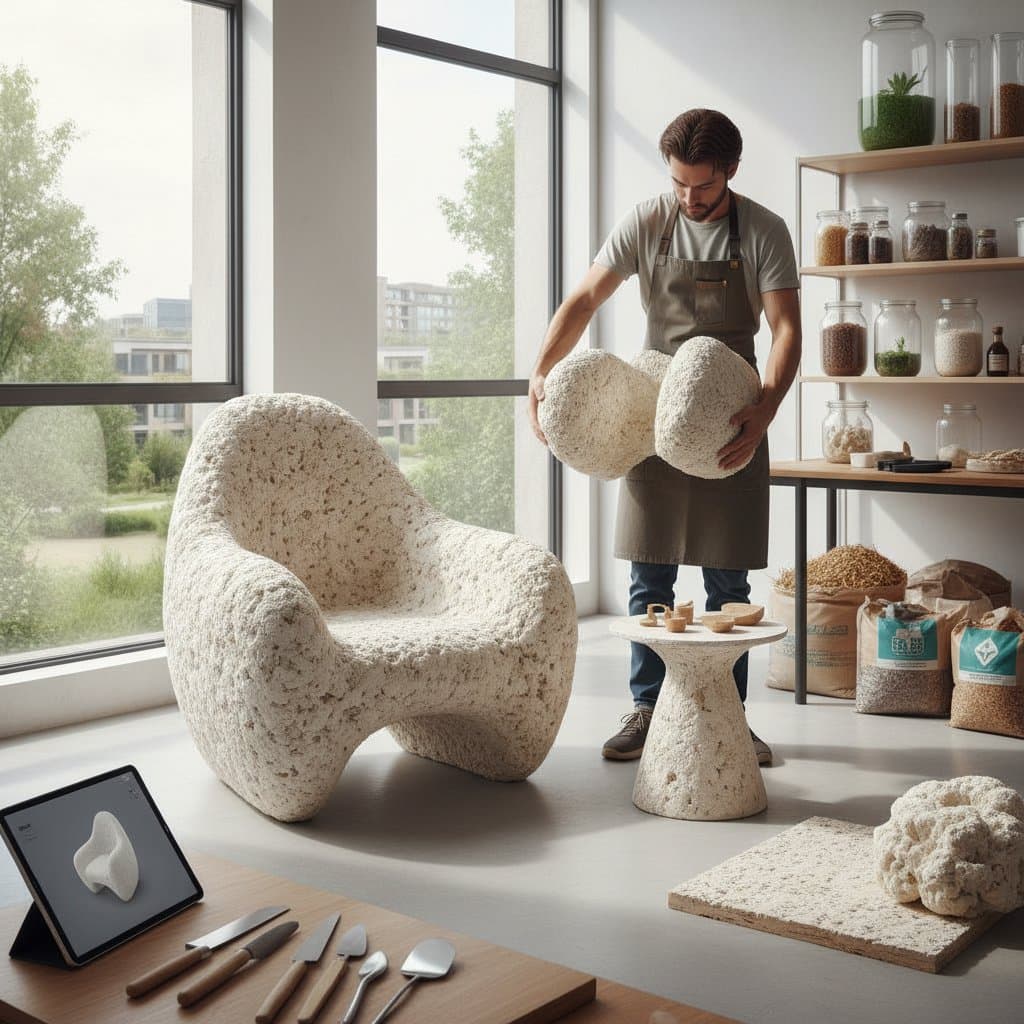
Sustainable Mycelium: Grow Furniture Like Never Before
Visualize cultivating a chair rather than assembling one. Mycelium, the thread-like root structure of fungi, transforms furniture creation by expanding into custom molds, developing inherent strength, and yielding pieces with an organic aesthetic and reliable durability. Woodworkers seeking sustainable alternatives find in this biological material a pathway to expansive creativity alongside a reduced ecological burden.
At a Glance
- Material cost: $5 to $15 per pound of mycelium substrate, depending on strain and source
- Growth time: 5 to 10 days under controlled environmental conditions
- Durability: Matches lightweight wood composites, with compressive strength up to 1,000 psi in optimized forms
- Best for: Lamps, stools, side tables, acoustic panels, and decorative accents
- Environmental benefit: Fully compostable, sequesters carbon during growth, and repurposes waste streams
What Makes Mycelium Furniture Distinct
Mycelium proliferates through substrates derived from agricultural residues, including sawdust, hemp hurds, or corn stalks. During colonization, the fungal network weaves through these particles, forming a cohesive, solid structure. To finalize the piece, bakers apply low heat to halt mycelial expansion and enhance material rigidity, producing a bio-composite suitable for substituting plastics or foam in furniture applications.
This method demands minimal energy input and eliminates the need for synthetic resins or adhesives. Molds prove reusable across multiple cycles, while excess substrate returns to compost or serves as inoculum for subsequent growths. Such practices align closely with sustainable woodworking principles, curtailing waste generation and reliance on petrochemicals.
Beginners access the process through commercial starter kits or collaborations with regional biomaterials laboratories. These resources typically supply pre-sterilized substrate bags alongside fungal strains tailored for varying densities, growth rates, and final textures.
Action Step: Experiment with small-scale decorative panels or lamp shades to observe mycelium responses to fluctuations in humidity and temperature, building foundational expertise.
How to Grow Your Own Furniture Base
The procedure remains straightforward yet necessitates meticulous attention to hygiene and timing. Follow this detailed step-by-step guide to achieve reliable results.
- Prepare the mold. Construct or select a sealed form from plastic, silicone, or wood coated with a non-porous barrier to contain the substrate securely.
- Inoculate the substrate. Introduce mushroom spawn or liquid fungal culture into the sterilized base of plant fibers, ensuring even distribution for uniform colonization.
- Pack the mold. Compress the inoculated mixture firmly into the form, eliminating air pockets, then seal it to shield against airborne contaminants.
- Let it grow. Position the assembly in a warm (around 75-80°F), dark environment with stable humidity (70-80%) for 5 to 10 days, monitoring for full mycelial coverage.
- Bake to finish. Transfer the colonized piece to an oven set at 160-180°F for 4-6 hours to deactivate the fungus and impart structural integrity.
A compact stool base completes growth in less than two weeks, with material expenses totaling under $30. This approach contrasts sharply with resin casting or foam fabrication, delivering comparable outcomes at a lower cost while sidestepping hazardous chemical handling.
Why it works: The mycelium's interwoven hyphae function as a natural binder, fusing particles into a matrix that derives resilience from biological architecture rather than artificial reinforcements. Advanced users experiment with strain variations, such as Ganoderma for density or Pleurotus for flexibility, to customize properties.
Costs and Budget Considerations
Anticipate overall expenses ranging from $40 to $120 for modest furniture projects, influenced by mold fabrication, substrate selection, and sterilization equipment. Bulk purchases reduce substrate pricing to approximately $3 per pound, enhancing affordability for repeated endeavors.
Money-saving tips:
- Reuse molds across batches to amortize initial investments.
- Incorporate reclaimed sawdust or agricultural chaff into the substrate for distinctive hybrid textures at no added cost.
- Employ a standard household oven for the curing phase, bypassing the expense of specialized drying apparatus.
- Source spawn from mycology suppliers in larger quantities to lower per-unit costs.
Prioritize investment in sterilization protocols, as contamination risks can compromise entire productions and inflate losses.
DIY or Professional Fabrication Options
Home-based production of mycelium furniture proves entirely feasible with basic equipment: sanitized containers, a digital thermometer, disposable gloves, and diligent monitoring. Commence with petite items to master handling before advancing to larger constructs.
For retail-grade outputs or substantial structural elements, engage a professional biofabrication studio equipped with sterile incubation chambers and precise climate controls. These facilities guarantee uniform material density and polished finishes essential for commercial viability.
When selecting collaborators, inquire about:
- Adherence to certified laboratory standards for spore management and contamination prevention
- Provenance of substrates, emphasizing recycled or low-impact sourcing
- Available post-processing techniques, including application of natural oils, waxes, or eco-friendly varnishes
Such partnerships often accelerate prototyping and ensure compliance with safety and performance benchmarks.
Common Mistakes to Avoid
- Inadequate sterilization invites unwanted mold growth; disinfect all surfaces, tools, and workspaces with 70% isopropyl alcohol prior to inoculation.
- Premature interruption of growth results in fragile structures; confirm complete mold colonization, evidenced by white, filamentous coverage, before proceeding to baking.
- Excessive heat in curing induces material cracks; maintain oven temperatures below 200°F and use gradual ramp-up to preserve integrity.
- Neglecting environmental controls leads to uneven development; invest in a simple hygrometer to track moisture levels throughout the process.
Addressing these pitfalls early fosters consistent success and minimizes material waste.
Integrating Mycelium Furniture into Daily Use
Mycelium pieces infuse interiors with tactile depth and organic warmth, complementing contemporary aesthetics. Their lightweight nature facilitates easy relocation, while full compostability supports end-of-life sustainability. Indoor applications yield longevity of several years when protected from moisture; apply natural wax or water-based sealants to surfaces for enhanced water resistance and preserved vigor.
Woodworkers embracing mycelium cultivate not only innovative designs but also a deeper commitment to ecological stewardship. Initiate with a targeted project, hone skills through iteration, and discover the transformative potential of living materials in evolving design paradigms.