
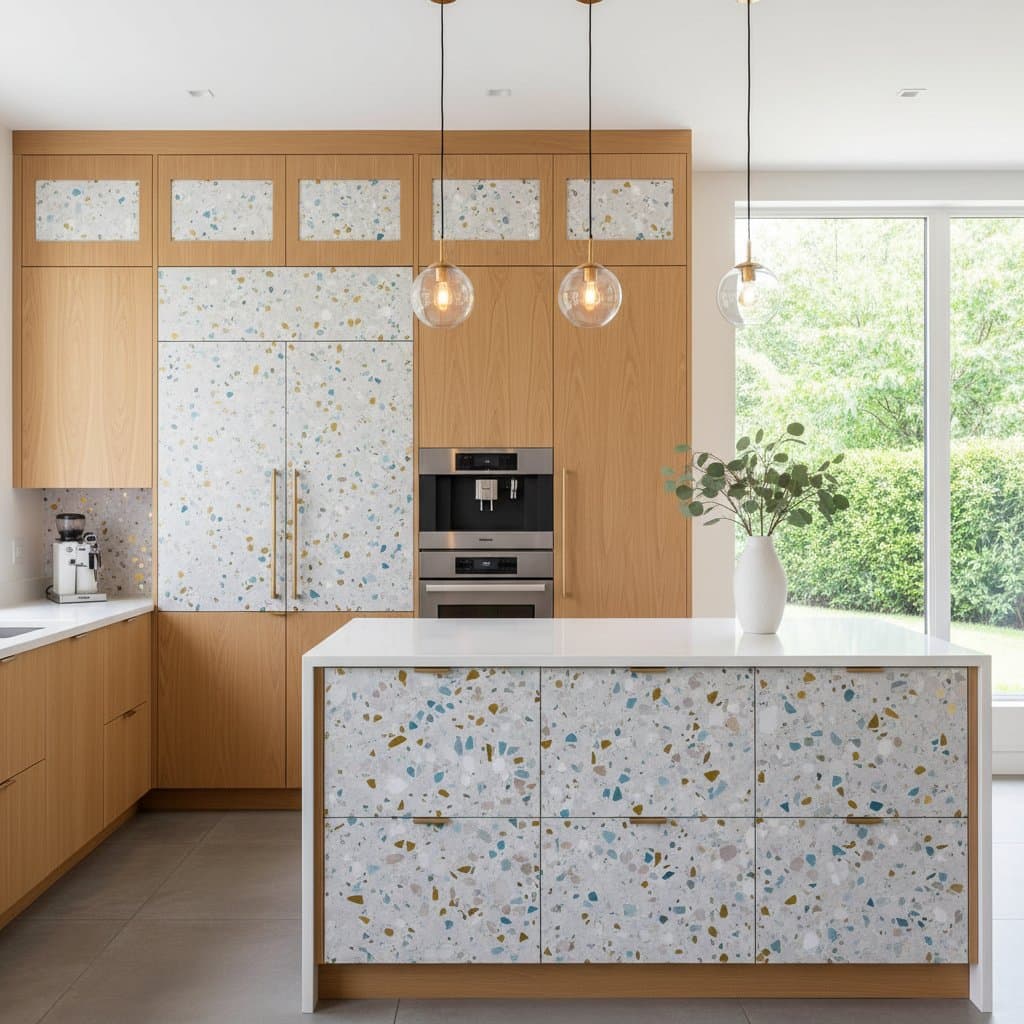
Terrazzo Inlays Elevate Cabinetry in 2026
Terrazzo returns to interior design, extending beyond floors into cabinet applications. Cabinet specialists integrate terrazzo panels within doors, drawer fronts, and structural frames, combining composite techniques with precision woodworking. This fusion yields cabinetry that appears artisanal, withstands daily use, and maintains dynamic visual interest. Stone aggregates, resin binders, and wood elements together produce a gentle iridescence that shifts under varying illumination and viewing perspectives. Experts view this method as an ideal connection between organic and manufactured substances.
Project Overview
Target Residents: Homeowners and remodelers who prioritize materials with distinctive qualities
Market Areas: Urban centers and coastal regions
Cabinet Dimensions: Ranging from 48-inch (122 cm) vanities to 12-foot (3.6 m) kitchen installations
Collaborating Firms: Studio Forma, Grain & Resin Workshop, Atelier Rho
Visual Documentation: Captured by Lexi Marron and Jonah Pike
Traditional Approaches
Earlier cabinet designs depended on standard surface treatments. Options such as painted medium-density fiberboard or plywood veneers handled coloration, supplemented by hardware and illumination. These choices provided clarity yet often resulted in monotonous appearances. "Clients sought tactile elements," noted cabinetmaker Julian Hart from Grain & Resin Workshop. "They desired warmth alongside exacting standards."
Professionals observed that lacquered flat fronts deteriorated rapidly, particularly near grips and appliance interfaces. Consistent textures failed to add dimension in well-lit kitchens or areas with heavy foot traffic.
Enhanced Implementations
Terrazzo inlays address these issues through integrated patterns, robust shielding, and individual character. Contemporary kitchen and bathroom setups feature slender terrazzo bands traversing drawer surfaces like colorful accents. Alternative installations display complete terrazzo inserts bordered by white oak or walnut. The aesthetic merges bold graphics with organic subtlety, resembling a mosaic rooted in skilled fabrication.
Images reveal how the terrazzo's dotted texture tempers the sharp lines of cabinetry. Aggregates of marble, quartz, or repurposed glass remain embedded in resin, then buffed to a soft luster. As inlays, these sections capture light in manners unattainable by painted alternatives. The minute color specks harmonize with adjacent countertops, wall treatments, and flooring.
Illumination enhances the effect significantly. Specialists position diffused under-cabinet light-emitting diodes alongside ceiling-mounted linear systems to accentuate the terrazzo's surface variations. The resin composition repels humidity, rendering it suitable beside water sources or as bathroom console fronts. Consequently, the cabinetry combines longevity with ornamental value.
Technical Specifications
- Components: Terrazzo mixtures incorporating marble or glass particles within resin, complemented by oak, walnut, or maple surrounds.
- Border Finishes: Subtle 1/8-inch (3 mm) rounded edges for fluid shifts from wood to composite.
- Hue Selection: Muted bases accented by rose, herbal green, or dark gray particles to mimic earthy stones.
- Accessories: Subtle handles or integrated grooves to preserve unbroken planes.
- Surface Treatment: Satin coatings that amplify depth and deter smudges.
- Illumination Setup: 3000 K warm-toned LED bands to accentuate terrazzo's tonal shifts.
- Eco-Considerations: Numerous workshops incorporate reclaimed fillers, reducing debris from stone processing.
Every assembly proves distinctive. "Inlays never replicate exactly," explained interior designer Mara Leto from Studio Forma. "This variability infuses the material with vitality."
Essential Insights
1. Material Integration
Terrazzo inlays foster interaction between robust timber and composite expertise. Wood patterns encase the terrazzo expanse, introducing design without artificial replication. This technique infuses artistic elements into structural assembly. Cabinet panels evolve into textured canvases beyond mere color holders.
2. Functional Resilience
Contemporary terrazzo's resin foundation provides greater reliability than unaltered stone. It withstands fractures and liquid exposure, essential for cooking and washing areas. Fabricators indicate that a 1/4-inch (6 mm) terrazzo layer adhered to plywood endures longer than veneered equivalents. The exterior conceals minor scratches or marks, suiting households with active routines.
3. Adaptable Fabrication
The approach fits custom and production-scale projects alike. Boutique operations cast terrazzo into flexible molds tailored for drawer elements, whereas volume producers acquire ready-formed sheets. Aggregate distribution adjusts from delicate to prominent based on particle dimensions. "This enables design across varied dimensions," stated Leto. "From intricate accents on bedside units to expansive kitchen focal points."
4. Seamless Harmonization
Terrazzo's multicolored composition links diverse room elements effortlessly. An inlay blending ivory and timber shades unites glossed upper cabinets with solid lower ones. Professionals frequently echo a terrazzo shade in proximate wall tiles or ledge details to establish visual cadence.
5. Upkeep Efficiency
Resin-bound terrazzo, unlike absorbent stone, requires mild detergent and rinsing. Periodic matte protectant applications sustain defense. For surrounding wood, occasional oil applications preserve hue uniformity and avert tonal discrepancies.
Everyday Integration
Residents characterize terrazzo inlay cabinets as functional art pieces. The motifs mask routine usage, while composite margins retain sharpness. Daylight filters through particles, imparting subtle radiance to kitchens. "It illuminates without relying on sheen," remarked Hart. Wood's inherent coziness paired with terrazzo's tactile quality achieves a harmony that spans modern and enduring styles.
Acknowledgments
Design Contributors: Studio Forma, Grain & Resin Workshop, Atelier Rho
Image Credits: Lexi Marron, Jonah Pike
Insights From: Julian Hart, cabinetmaker; Mara Leto, interior designer.