
Milk Paint's Ascent: A Non-Toxic Leader in Wood Finishing for 2026
Milk paint has transitioned from specialized workshops into mainstream design spaces and retail outlets. Previously viewed as a rustic option, it now leads sustainable wood finishing practices. The blend of natural components, matte finish, and breathable strength positions it as the preferred selection for furniture creators seeking vibrant, secure surfaces for both artisans and end users.
Overview
Category: Wood finishing and surface protection
Primary Advantage: Organic, non-toxic, permeable layer for wood surfaces
Main Applications: Furniture construction, cabinet installation, home refinishing projects
Emerging Style: Organic coatings that emphasize wood texture while minimizing synthetic elements
Visual Elements: Professional sample panels and completed pieces from craft professionals
Shifts in Practice and Their Implications
Solvent-heavy finishes long dominated professional woodworking for their rapid drying, even application, and wear resistance. These options often involved strong odors, complex waste management, and impermeable barriers over the wood. Milk paint reverses this approach through its composition of casein, lime, and earth-based colors, forming a mineral integration that soaks into the wood grain rather than coating it externally. This creates a surface that adapts to environmental moisture and develops a gentle patina over time.
Cabinet specialist Laura Kim from Portland Wood Studio notes, "People are tired of working with finishes that make the shop smell like a chemical plant. Milk paint gives me the color depth I want without the headaches or respirators."
Professionals value its authentic appearance, which captures nuanced shifts under various lighting conditions that glossy synthetics often mute. The non-reflective quality enhances photography, allowing the wood's natural patterns, precise joints, and overall shape to dominate.
Application Techniques
Commercial milk paints typically arrive as powders that users combine with water prior to application. The preparation resembles mixing plaster more than decanting pre-mixed paint, providing a hands-on experience. Adjust the liquid amount to vary translucency, achieving effects from sheer stains to solid opacity. Use a soft-bristled brush for application to preserve a textured, multi-dimensional result rather than a uniform gloss.
Prepare surfaces by cleaning raw wood or removing prior oils and barriers for optimal adhesion. After drying, gently abrade with a fine abrasive pad and apply a layer of plant-based wax or oil to secure the hue and introduce a faint luster. This method prevents delamination because the paint integrates structurally with the substrate.
In demanding settings like dining areas, apply a transparent water-based overcoat to boost resilience against scratches. This pairing retains the eco-friendly nature while enhancing longevity. Maintenance proves straightforward, as repairs integrate seamlessly and generated particles pose minimal health risks.
Integration into Contemporary Workshops
The expansion of boutique furniture operations and environmentally aware customers has propelled milk paint's adoption. It aligns with principles of regional sourcing and deliberate craftsmanship. Artisans benefit from disposing remnants through composting or simple rinsing, avoiding regulatory hurdles. For residential users, it combines hazard-free use with aesthetic versatility.
In kitchen settings, select from soft creams, subdued earth tones, or warm ochres. It complements metallic accents and natural stone elements in cabinetry. Bedroom installations benefit from its calming, air-permeable quality on storage units and bed frames. The subdued surface conceals smudges and evolves through use, developing character without structural failure.
Commercial projects incorporate it on retail fixtures, partition walls, and front desks. The inherent colors function as refined bases beneath artificial illumination, merging artisanal roots with sleek aesthetics.
Technical Specifications
- Core Ingredients: Milk-derived casein protein, slaked lime, earth-derived colorants
- Surface Profile: Flat to satin, vapor-transmissive mineral fusion
- Preparation Ratio: Equal volumes of powder and water
- Setting Time: Thirty minutes to one hour, influenced by ambient conditions
- Application Yield: Approximately 200 square feet per quart of prepared mixture
- Performance: Withstands dampness and light wear after protective treatment
- Maintenance: Cleans with water alone, eliminating chemical cleaners
Insights from Visual Documentation
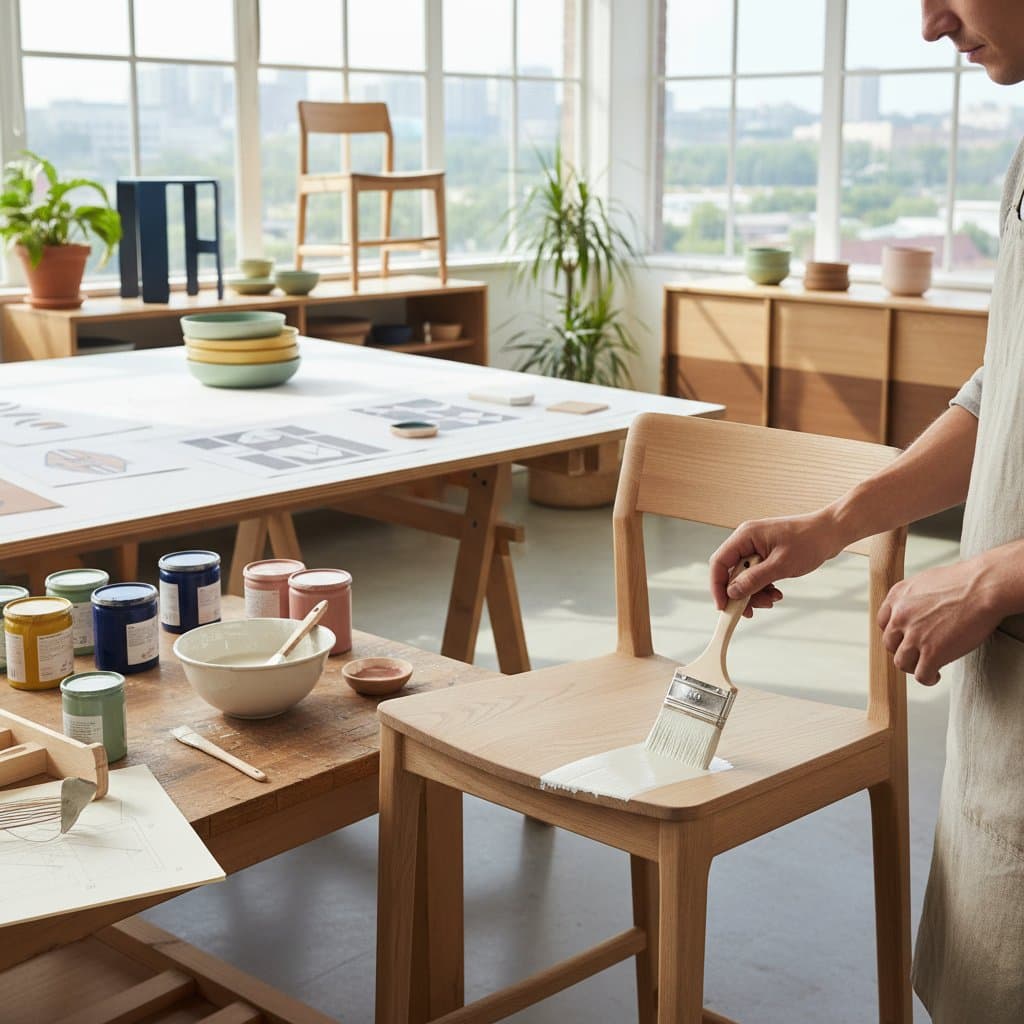
Recent evaluations feature a maple console in light sage milk paint next to a walnut seat with a clear tint. The console's supports display directional stroke patterns that interact uniquely with illumination on each angle. The seat illustrates subtle grain enhancement without coverage. An additional view captures a panel during brushing, where the substrate draws in the color in irregular streams that settle into a smooth layer upon curing.
Photographer Erin Scott documented tonal variations in natural light. These captures explain the finish's broad appeal, balancing crafted authenticity with refined execution.
Perspectives from Practitioners
Designer Mateo Ruiz of Studio Grainline states, "Every client who sees a sample ends up choosing it. It tells a story of craft and material honesty."
Restoration expert Dana Wells observes, "Old pieces finished with milk paint are easier to revive. You can recoat without stripping, and the new layer melts visually into the old."
Such insights reflect increasing appreciation for durable, restorable options over fleeting ideals.
Getting Started with Milk Paint
Begin with a modest project to explore milk paint. Prepare small quantities, as mixtures firm up within twenty-four hours. Brush on sparse layers, refining between applications using fine abrasive sheets. Conclude with a natural wax or seed oil application for enhanced protection and mild radiance.
For contemporary designs, combine with sharp-edged connections and dark metal fittings. In rustic endeavors, apply multiple shades and lightly abrade borders to expose base colors.
Essential Preparation Guide
- Combine ingredients in non-reactive vessels like glass or plastic.
- Agitate regularly to distribute color particles evenly.
- Sample on test materials, noting that hues lighten upon drying.
- Work in environments warmer than 60 degrees Fahrenheit.
- Protect the surface with organic sealants for extended service.
Practical Advantages and Forward Outlook
Milk paint represents evolving standards in wood finishing, favoring biological processes over synthetic efficiency. It yields enduring, adaptable exteriors that foster safer workspaces. The simplicity of restoration, biodegradable byproducts, and inviting aesthetics suit operations of all scales.
This approach encourages deliberate interaction with materials, where variations in each preparation enhance the creative process.