
Achieving Timeless Luxury: Venetian Plaster on Wood Surfaces
Wood combined with Venetian plaster produces surfaces that exhibit subtle depth and elegance. This technique, traditionally used on walls, now elevates cabinetry, millwork, and furniture panels. It offers a unique interplay of light and texture that surpasses the capabilities of conventional varnishes. Woodworkers and designers employ Venetian plaster to explore innovative aesthetics and material applications.
Project Overview
Project Type: Custom cabinetry and wall paneling
Finish: Hand-applied Venetian plaster over sealed hardwood
Design Firm: Studio Lume Interiors
Photographer: Aaron Keene
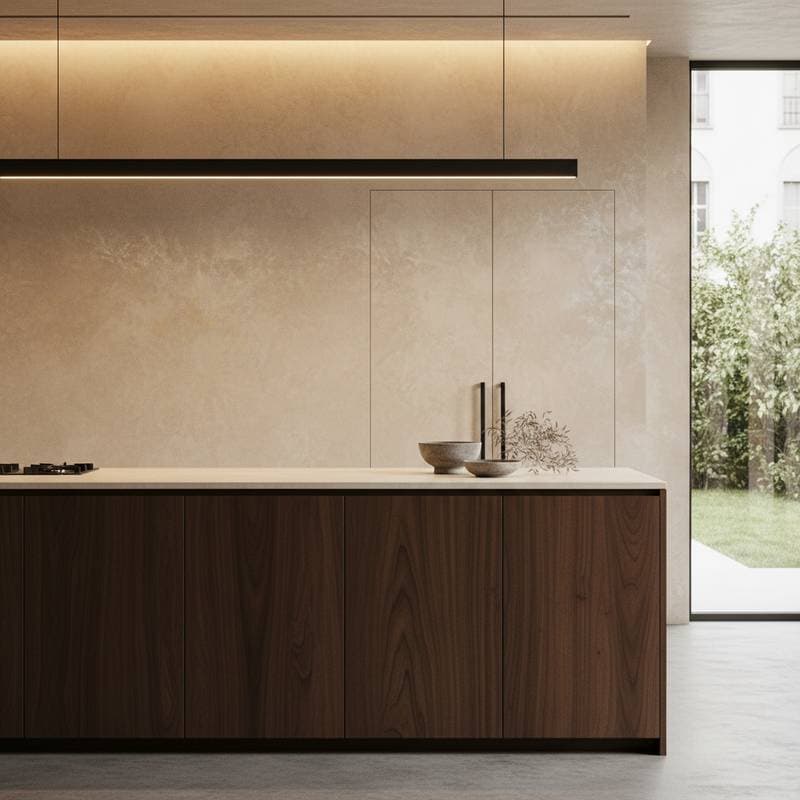
Studio Lume Interiors integrated the warm tones of walnut with the gentle luminescence of lime-based plaster. The resulting surface appears organic yet refined, altering its appearance under varying light conditions. This method converts standard wood elements into focal points within modern interiors.
Establishing the Foundation
Standard finishes such as polyurethane tend to mute the natural grain of wood, creating a uniform but uninspired look. Clients sought cabinetry that provided greater variation in depth and tactile quality. Designer Mia Lume noted, "We valued the cabinetry layout, but it required additional dimension. The surfaces did not interact effectively with light."
The design team experimented with various stains and low-sheen lacquers prior to selecting a plaster overlay. They began preparation by assessing the wood's porosity and selecting appropriate sealants to ensure uniform adhesion. Conducting tests on small samples allowed them to perfect the technique and prevent problems like uneven absorption.
Unveiling the Completed Finish
The application process commenced with thorough sanding and the application of a base sealant to regulate moisture levels. Craftsmen then applied multiple thin layers of Venetian plaster, burnishing each one to achieve a seamless consistency. This process subtly reveals underlying grain patterns while imparting a cohesive, radiant sheen.
Photographs capture the subdued matte glow on cabinet doors and fronts, complemented by brushed brass hardware and integrated LED lighting. The plaster tempers the sharpness of wood edges, transforming planar surfaces into welcoming, light-absorbing features. Its stone-like texture withstands fingerprints and routine handling, and the layered application generates subtle refractions that foster a serene ambiance.
Furthermore, the finish permits wood to expand and contract naturally, accommodating environmental fluctuations. This quality renders it suitable for high-traffic areas, where subtle evolutions contribute to the space's harmonious equilibrium.
Detailed Technical Guidelines
- Substrate: Solid walnut or oak veneer panels, pre-sealed to promote stability
- Plaster Composition: Lime-based mixture incorporating marble dust, tinted in warm gray or soft taupe shades
- Application Technique: Spread three to five thin layers using a 4-inch (10 cm) stainless steel trowel
- Protective Coating: Finish with beeswax or a natural polish to yield a satin effect and facilitate maintenance
- Maintenance Advice: Clean surfaces gently with a damp microfiber cloth; avoid harsh chemical cleaners
Permit each coat to dry completely between applications to preserve flexibility and eliminate the risk of cracking. This finish complements meticulous joinery and hidden hardware, emphasizing clean, contemporary lines.
Implementing the Technique Step by Step
Applying Venetian plaster to wood strikes a balance between tactile appeal and sophisticated refinement. Woodshops can introduce this service, which emphasizes craftsmanship over specialized machinery. Success depends on meticulous preparation, including the use of primers to secure adhesion and manage moisture.
Begin practice on modest elements, such as drawer fronts or decorative accents, to build proficiency. Select restrained color palettes like pale grays, warm sands, or subdued clays that complement the wood's inherent tones. These choices amplify the material's warmth without overwhelming it.
This finish thrives in transitional zones like entryways, kitchens, and integrated storage solutions, where fluctuating light enhances atmospheric depth. Pair it with matte stone countertops, plush fabrics, and satin-finish metals to achieve a unified aesthetic.
To apply effectively, first seal the wood surface with a penetrating primer to block excess absorption. Mix the plaster to a creamy consistency, then trowel it on in overlapping strokes for even coverage. After the final layer dries, buff lightly to reveal the subtle sheen. Test compatibility with your wood type, as denser hardwoods like oak may require an extra sealant coat.
Elevating Projects Through Layered Craftsmanship
Venetian plaster infuses modern woodworking with a sense of hands-on artistry. Whether in professional workshops or residential settings, it underscores the value of deliberate layering and gradual enhancement. This technique redefines luxury not through overt shine, but through nuanced texture and luminous interaction with light.
Adopting Venetian plaster expands creative possibilities for woodworkers, enabling finishes that endure both aesthetically and practically. It invites experimentation with natural materials, resulting in pieces that evolve gracefully over time and enrich their surroundings.