
Why Tung Oil Tops Eco-Friendly Wood Finishes Now
A growing number of woodworkers are rethinking the materials that contact their projects. Many shift from solvent-heavy finishes to natural alternatives that safeguard both wood and indoor air quality. For those seeking durability without harsh chemicals, pure tung oil emerges as the preferred option. Once reserved for fine furniture, this finish now suits everyday projects, countertops, and floors.
At a Glance
| Category | Typical Range | Notes |
|---|---|---|
| Cost per quart | $18 to $35 | Pure versions cost more but provide broader coverage |
| Coverage | 400 to 500 sq. ft. per gallon | Varies with wood density |
| Dry time per coat | 24 to 48 hours | Requires patience during curing |
| Finish type | Hand-rubbed matte to low gloss | Delivers natural warmth and depth |
What Makes Tung Oil Different
Tung oil derives from the seeds of the tung tree and hardens through oxidation rather than evaporation. This process creates a flexible, waterproof surface that resists cracking over time. Unlike synthetic finishes that form a surface film, tung oil soaks into the wood fibers and bonds internally. The outcome yields a subtle sheen that accentuates grain patterns without obscuring them.
Beyond aesthetics, pure tung oil includes no petroleum solvents or metallic dryers, rendering it non-toxic after curing. This quality proves essential in households with children, pets, or individuals sensitive to fumes. Products labeled food-safe allow application on cutting boards and salad bowls.
The curing mechanism produces a polymerized layer within the wood that repels water yet permits breathability. This adaptability handles seasonal expansion and contraction without peeling or blistering. Such properties suit solid wood countertops and furniture exposed to temperature variations.
When selecting products, seek labels specifying 100 percent pure tung oil. Steer clear of blends with mineral spirits or varnish additives to maximize environmental benefits.
Application and Performance in Real Use
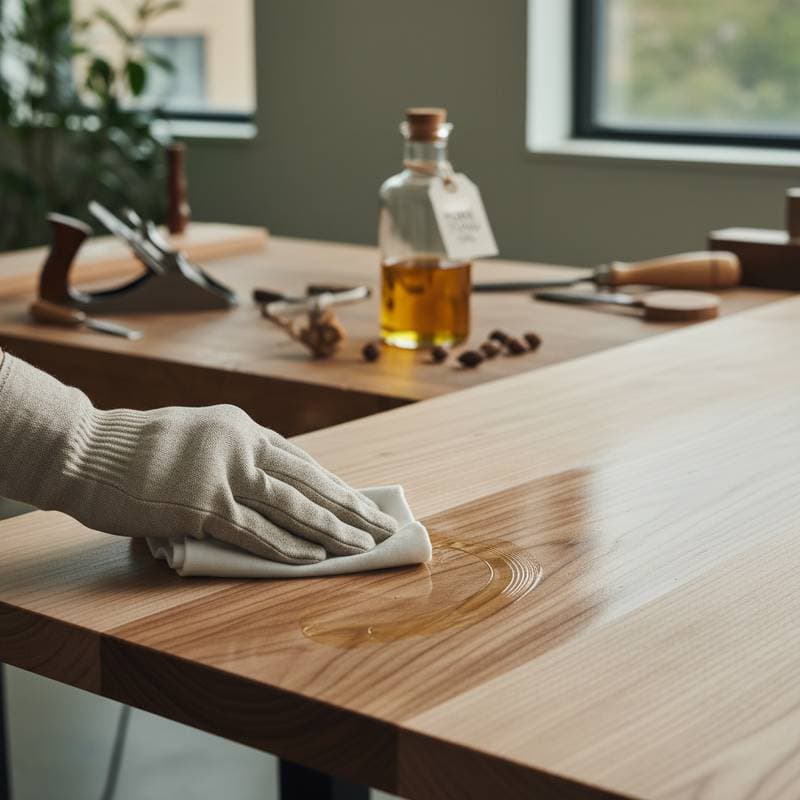
Applying tung oil demands patience yet yields superior results. Thin coats penetrate deeply, so multiple layers build the optimal finish. Light sanding between applications ensures even absorption.
Typical process:
- Sand the surface to 220 grit and remove all dust.
- Apply a thin coat using a lint-free cloth.
- Allow 24 hours for absorption.
- Repeat for three to five coats until the surface no longer accepts additional oil.
- Permit the final coat to cure for one week before subjecting it to heavy use.
One quart covers approximately 125 to 150 square feet across three coats. The result offers a satin glow rather than a high-gloss shell. For increased sheen, buff with a soft cloth or apply a beeswax topcoat.
In performance tests, tung oil withstands alcohol, mild acids, and short-term water exposure more effectively than linseed oil or shellac. It also resists the yellowing common in polyurethane finishes over time.
Schedule finishing tasks in warm, dry environments. High humidity delays polymerization and may produce a tacky residue lasting several days.
Costs and Budget Considerations
Pure tung oil carries a higher initial cost compared to blended alternatives. Prices range from $18 to $35 per quart or $70 to $120 per gallon. However, its efficient coverage offsets this, with one gallon treating 400 to 500 square feet.
Price factors:
- Purity level: Blended products cost less but often include petroleum solvents.
- Wood type: Dense species like maple require less oil than open-grained oak.
- Desired finish: Additional coats enhance color and protection but increase usage.
Money-saving strategies:
- Purchase in bulk for extensive projects.
- Use lint-free rags for application to minimize waste.
- Apply a single refresher coat annually instead of complete refinishing.
Resist the temptation of products labeled tung oil finish, which frequently conceal synthetic varnish blends. These options dry quickly but release strong odors and forfeit eco-friendly attributes.
Before buying, review the Material Safety Data Sheet. Authentic tung oil lists only tung oil as the ingredient.
DIY or Professional Use
Tung oil accommodates beginners while meeting the demands of professional workshops. Patience remains the primary requirement. Its extended curing time favors controlled indoor settings over rapid production schedules.
DIY skill check:
- Tools needed: Lint-free cloths, 220-grit sandpaper, gloves, and clean rags.
- Time commitment: Approximately 15 minutes per coat for application, plus curing periods.
- Skill level: Moderate. The method proves straightforward but demands consistency.
Opt for DIY on small furniture, cutting boards, or trim. Delegate large flooring installations or premium cabinetry to professionals, where uniform absorption and dust management prove crucial.
When engaging a professional, verify their use of pure tung oil rather than polymerized variants, unless faster drying suits your needs. Request sample boards to assess color and sheen in advance.
Store excess oil in a sealed metal container with limited air exposure. Oxygen contact thickens the oil during storage and diminishes its efficacy.
Common Mistakes to Avoid
Even seasoned woodworkers encounter pitfalls with natural finishes. Frequent errors encompass:
- Over-application: Thick layers trap uncured oil within the wood. Wipe away excess after 15 minutes.
- Inadequate preparation: Neglecting sanding or dust removal leads to uneven spots.
- Incompatible layering: Applying polyurethane over uncured tung oil results in clouding.
- Improper rag disposal: Oily cloths pose a spontaneous combustion risk. Submerge used rags in water and seal them in a container before discarding.
To remedy a sticky surface post-curing, buff gently with 0000 steel wool and add a thin fresh coat. This action stimulates oxidation.
Maintaining and Enjoying the Finish
After full curing, tung oil establishes a resilient, renewable barrier. Water forms beads on the surface, and minor scratches repair easily without full resurfacing. A simple application of fresh oil revives the shine. Gradually, the wood acquires a patina unique to natural finishes, unmatched by synthetics.
Key takeaways:
- Budget $18 to $35 per quart and allocate time for three to five coats to achieve optimal results.
- Select pure tung oil for its non-toxic, food-safe, and breathable qualities.
- Refresh annually with a light coat to sustain protection over the long term.
This finish benefits your workshop, living spaces, and health. Begin with a modest project to master its application, and consider it a lasting alternative to chemical-laden sealers.
Resources and Visual Aids
- Figure: Coverage chart comparing tung oil and blended finishes. Alt text: table showing coverage rates per gallon for pure vs mixed oils.
- Reference: ASTM D4442 for wood moisture content testing before finishing.