
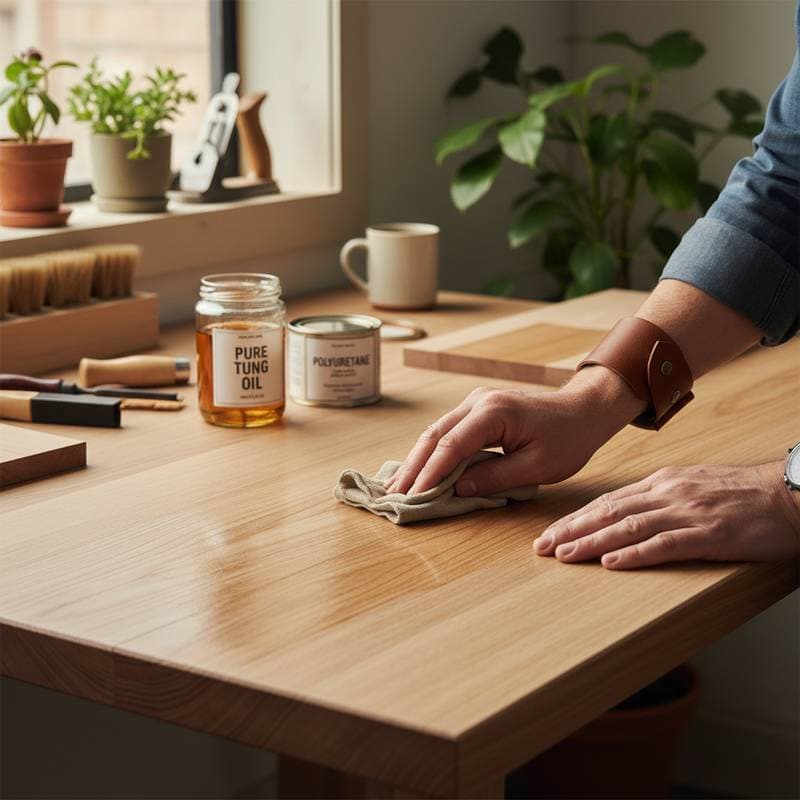
Why DIY Woodworkers Switch from Polyurethane to Tung Oil in 2026
The transition started subtly among hobbyist woodworkers. They began selecting bottles of tung oil rather than cans of polyurethane. This change extends beyond the final finish to encompass the application process, health considerations, and the overall atmosphere in the workshop at day's end.
At a Glance
Who: Home woodworkers and operators of small shops
Where: In garages, basements, and backyard setups
Size: From 12 square feet (1.1 square meters) for cutting boards to 400 square feet (37.1 square meters) for furniture pieces
Design focus: Natural finishes that provide tactile warmth
Photographer: Studio Woodgrain
The Era of Polyurethane
Polyurethane long served as the standard protective finish for wood projects. It creates a durable film that seals the surface beneath a glossy layer. While effective for protection, the outcome often appeared flat and artificial. DIY woodworkers frequently encountered issues such as brush marks, embedded dust particles, and persistent chemical odors during and after the curing period.
"I appreciated the shine, but the smell was unbearable," noted Brian Keller, a hobbyist who constructs walnut side tables in his garage. "It seemed as if I required protective gear for an item crafted by hand."
These challenges prompted many to seek alternatives that preserved durability without compromising the sensory experience of woodworking. Polyurethane's quick application suited fast-paced production, yet it distanced users from the wood's inherent qualities. Over time, this disconnect led to widespread experimentation with penetrating oils.
Embracing Tung Oil
Tung oil emerges as a milder option that penetrates the wood grain rather than forming a surface barrier. This absorption enhances the wood's natural depth and imparts a hand-rubbed appearance. The resulting surface retains a living quality, free from plastic-like rigidity. When light strikes a tung oil-treated board, the grain's subtle patterns remain visible, unobscured by harsh reflections.
Workshops adopting tung oil report a more serene environment. Proper ventilation remains essential, yet the absence of intense chemical fumes improves comfort. Cleanup involves a simple rag and minimal mineral spirits, avoiding extensive solvent use. The finish develops gradually through multiple coats, promoting patience and attention to detail in the crafting process.
Professional designers value tung oil's alignment with the resurgence of organic materials in woodworking. "The finish fosters a genuine connection," explained cabinetmaker Leah Ramos of Oakline Studio. "It allows you to see and touch the wood directly, reinforcing the purpose behind the creation."
This approach suits projects where aesthetic authenticity matters as much as protection. For instance, on dining tables or shelving units, tung oil highlights the wood's figure without overpowering it. Home woodworkers find that the oil's subtlety elevates everyday items into heirloom-quality pieces.
Application and Material Specifications
- Material: Pure tung oil at 100 percent concentration or polymerized variants for reduced drying time
- Application: Apply by wiping with lint-free cloths; wait 30 minutes before buffing away excess
- Sheen: Achieves low to medium gloss based on coat quantity
- Maintenance: Renew every 12 to 24 months for frequently handled items
- Safety: Store oily rags in airtight metal containers to avoid spontaneous combustion risks
- Typical cost: Ranges from 25 to 40 dollars per quart (0.95 liter), sufficient for approximately 200 square feet (18.6 square meters)
These specifications attract builders of small shops who prioritize reliable results without specialized equipment. One quart handles multiple undertakings, such as several cutting boards or a complete chair set. Proper storage in a cool, dry area extends the oil's usability for years, minimizing waste.
To apply effectively, begin with clean, sanded wood at 220 grit for optimal absorption. Work in thin layers to prevent pooling, and allow each coat to cure fully over 24 hours. This method ensures even penetration and a uniform patina that matures with time.
Essential Insights for Implementation
Layout and workflow: Tung oil integrates seamlessly into unhurried shop routines. Apply it directly on workbenches without the need to protect surrounding areas extensively.
Storage: Compact bottles fit easily on shelves and tolerate temperature fluctuations better than bulky polyurethane containers.
Lighting: Paired with warm LED bulbs or natural daylight, tung oil accentuates the wood's inherent hues. Maple takes on a golden tone, while cherry shifts to rich amber shades.
Durability: Once fully cured, it withstands water and alcohol exposure effectively, although it lacks polyurethane's extreme hardness. Additional coats on high-traffic surfaces like tabletops provide adequate resilience.
Repairability: Minor scratches repair easily through light sanding followed by a fresh oil application, eliminating the need for complete refinishing.
These attributes make tung oil ideal for versatile projects. Woodworkers report fewer frustrations during finishing, allowing more focus on design and assembly. The oil's forgiving nature encourages beginners to experiment without fear of irreversible errors.
Nurturing Wood Over Time
Adopting tung oil alters the ongoing care of wooden creations. Rather than applying a permanent seal and moving on, owners engage in periodic maintenance that revitalizes the surface. This practice strengthens the bond between creator and object, turning upkeep into a rewarding extension of the craft.
The departure from polyurethane represents a deliberate choice for greater control and sensory pleasure. A tung oil finish welcomes interaction through its soft tactility. It interacts gently with light, revealing the wood's character. Such surfaces signal to visitors and users alike that thoughtful craftsmanship endures in contemporary making.