
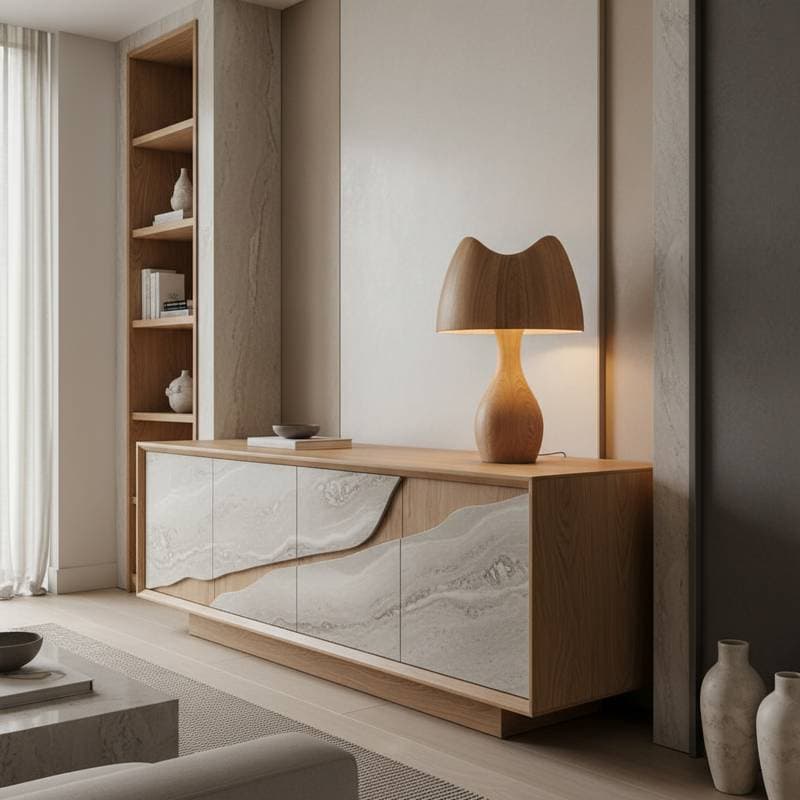
Venetian Plaster: Wood's Luxe Trend for 2026
Venetian plaster moves from walls to wood surfaces, delivering luminous, stone like depth to furniture, cabinetry, and millwork. Designers embrace this finish because it softens hard edges, introduces subtle movement, and highlights natural grain patterns. The appearance remains understated yet richly detailed, providing a tactile glow that evokes handcrafted timelessness.
The appeal extends beyond visuals. When applied properly, Venetian plaster protects surfaces and creates subtle light interactions. For woodworkers and finishers, it expands creative possibilities by blending traditional craftsmanship with modern luxury.
At a Glance
Who uses it: Furniture makers, interior designers, and custom millwork shops
Where it appears: Kitchen cabinets, paneling, table bases, and built in shelving
Typical size: Projects range from small accent pieces to full height wall panels
Design teams leading the trend: Studio Lumo, Atelier Corvo, and Harris & Finch Design
Photography: Courtesy of each studio's in house teams
Before
For decades, wood finishes followed familiar routes. Stains, oils, and lacquers prevailed due to their clarity and durability. The emphasis centered on enhancing grain patterns rather than altering them. Although these finishes stay relevant, some designers view them as restrictive.
"Clients wanted something that felt aged and luminous, not just glossy," said Megan Harris of Harris & Finch Design. "Traditional stains can flatten color. We wanted dimension, something that caught light differently."
That pursuit led artisans to adapt plaster methods originally designed for walls and ceilings. The main hurdle involved modifying materials for mineral surfaces to adhere to wood, which expands and contracts naturally. Initial trials resulted in cracks or loss of luster. Progress occurred through the use of flexible base coats and ultra thin plaster layers, completed with precise polishing.
After
Current advancements in Venetian plaster for wood address those initial challenges. Applied in micro layers, it forms a seamless covering that flexes with the wood while mimicking polished stone's light reflection. Photographs capture soft tonal clouds across cabinet faces or along curved console sides. The outcome appears both artisanal and organic.
This finish enables designers to harmonize diverse materials. A pale oak piece coated in tinted plaster integrates seamlessly with limestone or concrete elements. Dark walnut gains renewed vitality from a graphite or umber plaster application, with pores gently filled yet visible.
"It is about restraint," said Luca Corvo of Atelier Corvo. "You do not hide the wood, you veil it. That tension between surface and structure creates luxury."
Light behaves uniquely on these surfaces. Beneath sconces or recessed fixtures, plastered wood emits a glow rather than a harsh shine. This diffusion softens edges and enhances depth in compact spaces.
Design Details
- Base layers: Flexible bonding primers that secure the plaster and accommodate wood expansion
- Finish coats: Lime or marble based Venetian plaster, spread in two to four micro layers
- Tools: Stainless trowels and burnishing paddles, along with fine sanding pads for polishing
- Sealers: Breathable waxes or matte topcoats to block moisture
- Color range: Soft neutrals, mineral grays, bone, ochre, and muted metallics
- Sheen options: From chalky matte to subtle satin, controlled by burnishing pressure
- Maintenance: Gentle dusting and periodic wax applications, avoiding heavy solvents
Each step enhances the tactile essence. Multiple thin applications produce natural variations that suggest movement. When light skims an edge, it discloses the artisan's touch without evident tool marks or joints.
The Appeal of Texture and Light
Venetian plaster on wood captivates through its balance of matte texture and reflective depth. Unlike paint that overlays the surface, plaster integrates fully, forming a mineral enriched continuum. Polished sections mimic stone behavior while retaining warmth.
Designers leverage this dynamic to establish focal areas. In kitchens, plastered cabinet panels capture daylight and ease transitions between appliances and millwork. In living areas, a plaster coated mantel or table base delivers understated drama free of excess decoration.
Lighting plays a pivotal role. Combining sources accentuates nuances. A pendant lamp angled toward a plastered sideboard uncovers shifting tones that evolve daily. Recessed overhead lights emphasize the gentle sheen, making the surface seem dynamic.
Application Insights for Woodworkers
Finishers exploring this method should prioritize preparation and patience. The base requires smoothness, sealing, and stability. Surface irregularities or seams show through the thin plaster.
A standard process follows these steps:
- Surface prep: Sand to fine grit, seal knots, and apply flexible primer.
- Base coat: Spread a neutral plaster mixture for bonding. Allow complete curing.
- Tinted coats: Add one or two colored plaster layers, troweling in crossing patterns for texture.
- Burnishing: After drying, polish lightly with stainless steel or microfiber tools to expose depth.
- Sealing: Apply wax or matte acrylic for stain resistance.
Coats remain thin, about one sixteenth inch or 1.5 mm each, limiting overall buildup. Total thickness seldom surpasses one eighth inch or 3 mm.
Furniture demands attention to edges and corners. Rounded shapes resist chipping better. For cabinetry, finishing removable panels simplifies the work and minimizes installation risks.
Cost and Durability
Costs fluctuate by location and intricacy, typically spanning fifteen to thirty dollars per square foot or 160 to 320 dollars per square meter. This accounts for materials and expert labor. The price mirrors the effort in layering and refining.
Sealed properly, the finish withstands minor scratches and supports spot repairs via rewaxing or buffing. Its breathability prevents peeling or bubbling. Vertical or decorative applications suit it best, though high traffic tops or moist zones demand caution.
Why Designers Love It
Venetian plaster aligns with demand for natural, low VOC materials that showcase craftsmanship. It connects minimalist modernity with classic opulence. "Clients want calm textures that still feel special," said Maya Lumo of Studio Lumo. "Plaster provides that depth without pattern overload."
The method supports tone on tone interiors. Spaces build on layered neutrals rather than bold contrasts. Plastered oak walls in warm gray pair with stone floors, linen fabrics, and brushed metal accents, united by texture over color.
Three Projects Defining the Look
1. Urban Loft Kitchen by Harris & Finch Design
In this open plan loft, walnut cabinets gained a fine plaster wash with graphite tint. Images reveal smooth panel transitions and delicate highlights on drawer edges. The coating ties the pantry wall and island together, muting visual clutter amid glass and steel.
"The plaster softened the industrial shell," Harris said. "It gave warmth without gloss, and the light shifts through the day keep it interesting."
2. Atelier Corvo's Curved Console
Atelier Corvo coated a curved oak console base with pale limestone plaster. The texture resembles honed stone while remaining suitable for homes. A waxed satin sheen reflects candlelight gently.
Corvo said, "We wanted the piece to feel carved from one material, even though it is wood underneath. The plaster finish tricks the eye but keeps the warmth."
3. Studio Lumo's Plaster and Wood Wall Panels
Studio Lumo finished maple panels, framed in brushed brass, with Venetian plaster. Three layers of soft beige, troweled in varied directions, create the effect. Under recessed lights, the wall glows and links to nearby travertine.
Studio photos depict the panels as fabric like, with subtle tones responding to viewer movement.
Key Takeaways
- Venetian plaster imparts stone like depth to wood while maintaining warmth.
- Thorough preparation and flexible primers avoid cracking or separation.
- Strategic lighting unveils the finish's tonal variety and sheen.
- It excels on cabinetry, millwork, and furniture bases over countertops.
- Expenses reflect artisanal skill yet deliver enduring value via durability and distinction.
Living with the Finish
Installed pieces need little maintenance. Dust lightly and renew wax periodically to revive luster. Over years, faint variations emerge, akin to patina on aged limestone, enhancing character.