
How Terrazzo Inlays Elevate Wood Cabinets to Artistic Masterpieces
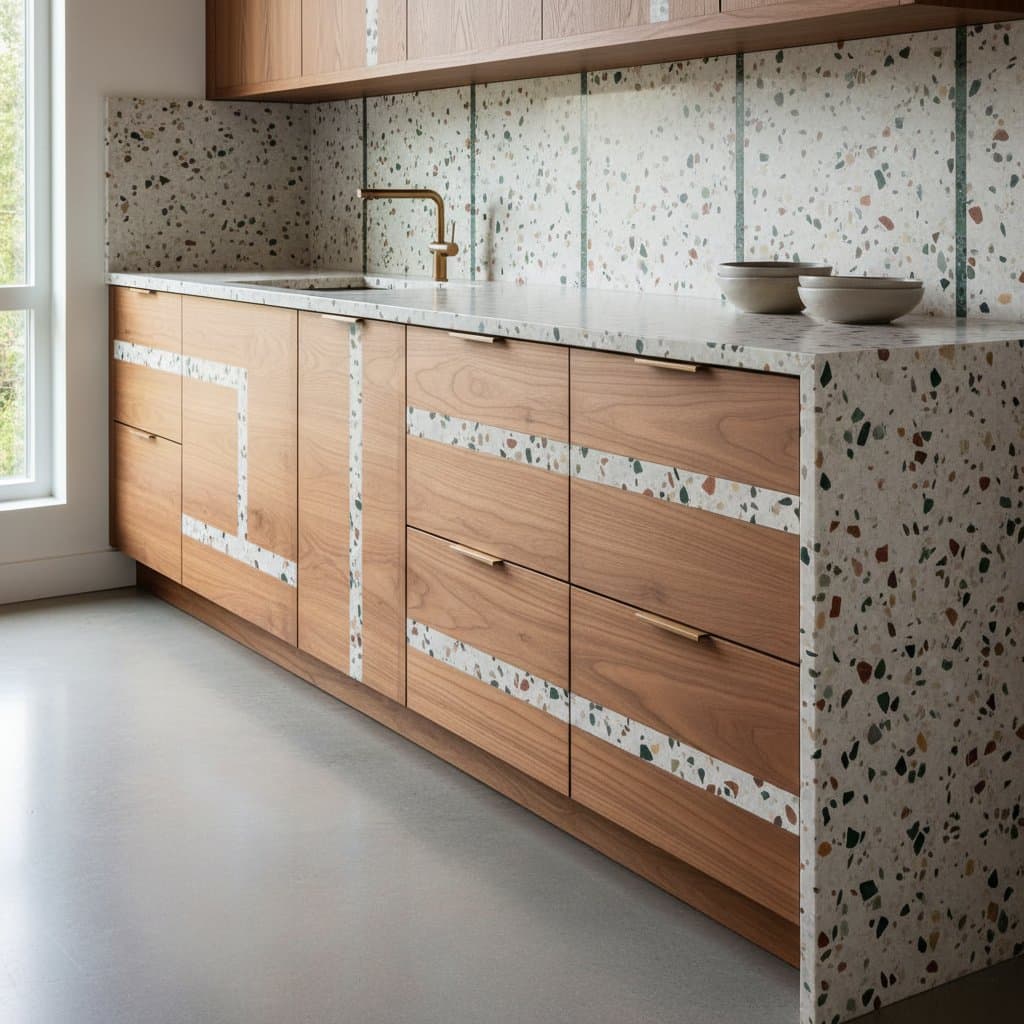
Terrazzo inlays represent a significant evolution in cabinet design. They combine precise craftsmanship with striking material contrasts, transforming standard cabinetry into elements of architectural artistry. Designers employ terrazzo to introduce patterns, sharpen edges, and form resilient surfaces that convey both warmth and permanence.
This technique extends beyond mere aesthetics. It redefines interactions among storage, illumination, and everyday use in kitchens, bathrooms, and bespoke furniture. The sections below detail the shift, its importance, and practical ways to incorporate terrazzo inlays for superior cabinetry.
Quick Overview
Target Audience: Homeowners who appreciate tactile elements and bespoke workmanship
Ideal Settings: Urban or coastal homes emphasizing natural light and tones
Scale: From small 48-square-foot vanities to expansive 180-square-foot kitchen installations
Notable Studios: Studio Alden, Formed Woodworks, Atelier Luno
Visual Contributors: Photographers Emily Raines and Marco Perri
Designers emphasize preserving the distinct qualities of stone and wood. The outcome appears unified while highlighting deliberate construction.
Traditional Limitations
Conventional wood cabinets often lack visual distinction. While grain, color, and finish provide coziness, they tend to merge into uniformity. Flat wood surfaces can dim light and create a sense of visual weight in kitchens or bathrooms. Countertops typically remain separate from the cabinet structure.
One homeowner noted, "We loved the texture of oak, but everything felt too similar. The eye had nowhere to rest." Terrazzo inlays address this monotony.
In past designs, stone appeared as full slabs or minor tiles, with little integration. Embedding terrazzo directly into wood faces delivers contrast and accuracy unattainable through standard joinery.
The Enhanced Result
Integration starts with thoughtful layout. Designers view terrazzo as both foundational and finishing. In kitchens, narrow terrazzo bands outline drawer fronts or trace counter edges, capturing light for defined contours. In bathrooms, terrazzo panels supplant standard door inserts, converting utility into prominent features.
Illumination interacts uniquely with each material. Wood diffuses light softly, whereas terrazzo disperses it dynamically. This pairing moderates brightness and depth. Strategic under-cabinet LEDs at 3000K illuminate terrazzo aggregates subtly, serving as understated emphasis.
Practical advantages emerge in storage. Terrazzo's strength suits interior shelving or handle areas. It bolsters frequently contacted zones like drawer edges, preserving sharpness and minimizing wood abrasion.
Opt for matte or honed finishes over glossy ones. Such choices promote a livable, organic feel. In images, these cabinets exhibit dimension and flow without overshadowing adjacent elements, fostering serene yet engaging environments.
Key Design Specifications
- Material Pairing: Terrazzo embedded in walnut, white oak, or ash; inlay depth typically 0.5 inch (13 millimeters).
- Edge Finishing: Mitered corners aligned flush with wood grain, secured by clear matte resin.
- Illumination Setup: 3000K warm white LEDs positioned 2 inches (51 millimeters) from edge for uniform diffusion.
- Hardware Options: Concealed finger pulls or terrazzo-tipped knobs to maintain sensory cohesion.
- Storage Approach: Adjustable shelves backed by terrazzo for resilience and simple upkeep.
- Protective Coatings: Low-VOC oil for wood; breathable sealer for terrazzo to avoid discoloration.
- Cost Estimate: $250 to $450 per linear foot ($820 to $1475 per meter), varying by terrazzo intricacy and labor.
These components foster harmony between manual skill and modern tools. CNC machines ensure accurate cuts, followed by manual sanding and application.
The Broader Impact
Terrazzo inlays alter perceptions of cabinetry. Surfaces, forms, and techniques now interweave distinctly. Terrazzo aggregates and wood grains narrate complementary tales under shifting light.
Professionals call it anchoring organic forms with structural intent. Terrazzo provides substance and steadiness; wood retains inviting quality. The tactile shift at material boundaries underscores the artisan's vision.
Sustainability benefits arise too. Terrazzo often incorporates recycled marble, glass, or quartz in cement or resin binders. Paired with ethical wood sourcing, it yields durable, refinishable pieces that reduce waste.
Implementing Terrazzo Inlays in Your Space
Custom workshops are not essential; scale the method with preparation.
Select Prime Areas
Focus on contact-heavy spots like drawer fronts, vanity splashes, or island sides. Maintain a 70:30 wood-to-terrazzo proportion to let natural hues prevail.
Account for Mass and Stability
Terrazzo weighs about 12 pounds per square foot (59 kilograms per square meter). Strengthen hinges and slides accordingly. Back thin panels with solid plywood for support.
Harmonize Patterns and Directions
Align wood grain horizontally on drawers and vertically on doors. Coordinate terrazzo chips with room stones or metals. Soft gray suits pale oak; warm beige enhances walnut.
Manage Surface Sheen
Steer clear of intense polish. Subtle gleam defines the appeal. Honed terrazzo complements satin-oiled wood. Clean both uniformly with microfiber for even appearance.
Integrate Lighting Effectively
Incorporate LED channels in upper cabinet recesses. A 0.5-inch (13-millimeter) space produces a levitating illusion. Target 8 to 10 lumens per inch (315 to 394 lumens per 25 millimeters) for supportive radiance.
Ensure Simple Upkeep
Reseal terrazzo biennially and oil wood semiannually. Neutral agents safeguard matte tones. Minor marks blend into the material's inherent character.
Insights from Designers
Studio Alden applied inlays to delineate kitchen areas. Lead designer Mara Chen stated, "We wanted the counter to flow into the cabinet rather than sit on top. Terrazzo gave us that continuity without losing warmth."
Formed Woodworks limited embeds to drawer fronts. Lead craftsman Luis Ortega explained, "It is a functional accent. The terrazzo handles wear better where you grab most often."
Atelier Luno merged terrazzo with oak in a compact galley kitchen. A slim ribbon between drawers emerged. Designer Nia Roberts observed, "That single line catches light from the window and makes the space feel wider."
These examples illustrate versatility, from discreet edging to comprehensive panels.
Fabrication Essentials
Woodworkers incorporating terrazzo must manage adhesion, movement, and flatness.
- Adhesion Method: Flexible epoxy accommodates slight shifts; rigid wood glue risks fractures.
- Movement Allowance: 1-millimeter gap at edges, filled with clear resin for environmental adaptation.
- Flatness Achievement: Joint sanding with 220-grit for seamless planes prior to sealing.
- Cutting Techniques: Wet saws or diamond blades minimize damage; route wood recesses post-terrazzo measurement.
- Sealing Sequence: Penetrating agents first, followed by oils to eliminate joint shadows.
These practices safeguard durability and tactile integrity.
Potential Drawbacks
Terrazzo inlays enrich aesthetics but demand foresight. Expenses exceed plain wood, and production extends timelines due to templating and fitting. Limit to highlights on rushed projects.
Added weight requires verified track capacities for extended drawers. Maintenance involves routine renewal; light buffing revives terrazzo, while wood toning maintains uniformity.
Functional Enhancements
- Terrazzo bases in sink-adjacent pull-outs resist dampness.
- Internal ledges in uppers support heat-resistant items like mugs.
- Dedicated slots for knives or utensils simplify cleaning.
- Back panels on open shelves add depth.
These integrations boost utility while reinforcing material synergy.
Optimal Applications
Terrazzo excels in contrast-driven contexts.
- Kitchens: Handle integrations, splash transitions, island terminations.
- Bathrooms: Vanity faces, mirror surrounds, water-proximal shelves.
- Furniture: Credenzas, consoles, or benches serving dual aesthetic roles.
Balance proportions to ensure enduring rather than fleeting appeal.
Essential Lessons
- Terrazzo inlays fuse resilience with artistry in cabinetry.
- They optimize light response and surface endurance.
- Material fusion generates rhythms absent in uniform wood.
- Sealing, reinforcement, and finish alignment secure lasting performance.
- Modest uses like pulls or lines yield notable effects.
As Mara Chen remarked, "When materials meet cleanly, you feel the precision every day." This daily assurance justifies the commitment.
Everyday Enjoyment
Once installed, these cabinets invite interaction. The subtle material dialogue enhances routines, from meal prep to morning preparations. Over time, the design matures, revealing new facets with each season's light.