
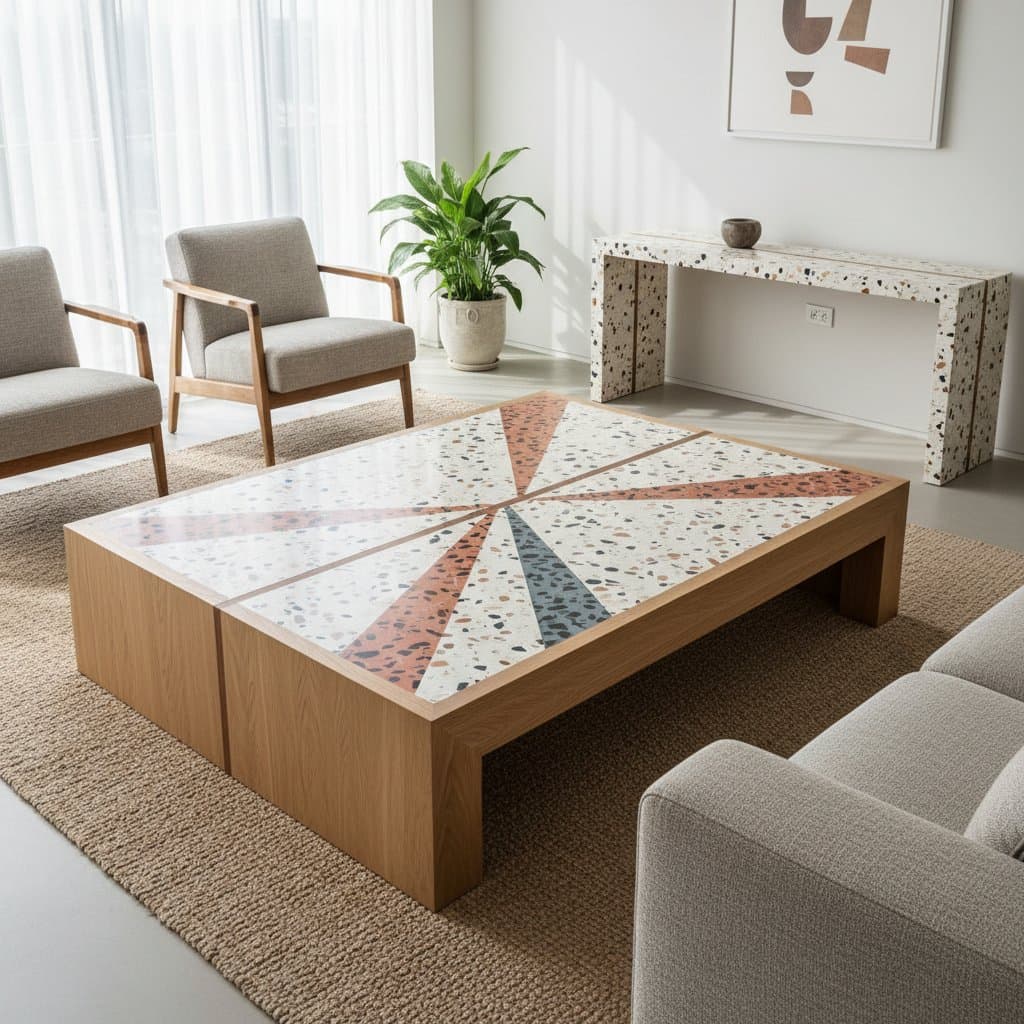
Terrazzo Inlays: The Dominant Force in 2026 Furniture Design
Terrazzo returns to the spotlight, now embedded directly into contemporary wood furniture instead of vast floor installations. Designers harness its distinctive speckled patterns and inherent mineral richness to introduce striking contrast, enhanced durability, and meticulous craftsmanship to streamlined forms. These pieces evoke a sense of heritage while embracing innovation, seamlessly uniting time-honored techniques with advanced manufacturing processes.
At a Glance
Type: Emerging furniture design trend
Focus: Integration of terrazzo inlays within wood-based structures
Applications: Coffee tables, credenzas, console units, benches, and cabinetry
Design Teams: Boutique studios and specialized custom fabrication workshops
Materials: Aggregates from recycled marble, quartz, and glass embedded in resin or cement matrices; paired with select hardwoods like oak, ash, walnut, and cherry
Photographer: In-house documentation from collaborating design collectives
The Shift from Simplicity
Traditional wood furniture emphasized sleek, monolithic forms with seamless surfaces that prioritized purity over complexity. Such designs projected quiet elegance but frequently fell short in providing sensory engagement or dynamic visual elements. Designers and clients alike sought ways to infuse personality and depth without resorting to elaborate embellishments or cumbersome overlays.
Furniture artisan Lila Grant observed, “Clients kept asking for warmth, but they also wanted something graphic. It pushed us to think about texture differently.”
The core challenge lay in incorporating details that appeared integral and lasting, rather than superficial additions that might detract from the piece's integrity.
Embracing Integrated Innovation
Terrazzo inlays address this need by embedding fragmented stone composites directly into the wood substrate. Artisans precisely mill shallow channels into surfaces such as tabletops, cabinet doors, or structural panels, then pour in tailored terrazzo formulations. After curing and fine polishing to a level plane, the inlay integrates fully, enhancing both aesthetics and functionality.
Visual examples include walnut credenzas featuring subtle terrazzo veins tracing across drawer faces, or compact side tables with radial terrazzo medallions outlining edges like celestial maps. The interplay between the wood's subtle matte grain and the terrazzo's shimmering particles creates evolving light effects throughout the day, adding vitality to static forms.
Grant noted, “The terrazzo breaks up large surfaces, so the piece reads lighter. It also protects the top from wear where hands and cups land most.”
This dual role in ornamentation and utility positions terrazzo inlays as a cornerstone of forward-thinking furniture lines, where every element serves multiple purposes.
Technical Specifications
- Material Combinations: Neutral resin-based terrazzo with white aggregates complements honey-toned oak, while darker quartz chips enhance the subtle tones of ash wood.
- Inlay Depth: Recesses measure approximately 0.25 inch (6 millimeters), providing sufficient thickness for robust polishing without adding undue mass to the overall piece.
- Edge Treatments: Subtle chamfering on wood borders frames the terrazzo, preventing abrupt transitions and ensuring a cohesive profile.
- Aggregate Sizing: Particle diameters vary from 0.125 inch (3 millimeters) for intricate patterns to 0.5 inch (13 millimeters) for pronounced textural impact.
- Eco-Friendly Practices: Studios prioritize recycled sources like marble offcuts and glass cullet, minimizing environmental footprint and promoting circular material use.
- Upkeep Protocols: Finished surfaces withstand routine buffing and application of natural wax sealants, preserving smoothness and luster over extended periods.
The exacting tolerances for seamless inlays align with the rise of computer numerical control (CNC) tools in woodworking. These technologies enable consistent replication of intricate motifs, bridging artisanal skill with scalable production.
Expanding on this, many workshops now incorporate variable-speed routers to navigate wood grains without splintering, followed by vacuum-assisted pouring to eliminate air pockets in the terrazzo mix. This results in flawless bonds that endure thermal fluctuations and daily handling.
Broader Implications
Terrazzo inlays exemplify the evolving landscape of material hybridization, where classical woodworking joins innovative composites. For creators, they unlock opportunities to manipulate spatial dynamics and compositional balance in novel ways. Homeowners benefit from furnishings that anchor interiors with reliability and minimal upkeep demands.
The material's inherent hardness and thermal neutrality guard against common damages like beverage rings or surface abrasions that plague untreated woods. Its reflective polish further amplifies ambient light, ideal for sunlit rooms or those depending on diffused natural sources over intense artificial lighting.
Designer Mateo Ruiz commented, “Clients want pieces that work for a long time. Terrazzo gives a hard-wearing top without losing the warmth of wood underneath.”
In practical terms, this trend responds to growing demands for versatile, long-lasting items that adapt to evolving lifestyles, from urban apartments to expansive family homes.
Implementing the Trend
Adapting terrazzo inlays requires consideration of scale and context, allowing for personalization from understated accents to comprehensive applications.
- Begin Modestly: Incorporate a single terrazzo element into a nightstand or serving tray. Opt for a transparent resin binder to maintain lightness and translucency.
- Coordinate Hues: Select aggregate colors that harmonize with existing elements like tile floors or wall treatments, fostering spatial unity.
- Align with Wood Characteristics: Pair cool-toned gray aggregates with ash for contrast, or warm earth tones with walnut to enhance inherent richness.
- Apply Finishes Thoughtfully: Employ a satin sealant on wood sections to offset the terrazzo's subtle sheen, emphasizing material distinctions without overwhelming brightness.
Specialized suppliers now offer starter kits with portioned mixes and instructional templates, democratizing access for hobbyists and small-scale makers. For larger projects, consulting with local fabricators ensures compatibility with specific wood species and design visions.
Essential Insights
- Terrazzo inlays infuse wood furniture with vibrant color variations, tactile variety, and superior resistance to everyday use.
- They fuse heritage craftsmanship with digital tooling, broadening possibilities for bespoke creations.
- Enhanced durability translates to reduced long-term care, preserving appearance and value.
- Customizable in size and coloration, these inlays allow for truly individualized expressions.
This methodology appeals to those desiring furnishings that merge unadorned elegance with intentional detailing. Moreover, it advances eco-conscious practices by repurposing industrial byproducts into enduring design features.
Credits
Design Contributors: Lila Grant Studio, Mateo Ruiz Workshop
Visual Documentation: Studio Grant Collective, Ruiz Documentation Group
Terrazzo inlays elevate wood furniture by weaving resilience with refined artistry. They transform basic silhouettes into multifaceted heirlooms, equipped for rigorous routines and timeless allure.