
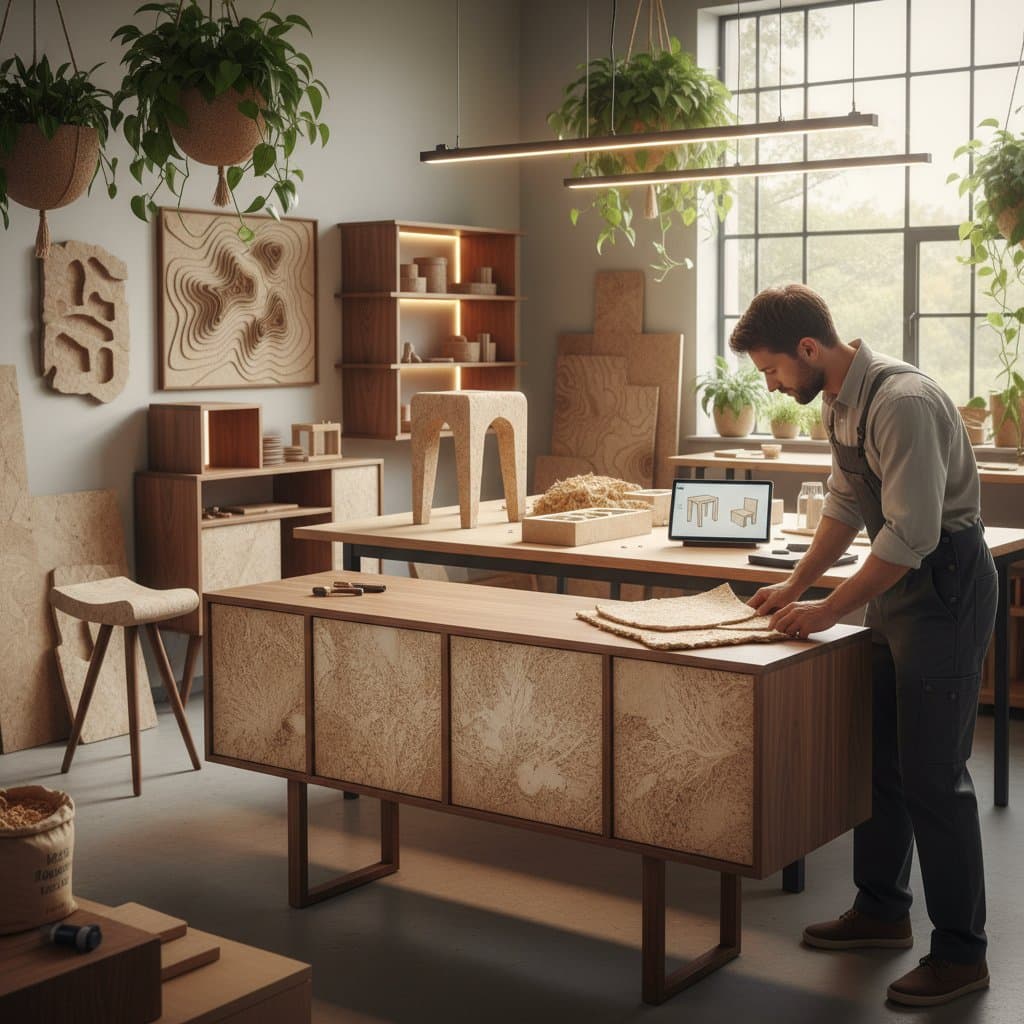
Mycelium: The Sustainable Alternative to Wood in 2026
A growing number of woodworkers turn to mycelium-based materials as substitutes for traditional lumber. The appeal lies in its production method. Mycelium, the root structure of fungi, grows into solid panels, molded furniture parts, and acoustic tiles using agricultural waste. Production costs less than hardwood in many regions. This approach eliminates deforestation from the supply chain. Woodworkers exploring sustainable materials for shops or design studios find this living composite transforms fabrication practices.
At a Glance
| Factor | Mycelium Composite | Traditional Wood |
|---|---|---|
| Material Source | Grown from fungal root networks and plant waste | Harvested from trees |
| Average Cost | $3 to $6 per sq. ft. | $5 to $14 per sq. ft. |
| Growth or Harvest Time | 1 to 3 weeks | 15 to 50 years |
| Density | 10 to 25 lb per cu. ft. | 25 to 45 lb per cu. ft. |
| Ideal Uses | Furniture cores, panels, decorative elements | Structural framing, cabinetry, flooring |
What Mycelium Is and Why It Matters
Mycelium functions as a natural glue that binds organic fibers such as sawdust, hemp hurd, or straw. In controlled molds, it forms a dense, lightweight material that replaces plywood, MDF, or foam cores. The growth process uses minimal energy. The result proves biodegradable and compostable.
Woodworkers appreciate mycelium because it forms near-finished shapes without extensive machining. Consider a chair seat grown directly in a mold, then trimmed and sealed with plant-based resin. This method reduces waste by nearly 80 percent compared to cutting from solid boards. The texture mimics cork or softwood. It accepts stains, veneers, and laminates effectively.
Why It Works
The fungal network produces chitin and polysaccharides that bond fibers naturally. This internal matrix provides surprising strength. Tests from material research centers indicate compressive strengths around 100 psi for dense composites. Although lower than oak or maple, this suits furniture cores, art panels, and acoustic products.
Mycelium aligns with sustainability goals. Each cubic foot sequesters roughly 3 pounds of carbon that would otherwise release into the atmosphere from burned or decayed agricultural waste. Builders seeking carbon-neutral certification find this feature particularly valuable.
Action Step
Order small ready-grown panels from suppliers such as Ecovative or MycoWorks. Experiment with cutting, sanding, and finishing techniques. This hands-on approach reveals material behavior before scaling to production.
How Mycelium Furniture Is Made
A typical mycelium furniture component starts with a mixture of agricultural waste like corn stalks or sawdust combined with a nutrient base. The blend undergoes sterilization, inoculation with fungal spores, and packing into a mold. Over one to three weeks, mycelium grows through the substrate and binds it into a solid mass. Drying or baking halts growth and stabilizes the form.
Step-by-Step Overview
- Prepare the substrate. Select clean, dry plant waste with small particle size to promote even growth.
- Add spores evenly. Incorporate the fungal culture throughout the substrate uniformly.
- Pack the mold. Compress gently to remove air pockets while leaving space for expansion.
- Incubate. Maintain 70 percent humidity and 80 degrees Fahrenheit temperature.
- Dry and cure. Bake at low heat once growth completes to cease biological activity.
- Finish. Sand lightly and apply natural resin or thin shellac for moisture protection.
This process demands patience. The control allows creation of components with integrated textures or patterns that would require hours to carve from wood.
Why It Works for Woodworkers
Growing parts in final geometry reduces tool wear and machining time. For small-batch makers, molds reuse dozens of times and maintain predictable costs. A 2-by-3-foot mold produces about 20 chair seats per month for under $100 in substrate expenses.
Action Step
Repurpose existing vacuum forms or casting molds for initial tests. Begin with non-structural items like lamp bases or wall panels. Document curing time and shrinkage rates to support accurate scaling.
Costs and Budget Considerations
Mycelium materials cost $3 to $6 per square foot for one-inch-thick finished panels. Hardwood plywood averages $5 to $14 per square foot based on species and grade. Savings increase with reduced machining and finishing demands.
Price Factors
- Mold complexity. Intricate designs extend growth cycles and labor requirements.
- Substrate type. Hemp hurd and straw yield denser, stronger results than sawdust.
- Finishing method. Natural sealants add about $1 per square foot; resin coatings may double this.
- Shipping and storage. Lightweight panels require sealed packaging to protect against moisture.
Money-Saving Strategies
- Reuse molds for multiple productions.
- Grow cores in-house and veneer with wood for familiar aesthetics.
- Source local agricultural waste to lower material expenses.
- Establish feedstock exchanges with nearby farms or breweries.
Where Not to Cut Corners
Avoid skipping the drying stage. Residual moisture permits continued growth or mold development. Bake or dehydrate until internal temperature reaches 180 degrees Fahrenheit. This ensures durability and prevents odors.
Action Step
Compute breakeven costs per piece, factoring substrate, mold, labor, and finishing. Compare against current wood expenses to identify viable substitutions.
DIY or Professional Production
Feasibility of in-house mycelium growth depends on shop space, ventilation, and safety measures. The process remains non-toxic but necessitates sterile conditions to avoid contamination.
When DIY Is Smart
- Shops feature small scale with reliable climate control.
- Projects involve custom shapes or artistic endeavors.
- Production limits to under 100 pieces monthly.
When to Hire Professionals
- Consistent structural performance supports furniture lines.
- Fire resistance or certifications become essential.
- Time constraints limit incubation and drying.
Professionals employ clean rooms and automated molds for uniform density and moisture control. Quality assurance adds about 20 percent to costs but saves weeks of labor.
Vetting Manufacturers
Request test data on density, moisture resistance, and compression strength. Verify use of food-safe sterilization over chemical fungicides. Obtain samples to assess surface quality and color prior to bulk orders.
Action Step
Launch a pilot with one professional supplier and one DIY batch. Evaluate appearance, consistency, and unit costs. This comparison determines in-house viability.
Common Mistakes and How to Avoid Them
1. Insufficient Sterilization
Contaminated substrate causes bacterial growth and uneven texture. Employ a pressure cooker or steam sterilizer prior to inoculation.
2. Overpacking the Mold
Excessive compression limits airflow, slows growth, and creates weak areas. Apply moderate pressure and monitor colonization daily.
3. Skipping Surface Sealing
Mycelium absorbs moisture readily. Apply breathable sealants like wax, shellac, or linseed oil.
4. Poor Ventilation During Growth
Fungal activity generates carbon dioxide. Inadequate exchange halts progress. Install small filtered vents in incubation setups.
5. Incorrect Curing Temperature
Underbaking allows spore regrowth; overheating damages structure. Monitor internal temperature with a thermometer during drying.
Action Step
Keep a logbook for each batch. Note substrate type, growth duration, and curing temperature. Patterns emerge after a few runs to optimize strength and color.
Living with Mycelium Furniture
Mycelium furniture offers a warm, organic texture akin to cork or rattan. It insulates effectively and absorbs sound. Composites with wood veneers endure decades indoors when kept dry and sealed. Outdoor applications demand robust coatings to resist degradation from prolonged moisture.
Maintenance proves straightforward. Clean surfaces with a dry or lightly damp cloth. Steer clear of harsh cleaners that degrade natural finishes. For chips, use natural filler or replace sections, as mycelium cuts and patches easily.
Why Homeowners Appreciate It
- Non-toxic and hypoallergenic properties suit sensitive users.
- Lightweight design facilitates moving or mounting.
- Full biodegradability simplifies end-of-life disposal.
- Custom shapes exceed traditional wood capabilities.
Integrating Mycelium into Your Workflow
Transition to mycelium begins with assessing current projects for substitution opportunities. Identify pieces where weight reduction or custom forms add value. Source initial materials and test small prototypes to build confidence.
Scale gradually by refining processes based on early results. Collaborate with suppliers for specialized needs. This integration enhances sustainability while controlling costs and expanding creative options in woodworking.