
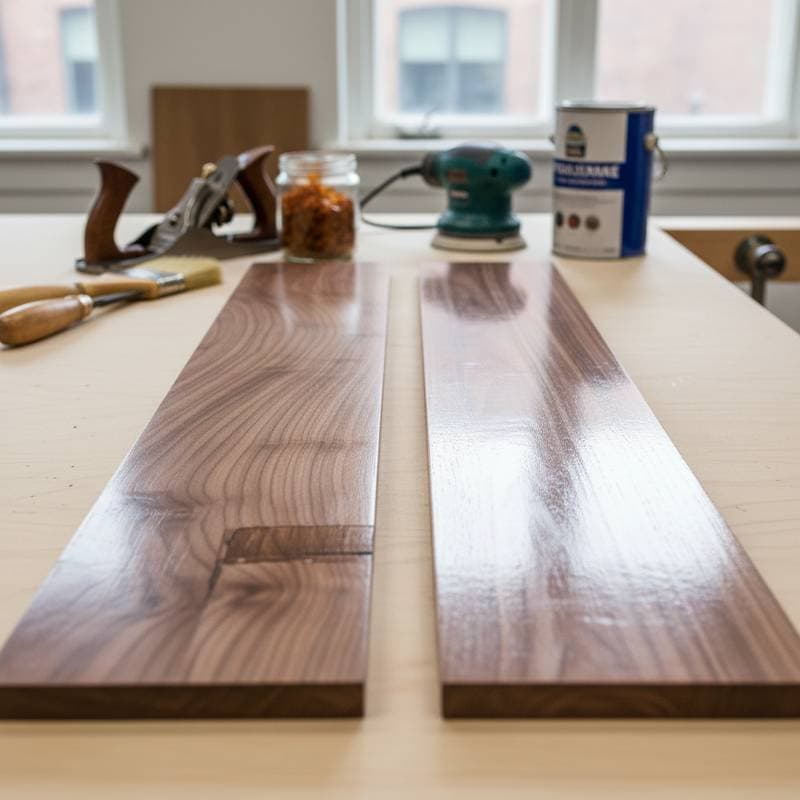
Shellac Revival: Why It Tops Modern Polyurethane Finishes
A flawless finish can make or break a woodworking project. Woodworkers invest hours in shaping, sanding, and joining, yet a poor topcoat can render the piece lifeless. Many professionals rediscover shellac, a natural resin finish that once defined fine furniture. This material experiences a revival due to its warmth, repairability, and application speed, qualities that surpass those of modern polyurethane.
At a Glance
| Finish Type | Average Cost per Quart | Dry Time | Repair Difficulty | Sheen Range |
|---|---|---|---|---|
| Shellac | $15 to $25 | 30 to 45 minutes | Easy | Satin to High Gloss |
| Oil-Based Polyurethane | $20 to $35 | 8 to 12 hours | Moderate to Hard | Satin to Gloss |
| Water-Based Polyurethane | $25 to $40 | 4 to 6 hours | Moderate | Matte to Gloss |
What Makes Shellac Different
Shellac derives from resin secreted by the lac bug, dissolved in denatured alcohol. It dries through evaporation rather than chemical curing, allowing each coat to dissolve into the previous one. This process creates a seamless, continuous film. Polyurethane finishes build distinct layers that demand sanding between applications for proper adhesion.
The outcome produces a finish that appears vibrant. Light passes through shellac and reflects off the wood fibers, rather than bouncing solely from the surface. This interaction yields depth and clarity often absent in polyurethane applications. Professionals note this as chatoyance, the subtle shimmer that reveals grain movement under varying illumination.
Shellac refracts light in a manner distinct from plastic-based coatings. Its refractive index aligns closely with wood, enhancing grain patterns without obscuring them. It also seals colors effectively, avoiding uneven stain or dye absorption.
Apply a 1-pound cut of shellac via brush or pad on scrap wood from the project. Observe the rapid development of warmth and luster. Thin or layer the material to control sheen levels precisely.
The Performance Edge in Real Shops
Shellac dries within an hour in most conditions, enabling multiple coats in one session. Production environments benefit from this efficiency. Polyurethane demands extended recoat intervals, potentially delaying assembly or delivery by several days. Smaller operations gain increased productivity and reduced downtime.
Shellac provides adequate durability for indoor furniture, cabinets, and trim, though it resists water less than polyurethane. Proper application and upkeep ensure resistance to abrasion and daily use. A well-maintained shellac surface endures for decades.
Repairability stands out as a key advantage. Address scratches or dull areas by applying fresh alcohol or a new coat, which reactivates the existing finish. Polyurethane lacks this property; repairs involve sanding or stripping once cured.
Store premixed shellac and a lint-free cloth in the workshop. Restore a client's table marred by a white ring or minor scratch in minutes, rather than hours.
Color and Tone Control
Shellac appears in natural shades from pale blonde to deep garnet, each influencing the final warmth. Select blonde for maple, birch, or light woods. Choose amber or garnet to complement cherry, walnut, or mahogany. Blend shades to match existing pieces or evoke historical styles.
Material costs range from $15 to $25 per quart of flakes or premixed solution. One quart covers 150 to 200 square feet, based on dilution levels. This often proves more economical per square foot than premium polyurethane options.
Maintain stocks of various grades. Employ dewaxed shellac beneath other finishes or as a sealer. Opt for waxed shellac in standalone applications for heirloom-quality results.
Costs and Budget
Project costs for shellac finishing hinge on materials, application techniques, and upkeep routines.
Material Costs
- Shellac flakes: $30 to $40 per pound, yielding approximately two quarts when mixed.
- Denatured alcohol: $15 per gallon.
- Brushes or pads: $10 to $25 for reliable tools.
Shellac delivers a premium appearance at an accessible price point, typically below $25 to $40 per quart for polyurethane. Mixing and filtering require time, yet become a satisfying process.
Labor and Timeline
Complete most shellac projects in one to two days. Apply three to four coats daily, with light sanding using fine abrasive pads between layers. Polyurethane applications extend to three or four days due to prolonged drying and curing.
Money-Saving Strategies
- Prepare only the volume needed for the week to ensure freshness and minimize waste.
- Use shellac as a sealer under oil or lacquer finishes, conserving pricier topcoats.
- Employ padding or French polishing to reduce overspray and simplify cleanup.
Prepare surfaces meticulously; shellac accentuates both beauty and imperfections. Sand to 220 grit minimum and remove all dust before the initial coat.
DIY or Professional
Shellac suits beginners with its forgiving nature, while supporting advanced restorations.
When DIY Makes Sense
Master shellac application with basic tools:
- Denatured alcohol
- Shellac flakes or premixed solution
- Clean cotton pads or brushes
- Fine abrasive pads for leveling
Finish a dining table or dresser at home for $40 to $60 in supplies. Quick drying suits spaces without spray facilities.
When to Hire a Professional
Engage experts for large built-ins, bar tops, or period reproductions needing precise color matching and French polishing. Rates range from $6 to $12 per square foot, varying by detail. Professionals manage environmental factors to prevent defects like lap marks.
Hiring Checklist
- Confirm use of dewaxed shellac for layering under other coatings.
- Inquire about repair and touch-up procedures.
- Examine samples under optimal lighting, as sheen and tone vary.
Test compatibility before topcoating shellac with varnish or lacquer. Base layers must use dewaxed shellac for adhesion.
Common Mistakes
Avoid these pitfalls to achieve optimal results with shellac.
- Using outdated stock: Mixed shellac lasts about six months. Aged batches dry sluggishly and stay tacky. Label containers clearly.
- Applying overly thick cuts: Start with a 1-pound cut for smooth flow and self-leveling.
- Neglecting sanding: Rub lightly with 400-grit between coats to eliminate nibs and particles, despite the material's bonding.
- Working in humid conditions: Excess moisture causes clouding. Select dry settings or add a retarder to extend evaporation time.
Create test panels for each project. These allow evaluation of color and clarity prior to full application.
Living with Your Finish
Maintain shellac surfaces by dusting with a soft cloth and steering clear of abrasive cleaners. Treat water rings by warming the spot with a hair dryer or dabbing with an alcohol-dampened cloth to reflow the finish. For scratches, pad on a thin layer and feather it into adjacent areas.
Shellac creates a breathable barrier that permits wood expansion without cracking. This contrasts with polyurethane's rigid film, which risks delamination from seasonal shifts.
Apply a fresh coat every few years in high-use areas. This renews protection and vibrancy without full refinishing.
Resources for Long-Term Care
Stock denatured alcohol and shellac for routine touch-ups. Consult wood grain references to select compatible shades. Schedule annual inspections to catch wear early, preserving the finish's timeless appeal.