
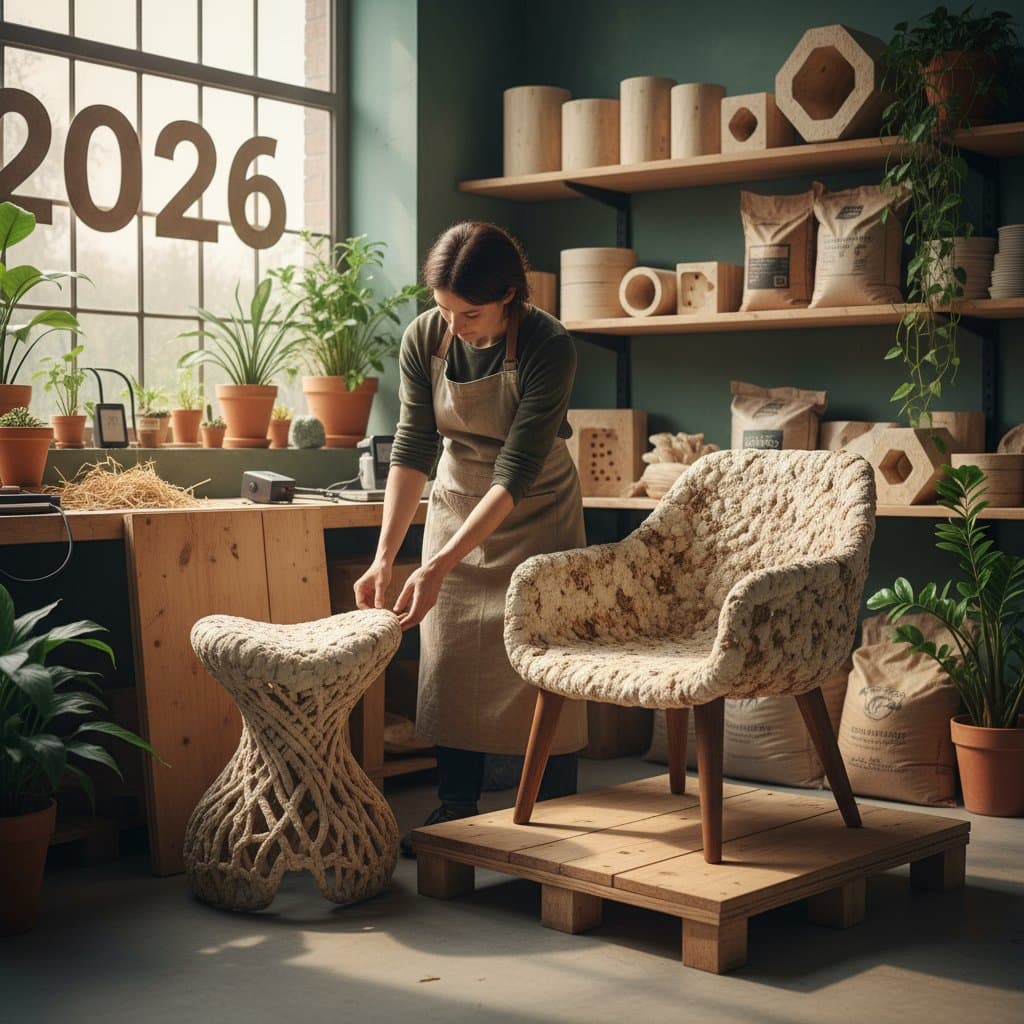
Cultivating Sustainable DIY Furniture with Mycelium in 2026
Home workshops evolve toward regenerative practices as makers seek materials that minimize environmental impact. Mycelium, the intricate root structure of fungi, emerges as a versatile option for furniture construction. This material expands rapidly within basic molds, incorporates agricultural byproducts like straw and sawdust, and decomposes naturally at the end of its lifecycle. Builders face the task of mastering shaping techniques and finishes to integrate mycelium effectively with traditional wood components.
At a Glance
Target Audience: Hobbyist makers and small-scale woodworkers
Settings: Home workshops and community fabrication labs
Scale: Molds typically measure 12 by 18 inches (30 by 46 centimeters)
Contributors: Independent biodesign researchers and local woodcraft instructors
Visuals: Captured by Studio Formfield
Challenges with Traditional Approaches
Conventional furniture production depends on kiln-dried lumber and plywood sheets. These options deliver durability yet demand significant resources from harvesting to processing. Makers often express a desire for alternatives that regenerate rather than deplete ecosystems. One participant from an Oregon workshop shared, "I loved the look of natural wood, but I wanted something that returned to nature instead of filling a landfill." Key obstacles include elevated costs, extended curing periods, and questions surrounding load-bearing capacity.
To address these issues, experimenters test mycelium's compressive strength, which reaches up to 50 psi in optimized mixes, comparable to certain foams. Early adopters document failures, such as uneven colonization leading to weak spots, and share solutions like precise moisture control during incubation.
Advances in Mycelium Fabrication
Recent developments in mycelium kits and shared mold designs streamline the creation process. Begin by combining mycelium spawn with substrates such as finely shredded straw, hemp hurds, or wood shop sawdust. Pack the mixture firmly into a prepared mold, ensuring even distribution to avoid air pockets. Place the assembly in a controlled environment—maintaining temperatures between 70 and 80 degrees Fahrenheit (21 to 27 degrees Celsius) and humidity around 80 percent—for five to seven days to allow full colonization.
After colonization, remove the form from the mold and proceed to dehydration. Air-dry for 48 hours in a well-ventilated area, followed by low-heat baking at 180 degrees Fahrenheit (82 degrees Celsius) for several hours to halt fungal activity and enhance rigidity. Seal the surface with natural options like tung oil, beeswax blends, or plant-derived resins to protect against humidity and pests. The finished product yields a lightweight panel with a density similar to rigid foam, amenable to cutting with bandsaws or routers and assembly using conventional woodworking tools.
Visual examples illustrate completed projects, including stools with mycelium seats atop sturdy oak frames and side tables featuring mycelium tops paired with maple legs. The material's subtle, earthy tones—ranging from creamy white to light beige—contrast elegantly with darker woods like walnut or cherry, accentuating both textures. Hybrid constructions gain popularity, where mycelium forms organic curves for chair backs or tabletops, supported by wooden bases for stability.
Designer Clara Jensen, who leads workshops on eco-friendly joinery, emphasizes aesthetic integration. "The goal is to let the material breathe visually," she explains. "Each mold grows a slightly different pattern, so every piece feels alive." Advanced techniques incorporate embedded elements, such as fiber reinforcements from recycled textiles, to boost tensile strength without compromising biodegradability.
Fabrication Specifications
- Substrate Composition: 70 percent agricultural waste (straw or sawdust), 30 percent mycelium spawn, with optional 5 percent natural binders like cassava starch
- Mold Construction: Frames from recycled high-density polyethylene or sealed plywood, lined with silicone sheets for easy release
- Incubation Protocol: Dark, humid enclosure at 75 degrees Fahrenheit (24 degrees Celsius) for 5 to 7 days; monitor for white mycelial threads covering the substrate
- Dehydration Steps: Initial air drying at room temperature for 48 hours, then oven drying at 180 degrees Fahrenheit (82 degrees Celsius) for 4 to 6 hours
- Surface Treatments: Apply linseed oil for a matte finish, beeswax for water resistance, or bio-resins for added durability; test on scraps first
- Assembly Methods: Secure with wooden dowels, mortise-and-tenon joints, or low-impact screws; steer clear of synthetic glues that inhibit decomposition
- Enhancements: Integrate LED lighting by routing channels into backing wood and diffusing light through mycelium's natural porosity
For larger projects, scale molds by dividing into modular sections, joining them post-drying with flexible natural adhesives. Safety considerations include wearing masks during mixing to avoid spore inhalation and ensuring ventilation during baking.
Practical Applications and Benefits
Mycelium suits makers aiming to minimize waste while exploring fluid forms unattainable with rigid woods. Production costs average 20 to 30 percent below equivalent hardwoods, factoring in substrate sourcing from local farms. At lifecycle's end, pieces compost in garden bins within months, returning nutrients to soil. The material's cellular structure also dampens acoustics, ideal for reducing echo in multifunctional living spaces.
Start with accessible projects to build confidence: fashion a mycelium lampshade by colonizing a cylindrical mold lined with fabric, or create a wall-mounted planter using a shallow tray form. Progress to furniture by prototyping small stools, noting how environmental factors like ambient humidity affect curing times—adjust by extending incubation in drier climates.
Online forums and maker spaces distribute free digital templates for 3D-printed mold inserts, alongside tested substrate ratios tailored to regional waste availability. Woodworkers appreciate how mycelium aligns with established techniques, such as sanding to refine edges or staining to match wood grains. Patience proves essential during the growth phase, yet the outcome transforms workshops into dynamic spaces where creations emerge from biological processes.
Integrating Mycelium into Your Workflow
Adopting mycelium closes the loop in design philosophy, linking creation with ecological restoration. Experimenters report heightened satisfaction from projects that evolve over time, fostering a deeper connection to materials. As techniques mature, mycelium enables bespoke furnishings that adapt to user needs—lightweight for easy relocation, customizable for personal aesthetics. This approach not only sustains workshops but inspires communities to rethink furniture as a living extension of the environment.
Sources or Credits
Design guidance by Clara Jensen Studio
Photography by Studio Formfield
Material research from BioGrow Collective.