
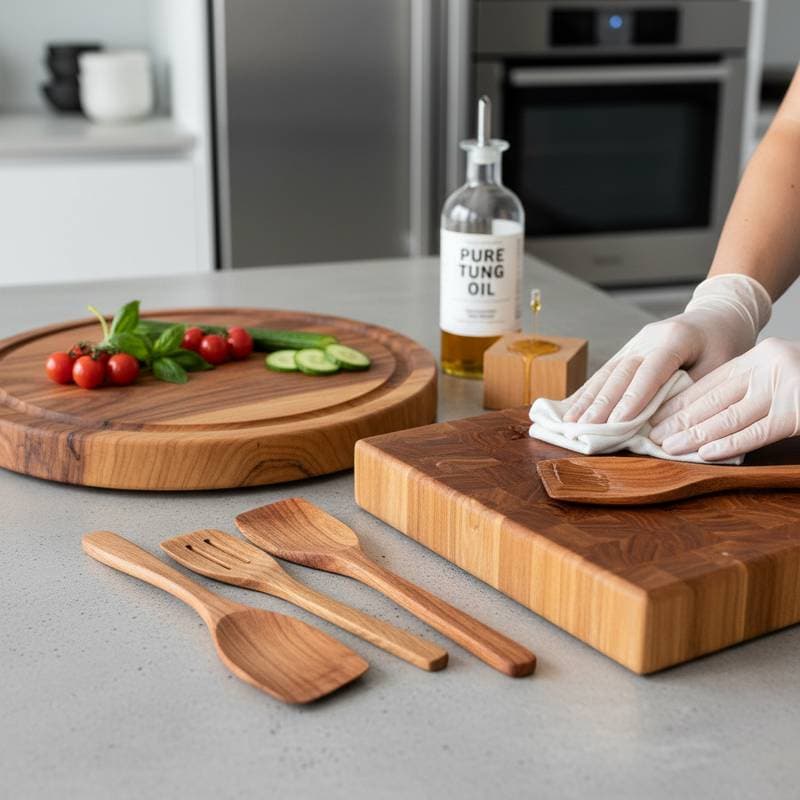
Introduction to Tung Oil
Tung oil derives from the nuts of the tung tree, a plant native to Asia. This natural oil has served as a wood finish for centuries, valued for its ability to penetrate deeply into wood fibers. In contemporary applications, it excels particularly in scenarios requiring food safety, such as cutting boards and tabletops.
Unlike synthetic alternatives, tung oil polymerizes through exposure to air, forming a tough, flexible layer. This process enhances wood's natural beauty while providing resistance to moisture and wear. For 2026, experts anticipate a surge in its use due to growing demand for eco-friendly, non-toxic materials.
Why Tung Oil Excels as a Food-Safe Finish
Tung oil meets stringent food-safety standards because it contains no harmful chemicals once cured. Organizations like the FDA approve it for direct contact with food, making it ideal for kitchen items. Its composition includes only the pure oil, free from solvents or additives that could leach into edibles.
The finish develops a subtle, matte sheen that highlights wood grain without overpowering it. This warmth contrasts with the plastic-like appearance of some varnishes. Additionally, tung oil resists bacterial growth, further supporting its suitability for food preparation areas.
Durability represents another key advantage. Properly applied, it withstands daily use, including spills and scrubbing, for years. Homeowners report surfaces that age gracefully, gaining character over time rather than deteriorating.
Comparing Tung Oil to Other Finishes
Many woodworkers compare tung oil to linseed oil, another natural option. While both penetrate wood effectively, tung oil dries faster and forms a harder film. Linseed oil, often boiled with metallic driers, may introduce trace metals unsuitable for food contact.
Mineral oil serves as a common alternative for cutting boards, but it requires frequent reapplication and offers less protection against water. Polyurethane provides superior durability yet fails food-safety tests due to potential off-gassing. Tung oil strikes a balance, combining safety with longevity.
For those seeking a pure option, avoid polymerized tung oil blends, which include synthetic hardeners. Stick to 100% pure tung oil to ensure compliance with food-safe criteria.
Preparing Wood for Tung Oil Application
Surface preparation determines the finish's success. Begin by sanding the wood to at least 220 grit for smoothness. Remove all dust with a tack cloth or compressed air to prevent imperfections.
If the wood is new, allow it to acclimate in the application environment for several days. This step minimizes warping from humidity changes. For reclaimed wood, clean thoroughly to eliminate contaminants like old finishes or residues.
Test the oil on a scrap piece to gauge absorption. Porous woods like oak absorb more coats, while dense species like maple need fewer.
Step-by-Step Application Guide
Apply tung oil in thin layers to avoid pooling. Use a lint-free cloth or brush for even distribution. Wipe excess oil after 15 to 30 minutes, ensuring the surface remains tack-free.
Allow each coat to cure for 24 to 48 hours in a well-ventilated area. The drying time varies with temperature and humidity; warmer conditions accelerate the process. Between coats, lightly sand with 320-grit paper to promote adhesion.
Typically, three to five coats suffice for food-safe surfaces. For high-use areas, add one or two extra layers. After the final coat, wait seven to ten days for full curing before exposing to food or water.
- Gather materials: pure tung oil, cloths, sandpaper, and gloves.
- Sand and clean the surface.
- Apply first thin coat and wipe excess.
- Cure for 24-48 hours.
- Repeat for additional coats, sanding lightly between.
- Final cure for one week.
Curing and Maintenance Tips
Curing transforms liquid tung oil into a solid barrier. During this phase, avoid direct sunlight or heat sources that could cause uneven drying. Maintain moderate humidity to prevent cracking.
Once cured, maintain the finish by reapplying a thin coat annually or as needed. Clean spills promptly with mild soap and water. For cutting boards, oil monthly to replenish protection.
If the surface dulls over time, buff gently with 0000 steel wool followed by a fresh coat. This restores luster without stripping the existing layer.
Benefits for Professionals and DIY Enthusiasts
Professionals appreciate tung oil's versatility across projects, from furniture to flooring. It enhances value by offering a premium, natural look that appeals to eco-conscious clients. DIYers find it accessible, requiring minimal tools and no specialized equipment.
The finish promotes sustainability, as tung trees regenerate quickly and the oil biodegrades. This aligns with 2026 trends toward green building materials. Users experience reduced maintenance compared to waxes or oils that demand constant upkeep.
In kitchens and dining areas, tung oil creates inviting spaces that feel organic and safe. Families benefit from surfaces that withstand children's use without health risks.
Achieving Lasting Results with Tung Oil
Selecting high-quality, pure tung oil ensures optimal performance. Source from reputable suppliers to avoid diluted products. Store in a cool, dark place to preserve potency.
Experiment with application techniques to suit specific woods. For example, end-grain cutting boards benefit from multiple thin coats to seal edges effectively. Track environmental conditions during curing to refine future projects.
Tung oil delivers enduring protection that evolves with the wood. It fosters a connection to traditional craftsmanship while meeting modern safety needs. Woodworkers who adopt it discover surfaces that not only function well but also inspire daily use.