
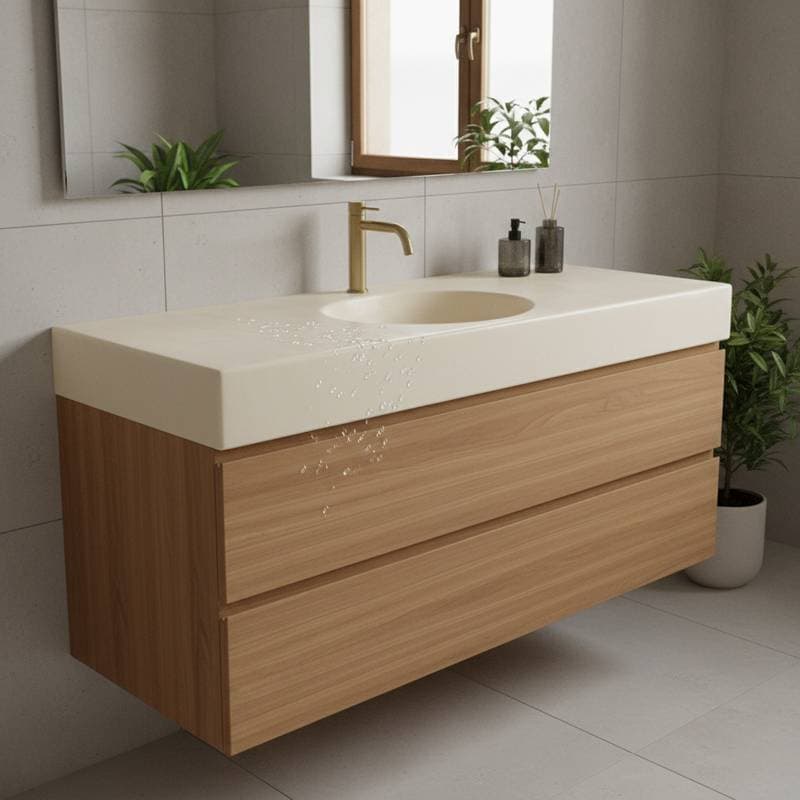
Waterproof Plaster Transforms Wood Vanities Forever
A wood vanity brings warmth that no stone or laminate can match. The problem is moisture. Even a small splash near the sink can swell panels, lift veneer, or stain the grain. Waterproof plaster, especially the tadelakt finish, is changing that story. Applied correctly, it seals wood against water while keeping the natural look many homeowners love.
Why Waterproof Plaster Matters for Wood Vanities
Traditional sealers can only protect the top layer. Once a scratch appears, water reaches the wood. Bathrooms run high humidity, and condensation collects on every surface. Over time, that moisture causes warping, mold growth, and finish failure. Waterproof plaster changes the chemistry of the surface itself.
Tadelakt, a lime-based plaster from Morocco, becomes water-resistant through a chemical reaction between lime and natural soap. When the finish cures, it forms calcium stearate, a dense layer that repels water but allows vapor exchange. That balance means wood under the plaster can breathe without rotting.
For woodworkers, this opens new design territory. You can create sculpted, seamless vanities that look carved from stone yet feel organic. The surface can be tinted in soft earth tones or bright pigments without paint or lacquer.
Action step: If you are planning a custom vanity, ask your finisher or plaster specialist about tadelakt compatibility with sealed hardwood substrates.
Cost and Budget Planning
Waterproof plaster is not the cheapest finish, but it competes favorably with solid surface or stone. Expect the following price ranges:
- Material cost: $10 to $18 per square foot.
- Labor cost: $25 to $40 per square foot for professional application.
- DIY supply kits: $150 to $250 for enough material to cover a small vanity.
For comparison, a quartz vanity top runs $45 to $70 per square foot installed. That means tadelakt can save money while offering a handmade appearance.
Factors That Influence Cost
- Surface complexity: Integrated sinks or curves add labor hours.
- Color customization: Pigments and soap finishes vary in price.
- Existing condition: Re-coating old wood requires sanding, sealing, and possibly patching.
- Regional labor rates: Urban markets trend higher due to skilled artisan demand.
Money-saving tip: If you handle prep and sealing yourself, you can reduce labor costs by 20 to 30 percent. Leave the plastering and polishing to a trained finisher for the best results.
Common Mistakes and How to Avoid Them
Even skilled finishers can run into problems with waterproof plaster. The most frequent issues come from rushing or skipping preparation.
Mistake 1: Inadequate Sealing of Wood
Bare wood absorbs moisture from wet plaster, which leads to uneven curing. Always apply a waterproof primer or thin epoxy coat first. Wait until it is fully dry before applying plaster.
Mistake 2: Over-Polishing Too Early
If you polish before the plaster has set enough, the surface can tear or cloud. Wait until the material feels firm but slightly cool to the touch, then start burnishing.
Mistake 3: Skipping Soap Application
The soap step is essential for waterproofing. Using plain water leaves the lime unreacted. Mix the soap solution as directed and apply in circular motions.
Mistake 4: Ignoring Temperature and Humidity
Cold air slows curing. Excess humidity keeps the surface soft. Use a small fan or dehumidifier to stabilize the environment.
Action step: Test your process on a scrap panel first. You will see how the plaster behaves before committing to the full vanity.
Design Freedom and Aesthetic Potential
Waterproof plaster brings a sculptural quality to bathroom design. Because the surface is seamless, it eliminates joints where grime collects. You can extend the plaster from vanity top to backsplash and into the shower niche for a unified look.
Popular finishes include:
- Matte limestone gray for a spa-like calm.
- Warm terracotta that pairs with brass fixtures.
- Soft white with subtle veining for a minimalist tone.
For woodworkers, this finish creates new revenue opportunities. You can offer clients a custom wood vanity base with a tadelakt top, blending craftsmanship with modern performance.
Action step: When designing, plan for gentle curves at corners. Sharp edges are harder to polish and more prone to chipping.
Achieving Long-Term Durability with Tadelakt
Proper maintenance ensures tadelakt vanities last for decades. Clean the surface weekly with a mild soap solution and a soft cloth. Avoid abrasive cleaners that could dull the finish.
Reapply a thin soap layer annually to refresh water resistance. Inspect for cracks or chips every six months, and address them promptly with a plaster repair kit. This approach preserves both beauty and functionality, making tadelakt a smart investment for any bathroom renovation.