
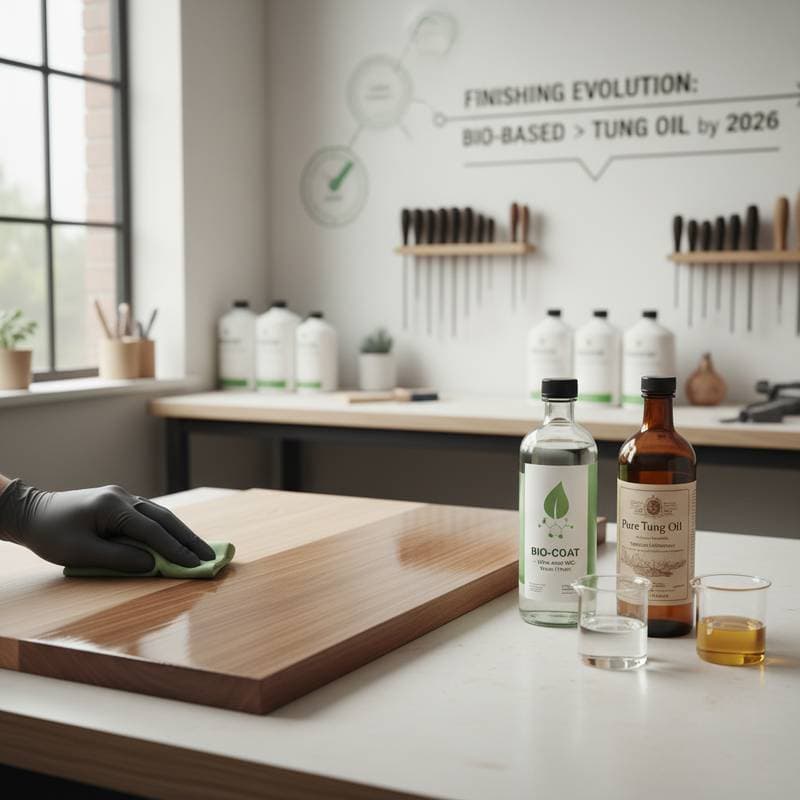
Why Bio-Based Finishes Will Outshine Tung Oil by 2026
Natural finishes have served woodcraft for generations. Tung oil provided a warm tone and protective sheen from the tung tree seed. A new generation of bio-based finishes now emerges, integrating plant-derived chemistry with performance levels once limited to synthetic options. This evolution benefits makers and clients seeking durability, reduced emissions, and minimal environmental impact.
At a Glance
Target Users: Furniture makers, cabinet shops, and small-scale finishers
Application Settings: Workshops emphasizing sustainable production
Project Scale: Surfaces ranging from 50 to 500 square feet (4.6 to 46.5 square meters)
Development Contributors: Finish manufacturers, material scientists, and green chemistry laboratories
Visual Resources: Studio test images from product developers and workshop users
Limitations of Tung Oil
Tung oil penetrates deeply and delivers a mellow glow. It polymerizes upon air exposure to form a flexible, water-resistant film. However, extended cure times often span days, and achieving full durability demands multiple applications. Cabinetmaker Louis Tran noted, “It is beautiful but slow. For high-traffic work surfaces, we kept searching for something faster and tougher.”
Advantages of Bio-Based Finishes
Bio-based finishes address these challenges through formulations from linseed, hemp, and castor oils, enhanced by natural resins or modified plant esters. They cure in half the time of tung oil and offer superior abrasion resistance. Water-dispersed versions simplify cleanup and minimize odors. Test panels reveal a satin film that accentuates wood grain with minimal ambering.
These finishes employ catalysts from non-toxic mineral salts for crosslinking, bypassing prolonged oxidation. Shorter intervals between coats reduce shop downtime. Woodworker Ana Lopez observed, “We can finish a tabletop in one day instead of three. The clarity and feel are equal or better than tung oil.”
Application and Performance Specifications
- Cure Time: 8 to 10 hours per coat, versus 24 to 36 hours for tung oil
- VOC Levels: Typically under 50 grams per liter, compliant with green building standards
- Application Methods: Compatible with brush, spray, or pad; minimal thinning required
- Durability Metrics: Hardness rating of approximately 2H on pencil test, effective against scratches and heat
- Maintenance Approach: Recoating without full sanding
- Storage Stability: Up to 12 months under moderate temperatures
Studio trial photographs display pine boards with enhanced color retention and oak slabs where grain contrast intensifies without yellowing. The resulting mild luster mimics hand-rubbed effects while enduring regular use.
Practical Benefits for Woodworkers
Bio-based finishes streamline workflows and elevate surface quality. Accelerated curing enables smaller shops to complete projects more quickly, lowering labor expenses. Reduced odors maintain healthy air quality for staff and clients. Customers appreciate the sustainability aspect, particularly in custom furniture and architectural millwork.
Standardized plant esters in these formulas ensure consistent color and sheen across batches. This predictability proves essential for matching multiple components precisely.
Woodworkers attached to tung oil can transition gradually. Many bio-based options layer over existing oil surfaces following light sanding. This method retains the depth of natural oil while adding rapid protection. Testing on offcuts allows comparison of gloss and texture prior to broader use.
Advancing Sustainable Practices
Bio-based finishes contribute to broader efforts in responsible material use. Renewable oils and water-based carriers diminish dependence on petrochemicals.
Shops prioritizing health, efficiency, and environmental stewardship gain tangible outcomes from these coatings. They safeguard craftsmanship, improve working conditions, and align with the inherent renewal of wood materials.