
- Curing period: 24 hours per coat under average humidity conditions
- Upkeep routine: Annual light recoating for heavily trafficked areas
- Usage safety: Fully cured oil qualifies as food-safe for items like cutting boards and bowls
These elements make tung oil user-friendly and low-risk. The citrus-infused variants offer a mild aroma, easing application in confined spaces compared to varnish's harsh scents.
Workflow Advantages
Unlike polyurethane, which necessitates pristine, dust-free conditions and precise timing, tung oil accommodates a relaxed pace. Basic tools suffice, ideal for multipurpose workshops handling sanding, assembly, and finishing. Its penetrating nature prevents cracking during seasonal humidity changes, promoting enduring performance.
Maintenance simplifies further: a surface clean followed by a new coat revives protection without removal of prior layers. This approach fosters a patina that evolves attractively, a quality absent in film-forming synthetics. Woodworkers value this for projects intended to last generations.
Visual and Design Impacts
Tung oil subtly alters perception by allowing light absorption rather than harsh reflection. Wood grain emerges with nuanced depth, enhancing pieces in ambient lighting. Interior specialists appreciate how it complements organic environments, particularly on live-edge designs where form and finish harmonize.
A San Francisco designer emphasized: tung oil enhances without overshadowing the wood's character. This philosophy aligns with contemporary trends emphasizing material honesty in furnishings.
Operational Gains for Small Operations
- Repair simplicity: Address scratches or marks with minimal sanding and a targeted recoat.
- Minimal setup: Rely on cloths instead of specialized spray equipment.
- Efficient resource use: Prepare small batches with stable shelf life for leftovers.
- Enhanced usability: Warm tactility improves interaction on functional surfaces like tables.
- Versatile safety: Cured finish suits food contact and child-safe items.
Such efficiencies streamline scheduling and costs, elevating the handmade appeal of output.
Sustainability and Safety Factors
Tung oil's plant origin contrasts polyurethane's petroleum reliance, minimizing synthetic exposure. Responsible sourcing ensures additive-free products, easing disposal and reducing fumes. Citrus-blended options accelerate drying while maintaining low toxicity.
Woodworkers benefit from straightforward cleanup and storage. Consumers favor transparent labeling, boosting marketability for direct sales channels.
Transitioning to Tung Oil
Adapting demands attention to preparation over volume. Tung oil emphasizes internal buildup, differing from polyurethane's surface emphasis.
Application Steps
- Prepare surface: Sand to 220 grit (240 for fine-grained woods); eliminate dust thoroughly.
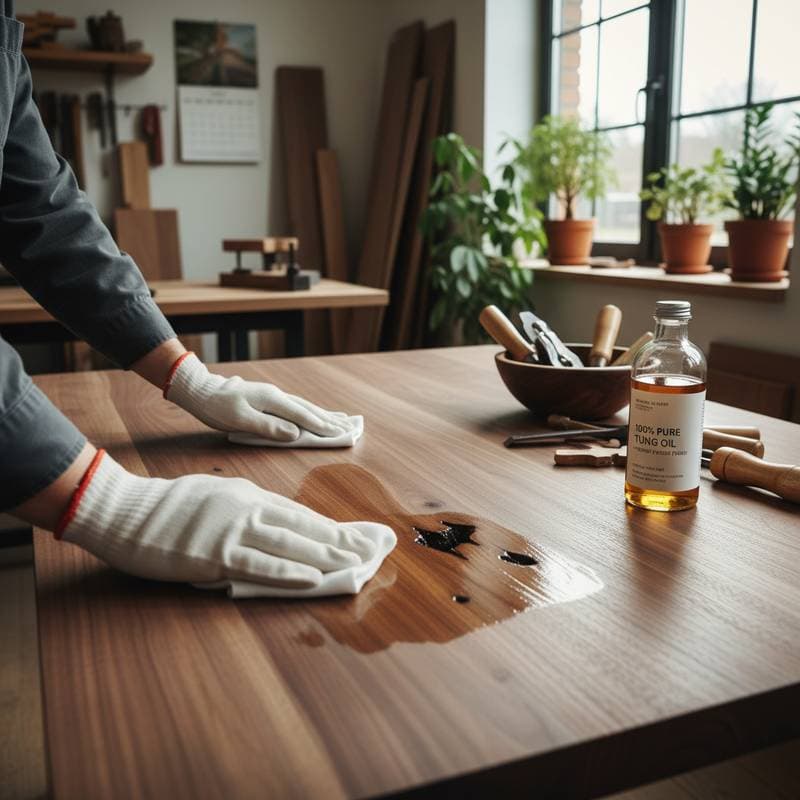
- Initial layer: Spread generously with cloth or brush; allow 20 to 30 minutes absorption.
- Clear excess: Wipe until nearly dry, avoiding tackiness.
- Initial cure: Allow one full day before next application.
- Additional layers: Continue until absorption slows.
- Final polish: Buff cured surface with soft cloth or fine steel wool for sheen.
Consistency yields richer tones and firmer protection, bypassing the need for aggressive sanding.
Avoiding Application Errors
- Excess buildup: Wipe thoroughly to prevent gummy finishes.
- Premature recoating: Ensure full drying to maintain clarity.
- Product conflicts: Strip existing polyurethane completely before applying oil.
- Rag handling: Lay used cloths flat to air-dry, mitigating fire hazards.
Adhering to these practices yields reliable outcomes and secure operations.
Enduring Advantages
Tung oil delivers lasting protection through wood integration, simplifying upkeep and aligning with authentic aesthetics. It supports sustainable practices, appealing to environmentally conscious creators and buyers. The result: finishes that evolve with use, enhancing both functionality and visual appeal.