
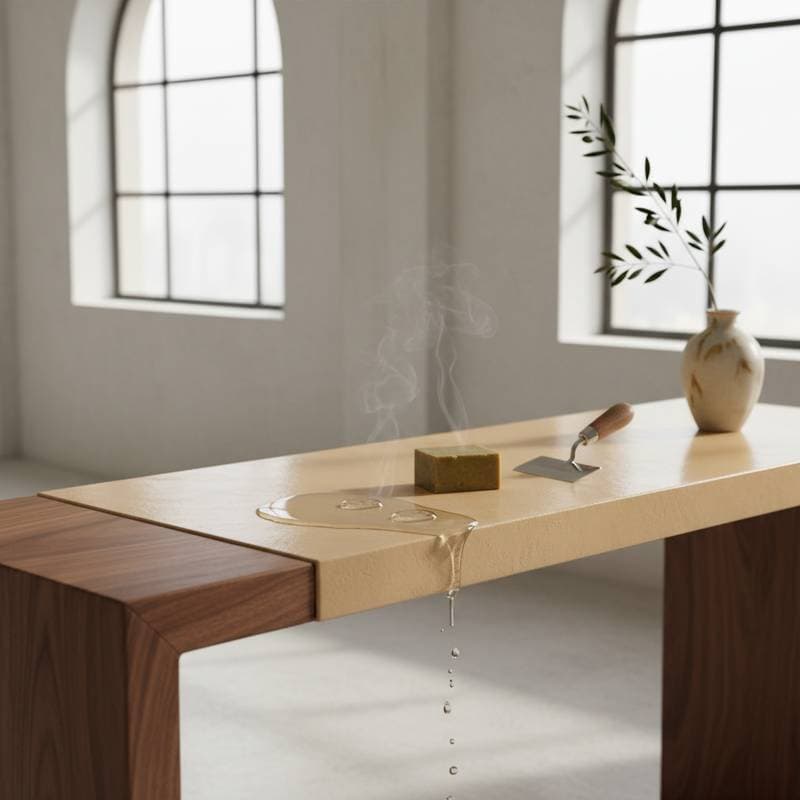
Tadelakt: Waterproofing Wood Through Timeless Moroccan Craftsmanship
Tadelakt represents a bridge between ancient Moroccan traditions and contemporary woodworking practices. This lime-based plaster, historically used in hammams and royal palaces, now serves woodworkers seeking a superior moisture barrier. It delivers a silky, natural finish that repels water while allowing vapor to escape, ensuring long-term protection without the drawbacks of conventional sealants.
The appeal of tadelakt lies in its ability to enhance wood's inherent beauty. Unlike synthetic coatings that form rigid films, tadelakt integrates with the substrate to create a resilient, stone-like surface. Woodworkers appreciate how this technique maintains the material's tactile qualities and subtle grain patterns.
Overview of the Technique
Tadelakt originates from Morocco, where artisans applied it to create watertight interiors. Today, global craft workshops adapt it for wood surfaces in furniture, cabinetry, and architectural elements. The process involves layering thin coats of lime plaster, compressing them, and sealing with olive soap to form a durable, breathable membrane.
Key components include high-calcium lime, fine aggregates like marble dust, and natural pigments for color. Artisans use traditional tools such as trowels and polishing stones to achieve uniform coverage. This method suits both professional studios and dedicated hobbyists willing to invest time in mastering the application.
Essential Elements:
- Location: Craft workshops worldwide
- Core Technique: Lime plaster application and soap polishing on wood
- Primary Materials: Lime putty, olive oil soap, mineral pigments, optional waxes
- Functional Benefit: Microscopic sealing for waterproofing and breathability
- Visual Documentation: Artisanal project photography
Challenges with Traditional Wood Finishes
Wood surfaces face constant threats from humidity, spills, and environmental changes. Standard sealers, such as polyurethane or varnish, initially provide strong defense but often fail over time. Expansion and contraction cause these films to crack, allowing water to penetrate and degrade the wood fibers beneath.
Furniture makers frequently encounter maintenance issues with oil-based treatments. One artisan, after years of reapplying oils to walnut pieces, sought an alternative. The goal was a finish that preserved the wood's organic appearance while enduring daily exposure to moisture without frequent upkeep.
These limitations highlight the need for innovative solutions. Synthetic options may yellow or become brittle, leading to aesthetic decline and structural compromise. Woodworkers desire a method that aligns durability with the natural ethos of their craft.
The Transformation with Tadelakt
Applying tadelakt to wood fundamentally alters its performance. The lime plaster, burnished with an olive soap solution, undergoes a chemical reaction producing calcium stearate. This compound embeds into the wood's pores, forming an impermeable yet permeable layer that sheds water droplets while permitting internal moisture to dissipate.
The result is a surface with a soft, inviting texture far removed from the hardness of plastic films. Light interacts gently with the finish, highlighting contours without harsh reflections. For instance, a walnut vanity treated with light gray tadelakt reveals faint grain lines under a subtle luster, where water forms beads rather than absorbing.
Birch cabinet doors in a warm taupe hue demonstrate further versatility. The semi-matte finish accentuates edges and details, enhancing architectural flow. Architect Lea Haddad notes, "Tadelakt's uniqueness stems from its internal hardening process. It transforms the surface holistically, not merely coating it."
This approach minimizes common failure points. The bonded layer flexes with the wood, resisting fractures from seasonal shifts. Users report sustained performance in humid settings, with no need for periodic stripping or refinishing.
Step-by-Step Application Guide
Preparing wood for tadelakt requires precision to ensure optimal adhesion. Begin with thoroughly sanded surfaces, aiming for a smooth yet absorbent texture. Dense hardwoods like oak, walnut, and maple bond effectively; softer varieties benefit from a preliminary lime-based primer to enhance grip.
Composition Details:
- Base: Pure lime plaster incorporating marble dust for density
- Additives: Earth-derived pigments for subtle coloration
Layering Process:
- Mix lime plaster to a creamy consistency using soft water.
- Apply the first thin coat with a trowel, feathering edges for evenness.
- Allow partial curing, then add subsequent coats, compressing each with a flat stone.
- After three to five layers, polish with diluted olive soap using a flexible trowel.
The soap step activates the sealing reaction, closing microscopic voids. Curing demands a humid environment to facilitate carbonation, where lime absorbs carbon dioxide and strengthens. Full hardening occurs over several days, yielding a robust, low-maintenance finish.
Customization Options:
- Sheen Levels: From matte for understated elegance to burnished gloss for reflective depth
- Maintenance Routine: Wipe with neutral soap solution; avoid abrasives
This methodical application, though labor-intensive, produces professional-grade results. Artisans recommend practicing on test pieces to refine pressure and timing during polishing.
Benefits and Practical Insights
Tadelakt's chemistry provides unparalleled waterproofing. Lime penetrates the wood, creating a monolithic mineral network that withstands humidity fluctuations. Unlike film-forming sealants, it avoids trapping vapors, reducing risks of warping, rot, or fungal growth.
Adopters highlight reduced repair needs and elevated design potential. Hand-applied textures introduce organic variations that enrich visual interest. Light dances across troweled imperfections, imbuing pieces with artisanal character absent in machine-sprayed alternatives.
Sustainability adds to its value. Derived from natural sources, tadelakt avoids volatile compounds found in many modern finishes. It supports eco-conscious woodworking, appealing to clients prioritizing health and environmental impact.
Getting Started with Tadelakt
For newcomers, begin with small-scale projects like coasters or drawer fronts. Source quality lime from specialty suppliers and assemble basic tools: trowels, polishing stones, and soap. Work in a controlled space to manage curing humidity.
Test compatibility by applying to wood scraps, observing bead formation after soap treatment. Adjust pigment ratios for desired tones, ensuring even mixing. With experience, scale up to larger surfaces, unlocking tadelakt's full transformative power.
This finish endures beyond trends, linking historical mastery to future innovations. Wood gains stone's fortitude while retaining organic allure, ideal for moisture-prone applications. The investment in learning tadelakt yields pieces that stand the test of time and use.
Credits
Collaborators: Artisan Plaster Collective, Studio Haddad, and select wood finishers.
Visuals: Provided by project artisans and workshop records.