
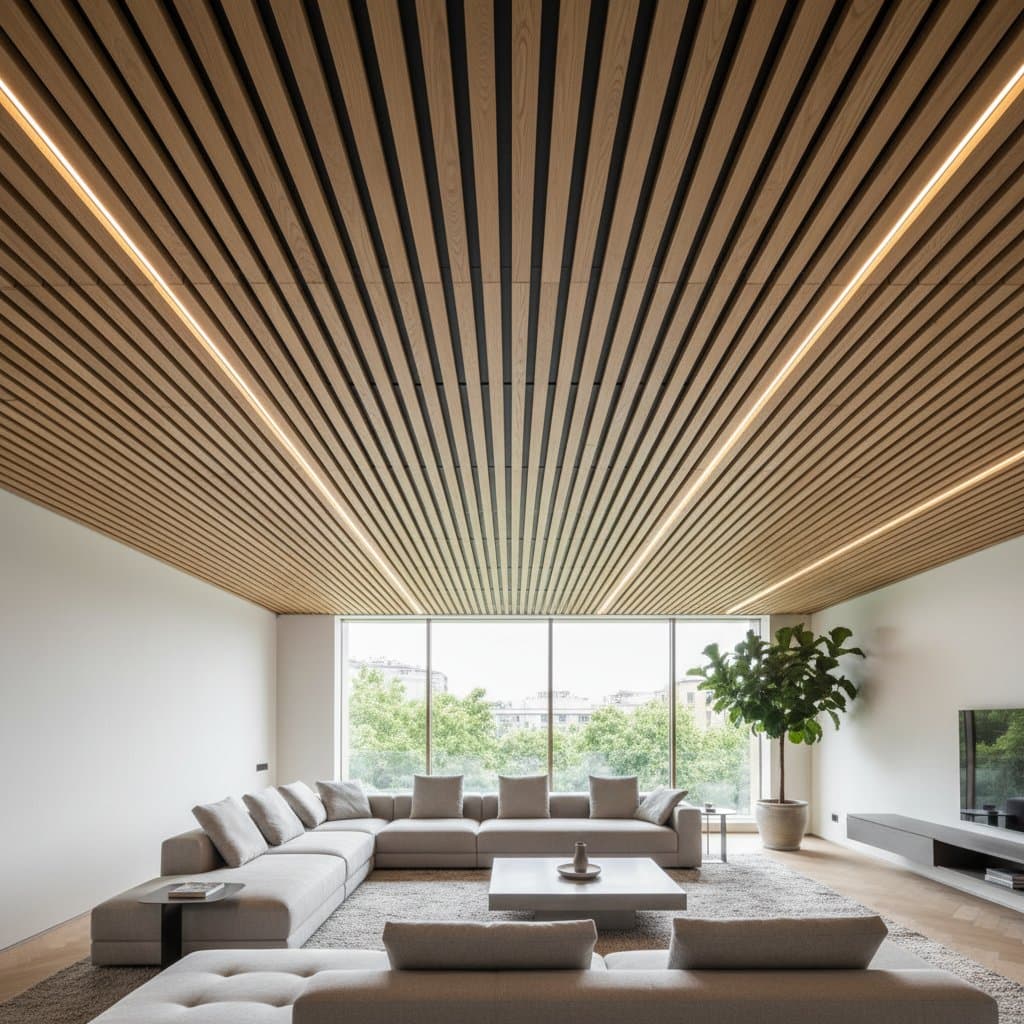
Wood Slat Ceilings Reduce Echo and Elevate Interiors
Wood slat ceilings combine visual appeal with practical acoustic control. They absorb sound, soften lighting, and introduce natural texture to any space. Homeowners and designers turn to this approach when standard drywall leaves rooms feeling harsh and loud.
Planning Your Installation
Accurate planning starts the process. Map the locations of ceiling joists and any existing fixtures. Mark a one inch border around the room perimeter to create a clean edge that avoids awkward cuts near vents or ducts. Painter tape helps visualize slat spacing before any wood is cut.
Gathering and Preparing Materials
Select straight boards with minimal knots for best results. Rip the boards to uniform width on a table saw and sand each piece with 180 grit paper. Apply the finish on a workbench rather than overhead. This step prevents drips and ensures even color across every slat.
Constructing the Support Grid
Secure 1 by 3 inch furring strips perpendicular to the joists at 16 inch intervals. The grid provides a stable base for both the acoustic layer and the visible slats. On concrete ceilings, use appropriate overhead rated anchors and confirm the entire grid sits level before moving forward.
Adding the Acoustic Backing
Cut felt panels to fit between the furring strips and fasten them in place. This hidden layer absorbs mid and high frequency sound that would otherwise bounce off hard surfaces. Black or dark gray felt creates depth and prevents the gaps from appearing as bright lines.
Attaching the Slats
Fasten each slat with a finish nailer or hidden clip system. A simple spacer block maintains consistent gaps throughout the field. Stagger end joints on longer runs to keep seams from aligning and drawing the eye.
Incorporating Lighting
Position recessed fixtures between slat rows before the final boards are installed. Cut openings in the felt so electrical boxes sit flush and trim rings rest cleanly against the wood. Dimmable LEDs allow the ceiling to shift from bright task light to a softer ambient glow.
Design Options for Different Styles
Pale ash or birch paired with white felt suits Scandinavian interiors. Charred pine and metal channels suit industrial spaces. Alternating walnut and oak strips add tonal interest in mid century rooms. Matte black slats over white felt create strong contemporary contrast.
How the Ceiling Controls Sound
Hard surfaces reflect sound waves while soft fibers absorb their energy. Gaps between the slats let sound reach the felt backing where vibrations convert to heat. Typical drywall rooms show reverberation times above 1.2 seconds. Wood slat ceilings commonly reduce that figure to roughly 0.5 seconds, improving speech clarity and musical detail.
Everyday Advantages
Beyond acoustics, the ceiling conceals wiring and ductwork without bulky soffits. It also trims the air volume that must be heated or cooled. Indirect light washing across the slats reduces glare and highlights wood grain.
Homeowner Claire Morton noted that conversations at the dining table no longer require raised voices. The change affects both measurable sound levels and the overall sense of calm in the room.
Suitable Locations
Living rooms and open plan areas gain focus and warmth. Home theaters benefit when the ceiling works with wall panels. Restaurants and offices see reduced background noise and clearer conversation. Even a small section above a dining table can serve as a visual and acoustic anchor.
Budget Options
Pine or poplar with basic felt offers an entry level solution near eight dollars per square foot. White oak or maple with factory finish and LED strips falls in the mid range around fourteen dollars per square foot. Walnut or teak with custom suspension reaches the high end near twenty five dollars per square foot.
Care Over Time
Dust the surface periodically with a microfiber cloth or vacuum brush attachment. Because every slat receives finish on all sides, seasonal movement stays minimal. Damaged boards can be removed and replaced individually. Reapply finish every five to ten years depending on sunlight and humidity exposure.
Practical Installation Tips
Cut all slats on a miter saw for uniform ends. Label cutoffs so short pieces can fill runs near walls. A laser level keeps rows straight across large ceilings. Mark wiring paths before they disappear behind the slats. Small expansion gaps at the perimeter accommodate natural wood movement.
Long Term Value
A finished wood slat ceiling continues to improve daily comfort years after installation. Clearer sound, softer light, and reduced energy use combine into lasting satisfaction. Regular maintenance keeps the surface looking fresh while the acoustic benefits remain constant.