
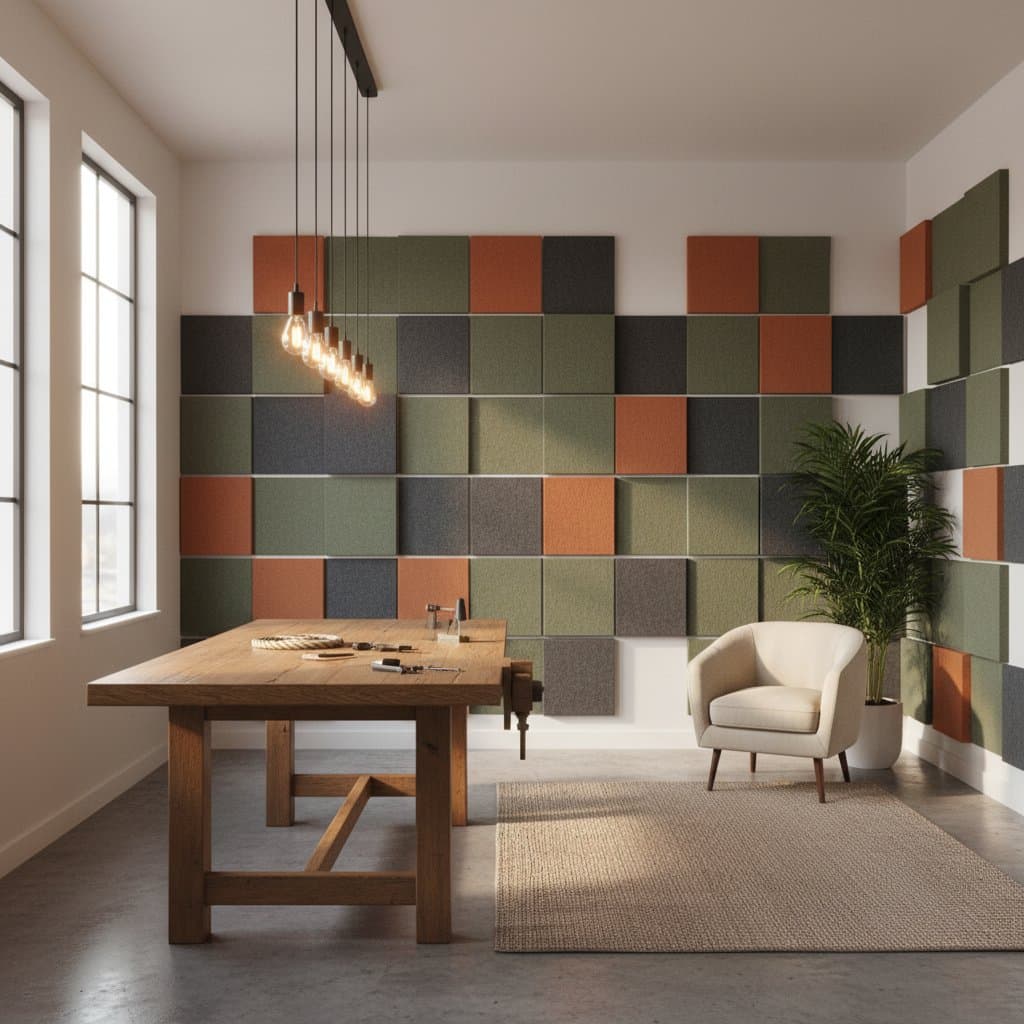
DIY Felt Panels: Reduce Shop Noise and Infuse Warmth
Excessive noise transforms a productive workshop or home studio into a challenging environment. Hard surfaces reflect sound waves, and open layouts intensify the issue. Felt wall panels provide an effective solution by absorbing echoes and introducing a welcoming texture. Individuals can construct these panels using basic materials and tools, customizing colors and patterns to suit specific spaces.
Project Overview
Target Audience: Home woodworkers and owners of small studios
Ideal Locations: Workshops, offices, and residential areas
Scale Options: From compact accent pieces to comprehensive wall coverings
Development Input: DIY approach informed by acoustic fabric experts
Visual Documentation: Photographs captured by project participants
The Challenge of Uncontrolled Noise
Exposed walls and concrete floors create stark acoustics in compact workshops or creative spaces. Each hammer impact or tool operation reverberates against these surfaces. In residential settings, echoes from discussions or media playback accumulate quickly. One resident noted, “We appreciated the open layout, but the persistent echo hindered relaxation.”
Reflective elements exacerbate the situation. Fresh paint, glass panels, and finished wood amplify sound travel. Area rugs mitigate floor-level noise yet fail to address mid-range and high-frequency sounds that target walls.
Results After Installation
Felt panels interrupt sound reflections and elevate the room's overall appearance. Arranged in uniform rectangles or artistic groupings, they dampen acoustics while incorporating vibrant colors and tactile elements. Images reveal how the subdued finish interacts with light, generating gentle variations in depth across each panel.
Mounting options include direct attachment to drywall or plywood with adhesive hooks or concealed screws. Interior specialists highlight the system's versatility. Users rearrange configurations, exchange shades, or increase coverage with minimal surface disruption.
One specialist observed, “Felt manages sound effectively and contributes a sense of visual serenity. It functions as practical artwork.”
Construction Specifications
Required Materials and Tools
- Sheets of wool or recycled PET felt, ⅜ inch (10 mm) thick
- ¼ inch (6 mm) MDF or plywood sheets for structural support
- Spray adhesive or contact cement
- Utility knife equipped with new blades
- Metal straightedge and carpenter's square
- Adhesive mounting strips or screws paired with cover caps
Preparation and Assembly Steps
- Measure and cut backing sheets to desired dimensions. Standard sizes include 12 by 24 inches (305 by 610 mm) or 18 by 18 inches (457 by 457 mm).
- Apply adhesive uniformly to one side of each backing sheet, then align and press the felt sheet firmly in place.
- Use the utility knife, guided by the straightedge and square, to trim excess felt along the edges for a precise finish.
- For added dimension, cut supplementary felt pieces from thinner material and layer them atop the base panels.
Installation Methods
- Attach lightweight panels, those under 24 inches (610 mm) in width, using double-sided adhesive strips for secure, non-invasive hold.
- Secure larger panels with screws inserted through pre-drilled keyhole slots, positioned at 16-inch (406 mm) intervals.
- Position panels with a consistent ⅜ inch (10 mm) separation to produce defined shadow lines that enhance visual interest.
Enhancement Options
- Select subdued palettes such as grays and taupes to establish a tranquil foundation.
- Orient panels vertically to accentuate ceiling height or horizontally to expand perceived wall width.
- Integrate slim LED lighting strips along panel borders to accentuate the material's inherent texture.
Essential Insights
Effective Acoustic Management
Felt effectively captures mid- and high-frequency sounds, minimizing echoes and enhancing speech intelligibility or audio recording quality. Covering approximately 40 square feet (3.7 square meters) of wall space yields measurable reductions in room reverberation.
Aesthetic and Tactile Benefits
Felt surpasses basic foam alternatives with its inviting surface and design versatility. It complements wooden fixtures and soft-finish accents seamlessly. Within a workshop, panels frame tool displays or serve as focal points behind workbenches.
Flexible Implementation
The modular format supports incremental additions. Begin with a targeted installation, evaluate performance, and expand accordingly. For instance, a craftsman started with a lattice arrangement near the lathe before incorporating panels into an adjacent relaxation area.
Cost Considerations
Materials range from 6 to 10 dollars per square foot (65 to 108 dollars per square meter), varying by felt type. Recycled PET options prove economical, whereas wool varieties offer superior depth and color vibrancy.
Care Instructions
Remove dust from panels using a vacuum with a soft brush attachment at regular intervals. Address stains with a light application of mild soap and water, followed by gentle blotting. Prolonged exposure to intense sunlight may cause fading, so reposition panels periodically in brightly lit areas.
Experiencing the Upgraded Environment
Installation yields prompt improvements in ambiance. Ambient noise levels drop, vocal clarity increases, and minor operational sounds integrate more harmoniously. The material's texture encourages interaction and offsets glossy elements effectively. Residents report a soothing influence, particularly in zones dedicated to concentration and output.
Extend the application to additional settings. In dining spaces, panels curb sound buildup during gatherings. Home offices benefit from diminished distractions during virtual meetings.
This undertaking accommodates varying expertise levels. Materials tolerate minor errors, and adjustments remain straightforward.
Project Acknowledgments
Consultation provided by regional acoustic fabric advisors
Images supplied by workshop participants and residents
Insights drawn from interviews with residents and design professionals
DIY felt panels merge sound absorption with creative expression, enabling precise environmental adjustments. Dedicated time in fabrication and setup converts disruptive areas into refined, personalized retreats.