Why DIY Modular Closets Outshine Custom Built-Ins
Homeowners often face the challenge of limited space and evolving storage needs. Traditional custom built-ins, while tailored, demand professional installation and resist changes over time. DIY modular closets offer a superior alternative by providing flexibility, affordability, and professional results that homeowners can achieve independently.
These systems allow users to customize layouts without permanent alterations, making them ideal for renters or those anticipating lifestyle shifts. By selecting components that fit specific dimensions and preferences, individuals create organized spaces that enhance daily routines and maximize utility.
At a Glance
Target Audience: Homeowners and renters desiring adaptable storage solutions.
Ideal Settings: Urban apartments, suburban homes, and any area where space optimization is essential.
Dimensions: Systems accommodate walls from 4 to 12 feet (1.2 to 3.7 meters) in length.
Popular Brands: Modular Closets, The Container Store Custom Closets, IKEA PAX series.
Visual Resources: Images provided by Modular Closets and professional installers.
The Challenges of Traditional Closets
Older closet designs typically feature a basic setup: one hanging rod and a fixed shelf that leaves much of the space underutilized. Homeowner Dana Lewis shared her experience: "I felt like half the closet was air I could not reach." Builders frequently applied uniform configurations across rooms, overlooking individual requirements such as seasonal clothing variations or hobby storage.
Adjustable elements were rare, leading to uneven stacking of items and inaccessible corners. Illumination often relied on a single overhead fixture, creating shadows that obscured contents. Over time, these limitations fostered clutter accumulation, particularly during transitions like family expansions or office-at-home setups.
The Advantages of DIY Modular Systems
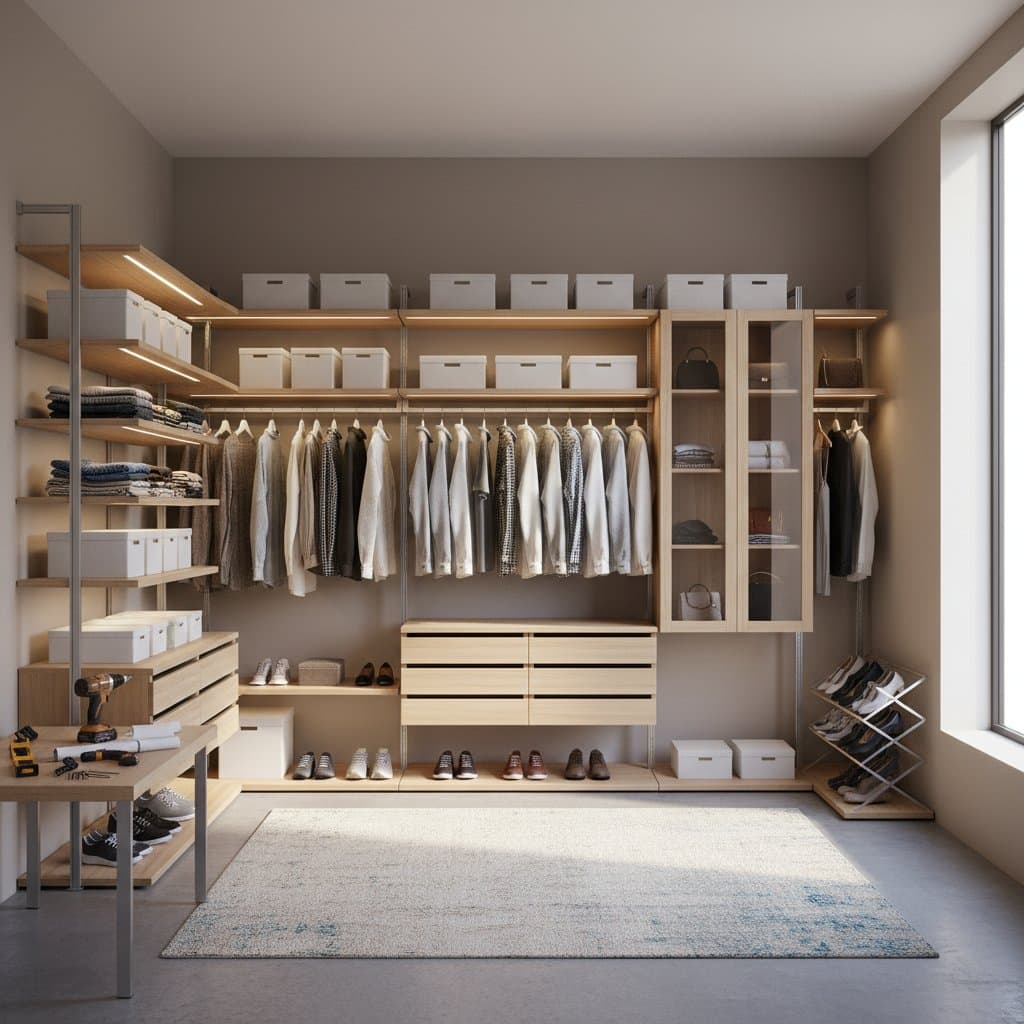
Modular closets introduce a dynamic approach with interchangeable components that assemble via tracks or connectors. Users begin with core elements and add features as needed, ensuring scalability. For instance, a standard 7-foot (2.1-meter) wall can transform into a comprehensive unit featuring dual hanging areas, a 24-inch (61-centimeter) drawer tower, and elevated shelves for bulk storage.
Designer Miguel Ortiz, specializing in compact urban installations, emphasizes adaptability: "We wanted our clients to feel like the system changes with them." Integration of modern lighting, such as LED strips positioned beneath shelves and motion-activated sensors near entry points, ensures visibility across all areas. This setup not only illuminates but also highlights textures and colors, facilitating quicker item location.
Essential Design and Installation Elements
Materials and Durability
Core components consist of melamine-coated or painted medium-density fiberboard (MDF) panels in versatile neutral tones. These surfaces withstand daily wear, including scratches from hangers or accessories, while maintaining a sleek appearance that complements various interior styles.
Hardware and Assembly
Concealed brackets and adjustable pins enable seamless reconfiguration without visible fasteners. Shelf heights modify in 1-inch (2.5-centimeter) increments, accommodating items from shoes to luggage. Assembly involves aligning wall-mounted tracks to studs for stability, keeping the floor clear for vacuuming or future flooring updates.
Lighting and Functionality
Opt for low-voltage LED tape lights with a 3000K color temperature to provide warm, non-glaring illumination. Install these along shelf undersides or vertical edges to eliminate dark spots. Motion sensors activate automatically upon approach, conserving energy while enhancing convenience during early mornings or late evenings.
Configurations and Customization
Available towers span 18 to 30 inches (46 to 76 centimeters) in width, supporting stackable drawers for folded garments or accessories. Corner units feature pull-out shelves or rotating carousels to reclaim otherwise wasted areas. For deeper personalization, integrate pull-down rods for upper storage or ventilated bins for linens and delicates.
Step-by-Step Installation Guide
- Measure the wall space and mark stud locations using a stud finder.
- Install horizontal tracks at desired heights, securing with screws into studs.
- Attach vertical standards or panels to the tracks, ensuring level alignment.
- Insert shelves, rods, and drawers into adjustable pins or slots.
- Connect lighting fixtures to nearby outlets or use battery-powered options for simplicity.
- Test all components for stability and adjust as necessary.
This process typically requires basic tools like a drill, level, and screwdriver, completing in a weekend for most setups.
Cost Considerations
Entry-level kits start at $500 for basic configurations, scaling to $2,000 for expansive systems with premium finishes and accessories. Factors influencing price include material quality, added features like soft-close drawers, and brand selection. Compared to custom built-ins, which often exceed $3,000 plus installation fees, modular options deliver comparable aesthetics at a fraction of the expense.
Practical Benefits and Long-Term Value
DIY modular closets excel in their ability to evolve with users' lives. Transition from a minimalist setup for singles to a family-oriented design with toy compartments or work attire sections. Reusability promotes sustainability, as components disassemble for relocation or repurposing, reducing waste associated with demolition and rebuilds.
Beyond organization, these systems contribute to mental well-being by streamlining routines and reducing visual chaos. Homeowners report less time spent searching for items and greater satisfaction from personalized spaces. Investing in such versatility ensures storage remains relevant through career changes, growing families, or downsizing phases.
Sources and Inspirations
Brands Featured: Modular Closets, The Container Store Custom Closets, IKEA PAX series.
Contributors: Images from Modular Closets Studio and Miguel Ortiz Interiors.
Embracing DIY modular closets equips homeowners with tools for enduring organization. These systems not only optimize space but also empower individuals to craft environments that support efficient, stress-free living.