
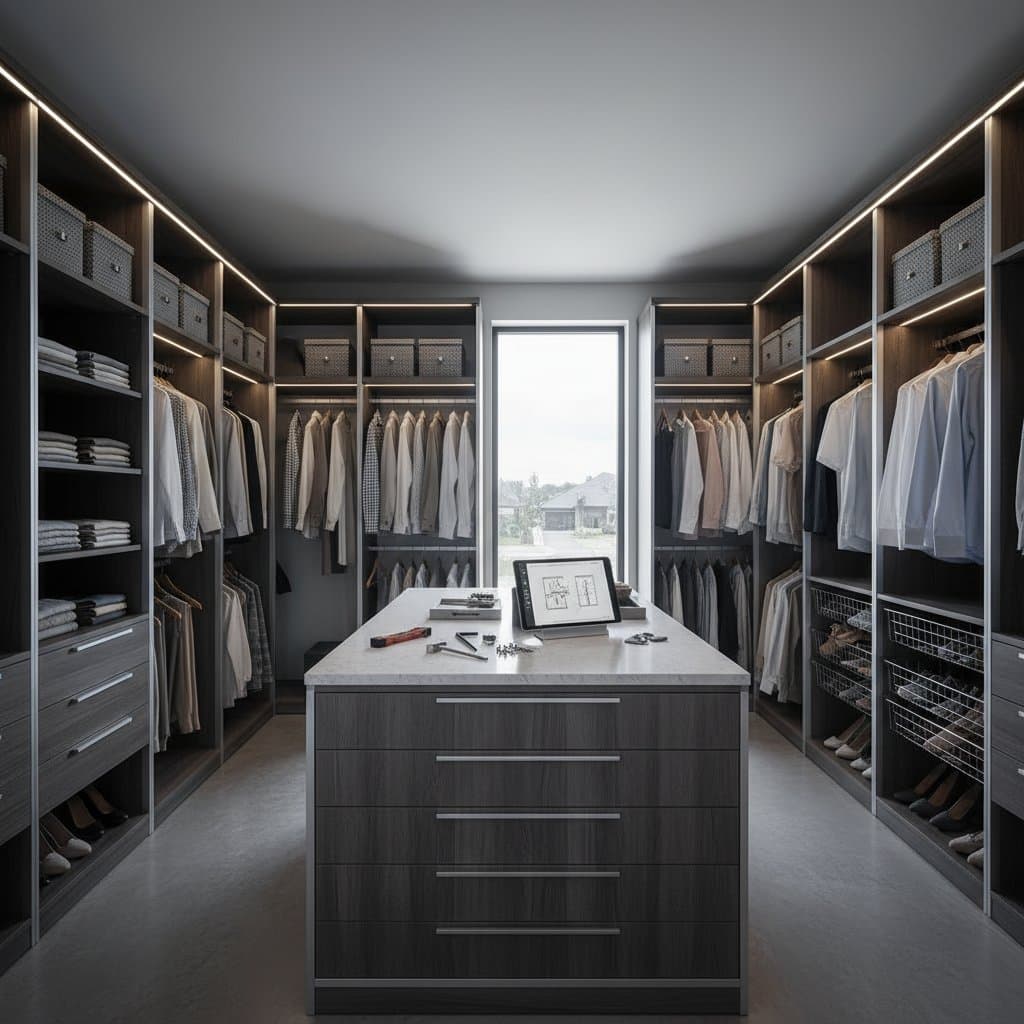
Modular Closets: Revolutionizing DIY Custom Storage
Homeowners increasingly adopt modular closets to achieve professional-level storage through their own efforts. These systems merge exacting woodworking techniques, adaptable configurations, and straightforward assembly. The core innovation lies in enabling a complete, fitted closet without the need for a professional cabinetmaker.
At a Glance
Who benefits: Homeowners pursuing organized, adaptable storage options
Settings: Residences in urban and suburban areas nationwide
Scale: Installations typically span 60 to 120 square feet (5.6 to 11.1 square meters)
Providers: Modular Closets, Inspired Closets, The Container Store Custom Spaces
Visuals: Studio 204 Interiors, Jason Lee Photo
Before Modular Systems
Traditional closets often featured a basic rod, one shelf, and dim corners prone to clutter accumulation. Sagging wire shelves wasted vertical areas, while inaccessible spots frustrated users. One Denver homeowner noted, "We were losing half the storage to ceilings and floor gaps." The space appeared disorganized regardless of folding efforts.
Inadequate lighting compounded issues. Shadows obscured garments, and heavy doors impeded airflow. Construction plans seldom accounted for ventilation or illumination, making closets feel confined.
After Installation
Contemporary modular closets address these challenges with robust construction, illumination, and strategic layouts. Pre-cut panels feature locking cams or dowel joints for assembly using basic tools. Full-height vertical dividers create optimized zones from floor to ceiling.
Design approaches now view closets as miniature rooms rather than mere repositories. Configurations incorporate dedicated hanging areas, drawers, and adjustable open shelving on hidden tracks. LED strips beneath shelves provide uniform lighting, complemented by overhead fixtures for added clarity.
Photographs reveal seamless, polished installations. Neutral matte white or natural wood panels serve as a refined background. Hardware remains understated, often in brushed nickel or matte black finishes. Full-extension drawers expose contents easily, and retractable trays organize shoes or sweaters. Designer Clara Mendes of BrightSpace Interiors explained, "We wanted every inch to work hard." The modular approach permitted precise adjustments to dimensions without specialized fabrication.
The outcome resembles bespoke tailoring, assembled from standard components.
Design Details
Materials
- Melamine-coated particleboard or MDF with edge banding to ensure durability
- Plywood rear panels in humidity-resistant coatings for extended service
- Optional solid wood accents to achieve a furniture-quality appearance
Fixtures and Hardware
- Cam-lock mechanisms for rapid, secure assembly
- Height-adjustable rods equipped with integrated LED lighting
- Soft-close glides supporting up to 75 pounds (34 kilograms) per drawer
Organization Features
- Concealed pull-out hampers for laundry behind false panels
- Configurable cubbies suited for shoes, handbags, and off-season goods
- Felt-lined slide-out trays dedicated to jewelry
- Upright partitions for purses and stacked clothing
Clever Add-Ons
- Integrated USB outlets within drawers for device charging
- Motion-activated lights that illuminate upon door opening
- Lift-assisted overhead compartments for bulky seasonal storage
These elements foster a serene, orderly environment. Systems expand from a single-wall unit to full walk-in configurations.
Why Modular Systems Excel Today
Modular closets align with demands for customization and ease. Earlier kits required significant trade-offs, but advanced production yields precise fits and premium surfaces. Users assemble components like interlocking blocks, rearranging drawers, rods, and shelves to match shifting requirements.
Online planning software simplifies the process. Input measurements to generate 3D previews, then order pre-packaged parts for prompt delivery. Components arrive clearly marked for assembly. Woodworkers find a rewarding mix of hands-on skill and practical efficiency.
Mendes observed, "Clients appreciate starting modestly and expanding gradually. This reflects real family dynamics."
How to Plan Your Modular Closet
- Measure accurately. Document wall lengths, ceiling heights, and door clearances. Allocate at least 24 inches (61 centimeters) of depth for hanging garments and 36 inches (91 centimeters) of walkway for walk-ins.
- Establish zones. Designate areas for full-length hanging of dresses or coats, versus double rods for shirts and trousers. Assign drawer banks for linens and open ledges for daily essentials.
- Incorporate lighting upfront. Route electrical before assembly. Position LED tapes under shelves for diffused, consistent glow.
- Choose finishes and accents. Opt for white surfaces to enhance brightness or wood veneers like walnut for warmth. Select sleek handles to maintain a contemporary profile.
- Assemble progressively. Anchor the primary vertical frame first, then extend sections. Fasten panels to wall studs for firm support.
- Adapt as needed. Introduce additional drawers or dividers in response to routine changes or collection growth.
Such layouts evolve alongside users, surpassing rigid built-ins.
Cost and Implementation
Systems generally cost 40 to 90 dollars per square foot (430 to 970 dollars per square meter). Basic laminate setups for compact closets start at 600 dollars, whereas expansive walk-ins with illumination and tailored faces exceed 4,000 dollars.
Hire professionals for installation if preferred; most finish in one day. Self-assembly spans six to ten hours based on scope.
Key Takeaways
- Modular closets merge bespoke style with hands-on adaptability.
- Precision-drilled components simplify setup for novices.
- Versatile shelving and storage units respond to lifestyle shifts.
- Embedded lights banish shadows and elevate refinement.
- Resilient construction ensures long-term reliability.
These solutions provide luxury outcomes at reduced expense compared to bespoke woodworking.
Daily Use and Adaptation
Installation yields instant improvements in routine. Garments align at convenient heights, drawers operate smoothly, and lights highlight fabrics and hues. Mornings streamline, and evenings require minimal effort to restore order.
Upkeep proves straightforward. Clean surfaces with a moist cloth, inspect connections yearly, and distribute weight evenly on rods. The framework permits targeted replacements or enhancements without full disassembly.
Woodworkers gain avenues for personalization. Craft custom veneers, wooden edges, or specialized inserts to integrate artisanal touches into user-assembled bases. Local shops might supply upgraded panels or unique organizers.
Preserving System Performance
Conduct routine checks on glides and pivots every few months. Secure loose fasteners and dust light elements carefully. In variable humidity, maintain minor expansions between panels and walls to accommodate movement.
During home updates like painting or flooring, dismantle units methodically, tag parts, and reconstruct after surfaces dry. Modular pieces endure repeated setups, prolonging utility and resale potential.
Realizing Lasting Value
A modular closet transcends basic storage; it functions as a personal design endeavor that redefines interactions with possessions. Order emerges alongside tranquility with each access.
Transitioning from chaotic hangs to lit, purposeful arrangements recovers space and sharpens focus. Every compartment embodies deliberate planning.