
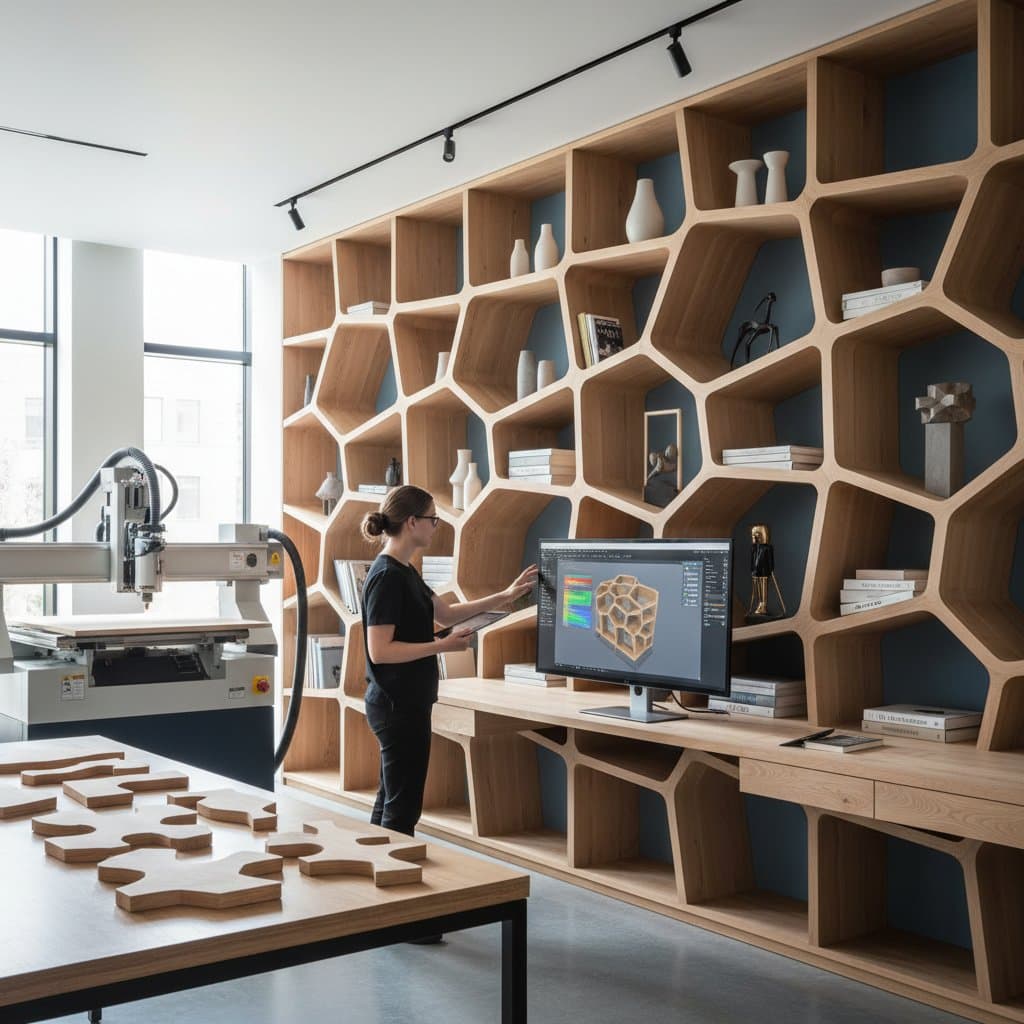
Parametric Shelving Cuts Design Time to Hours
Understanding Parametric Design in Woodworking
Parametric design represents a fusion of traditional woodworking skills and modern computational tools. This approach employs algorithms to generate shelving units that adapt dynamically to specific spatial requirements. Woodworkers input parameters such as room dimensions, load capacities, and aesthetic preferences, and the software produces optimized designs instantly.
Unlike static blueprints, parametric models allow for real-time modifications. A change in shelf height triggers automatic adjustments across the entire structure, ensuring structural integrity and visual harmony. This method shifts the focus from manual sketching to intelligent iteration, empowering creators to explore countless variations without starting over.
The Role of Algorithms in Shelving Creation
Algorithms form the backbone of parametric shelving by processing complex variables into cohesive designs. Software like Grasshopper for Rhino or Fusion 360 integrates these algorithms to model joints, supports, and curves with mathematical precision. Each element responds to user-defined rules, such as minimizing material use while maximizing stability.
For instance, an algorithm can calculate the optimal angle for diagonal braces based on weight distribution. This eliminates guesswork and reduces errors that plague conventional drafting. As a result, woodworkers achieve designs that are both functional and elegant, tailored precisely to client needs.
The process begins with defining key parameters. Users specify measurements for width, depth, and height, along with constraints like wood grain direction or hardware compatibility. The algorithm then generates a 3D model, complete with cut lists and assembly instructions, ready for fabrication.
Streamlining the Design Workflow
Traditional shelving design often consumes days or weeks, involving repeated measurements and revisions. Parametric methods compress this timeline to mere hours. Designers import spatial data from laser scans or CAD files, and the system outputs a viable prototype in minutes.
This efficiency stems from automation. Once parameters are set, the software handles iterations, testing multiple configurations for strength and aesthetics. Woodworkers review options via interactive previews, selecting the best fit without manual recalculations.
Integration with digital fabrication tools further accelerates the process. Export the model directly to CNC machines for precise cutting, or to 3D printers for prototyping joints. This seamless pipeline minimizes delays and ensures the final product matches the digital vision exactly.
Reducing Waste and Enhancing Sustainability
Material efficiency stands out as a key advantage of parametric shelving. Algorithms optimize layouts to nest parts tightly, cutting waste by up to 30 percent compared to manual methods. This not only lowers costs but also supports eco-friendly practices in woodworking.
Consider a custom bookshelf for an irregular nook. The software analyzes the space and suggests a layout that uses every inch of plywood efficiently, avoiding oversized sheets or discarded scraps. Joints are designed for minimal overlap, preserving wood resources.
Beyond waste reduction, parametric design promotes durability. By simulating load stresses, the system reinforces critical areas, extending the lifespan of the shelving. Woodworkers produce pieces that withstand daily use while consuming fewer natural materials.
Actionable Steps for Implementing Parametric Shelving
To adopt parametric shelving, start with accessible software. Free tools like FreeCAD offer parametric plugins for beginners, while advanced options such as SolidWorks cater to professionals. Invest time in tutorials to master parameter setup, focusing on how inputs influence outputs.
- Measure the target space accurately using digital tools like calipers or LiDAR scanners.
- Define core parameters: dimensions, material thickness, and functional requirements such as adjustable shelves.
- Input data into the software and apply algorithms for joint generation and structural analysis.
- Iterate designs by tweaking variables, visualizing changes in real time.
- Export files for CNC routing or laser cutting, including detailed fabrication plans.
- Assemble the unit, verifying fit with the digital model.
This step-by-step approach demystifies the technology, making it approachable for shops of any size. Regular practice refines skills, turning initial setups into intuitive workflows.
Real-World Applications and Case Examples
In residential projects, parametric shelving transforms awkward corners into organized storage. A carpenter designing for a compact urban apartment uses algorithms to create modular units that fit precisely around plumbing or windows. The result: custom solutions delivered in half the usual time.
Commercial applications extend to retail displays and office fit-outs. For a bookstore, parametric design yields expansive shelving with curved edges that enhance visual appeal. Algorithms ensure even weight distribution for heavy book loads, preventing sagging over time.
One workshop reported slashing design hours from 20 to 4 per project after adopting this method. Clients appreciated the rapid turnaround and bespoke quality, leading to repeat business. Such outcomes highlight how parametric tools elevate woodworking from craft to precision engineering.
Unlocking Customization Without Compromise
Parametric shelving opens doors to endless personalization. Clients request features like integrated lighting or hidden compartments, and the software incorporates them seamlessly. Adjust for style—minimalist lines or ornate carvings—while maintaining feasibility for production.
This flexibility benefits small-scale artisans and large manufacturers alike. Prototyping becomes cost-effective, as digital tweaks precede physical builds. Woodworkers experiment freely, confident that algorithms validate each innovation.
The Future of Data-Driven Woodworking
As computational power grows, parametric shelving will integrate with AI for predictive design. Imagine software suggesting layouts based on usage patterns, learned from past projects. This evolution promises even greater efficiency and creativity.
Woodworkers who embrace these tools position themselves at the forefront of the industry. They deliver superior results faster, meeting demands for sustainable, custom solutions. Parametric design not only cuts time but redefines the boundaries of woodworking artistry.