
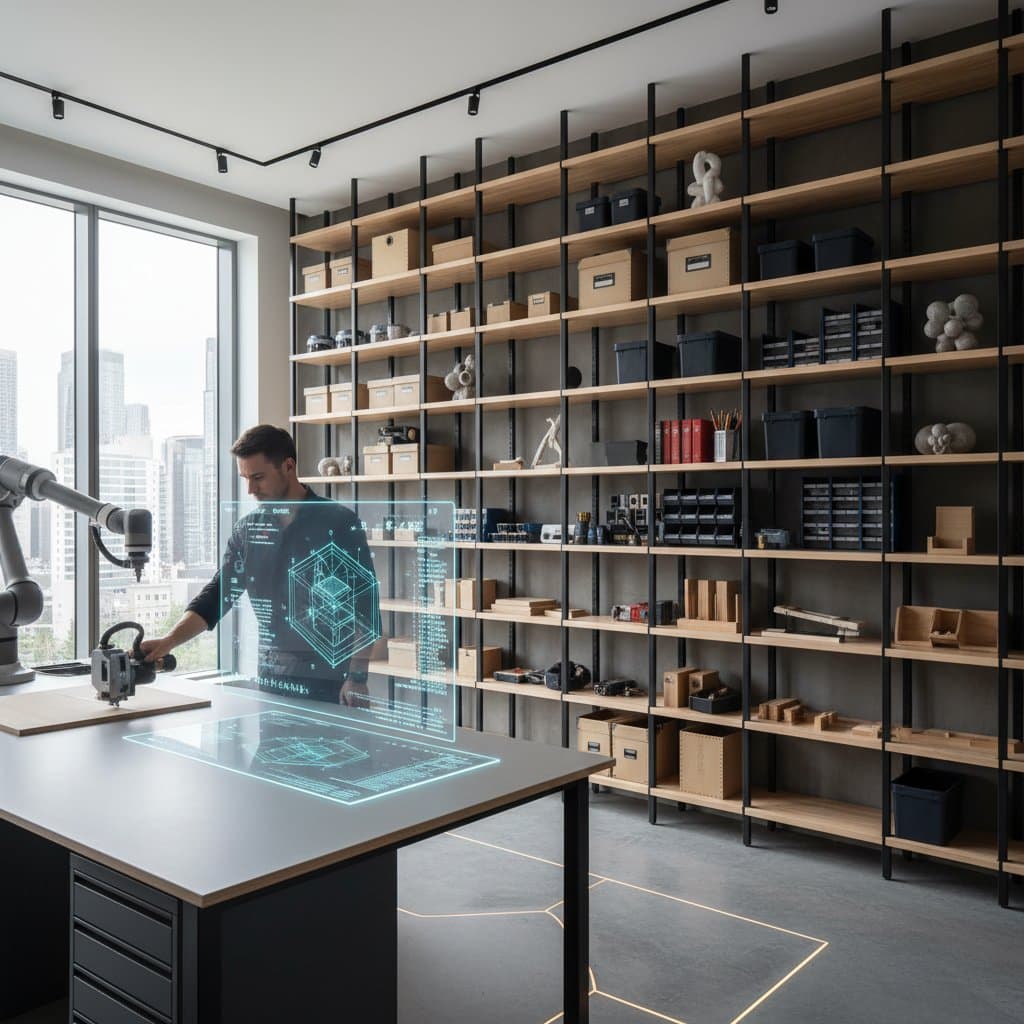
Why Parametric Design Revolutionizes DIY Storage Projects
Building custom storage in a woodworking shop often involves frustrating trial and error. A slight miscalculation in measurements can ruin an entire sheet of plywood. Parametric design addresses these challenges by enabling adjustable digital models that automatically update dimensions, joints, and cuts. This method ensures precise, adaptable shelving systems without starting over each time.
At a Glance
Skill Level: Intermediate woodworker with basic CAD familiarity
Average Cost: $120 to $350, covering materials and essential software
Time Frame: 4 to 8 hours, including design iteration and assembly
Best For: Tailored shelving units, modular storage solutions, and space-constrained workshops
Understanding Parametric Design for Woodworkers
Parametric design relies on algorithmic rules to define and modify geometric shapes. Woodworkers input core parameters, such as overall height, shelf depth, and plywood thickness, into specialized software. The program then dynamically recalculates all related elements, including notch sizes for joints and spacing between supports.
Popular tools include Autodesk Fusion 360 for its intuitive interface, Rhino paired with the Grasshopper plugin for advanced scripting, or no-cost options like OpenSCAD for browser-based experimentation. These platforms provide real-time visualizations, allowing users to preview assembly fits and material usage before committing to cuts. For instance, altering shelf height from 12 to 14 inches triggers instant adjustments to bracket positions and board lengths.
To begin, identify project constraints early: measure available wall space accurately, estimate load capacities for items like books or tools, and select standard material dimensions to minimize custom orders. The software generates optimized layouts, streamlining the transition from digital file to physical build.
Advantages for Storage System Builds
Storage projects thrive under parametric design due to their repetitive yet variable nature. Establish rules for uniform shelf depths, adjustable vertical spacing, or integrated hardware placements like dowels or biscuits. A single change, such as increasing unit width by six inches, propagates through the model to maintain structural integrity.
Key benefits include:
- Precision Alignment: All components interlock seamlessly, eliminating manual recalculations and ensuring level installations.
- Tailored Adaptations: Accommodate irregular spaces, such as angled walls or low ceilings, by tweaking parameters without redesigning core elements.
- **Material ** Algorithms nest parts efficiently on plywood sheets, reducing offcuts and waste by optimizing grain direction and kerf allowances.
- Reusable Frameworks: Develop template models for recurring projects, scaling them for various room sizes or client specifications with minimal effort.
Beyond basic adjustments, integrate computational analysis to evaluate joint strength under expected loads or simulate balance for freestanding units. This proactive step identifies potential failures, such as insufficient support in cantilevered shelves, allowing refinements before fabrication.
Budget Considerations
A typical parametric shelving project costs between $120 and $350. This budget accounts for birch or maple plywood sheets, corrosion-resistant hardware like shelf pins, and access to design software. Hobbyists can leverage free tiers of tools like Tinkercad or FreeCAD, while subscriptions to professional suites, around $50 monthly, unlock features like automated nesting.
Parametric workflows cut material waste by 20 percent or more through precise planning. For example, software can arrange multiple shelf patterns on a single 4x8-foot panel, maximizing yield. In established shops, established templates reduce design time from hours to minutes, potentially halving overall production cycles and justifying initial software investments.
Tackling Projects Solo or with Experts
Intermediate woodworkers can manage parametric designs independently using desktop CAD applications and standard tools. Export models as DXF files for CNC routers to automate precise cuts, or generate printable patterns for jigsaw or table saw work. Focus on verifying parameter inputs against physical measurements to avoid discrepancies.
For complex installations, professionals charge $400 to $900, factoring in custom joinery, finishes like polyurethane coatings, and on-site assembly. Seek fabricators proficient in parametric tools; request portfolios showcasing adaptive models, such as scalable garage organizers, to verify their efficiency in handling variations without full redesigns.
Pitfalls to Sidestep
Several errors can undermine parametric projects. Overlook material thickness variations, and joints may bind or gap unexpectedly. Always incorporate clearances, typically 1/32 inch for glued fits or 1/8 inch for mechanical fasteners, directly into your parameters.
Resist the urge to overload models with excessive variables early on; begin with essential adjustments like height and depth. Conduct small-scale prototypes, cutting a single shelf section to test fit and finish. Neglecting these steps risks amplifying issues across the entire build.
Building Your First Parametric Storage Solution
Select a user-friendly platform compatible with your hardware setup, such as a laptop connected to your shop tools. Create an initial model for a straightforward wall-mounted unit: input dimensions for a 36-inch-high by 24-inch-wide frame using 3/4-inch plywood. Experiment with parameter sliders to vary shelf counts from three to five, observing how support legs and back panels adapt.
Refine the model by adding rules for load-bearing elements, ensuring shelves hold at least 50 pounds per linear foot. Export cut lists and assembly diagrams to guide construction. With practice, expand to interconnected modules that configure for pantries, tool racks, or media centers. Parametric design empowers woodworkers with professional-grade accuracy, transforming ad-hoc builds into efficient, repeatable processes that enhance any workshop's capabilities.