
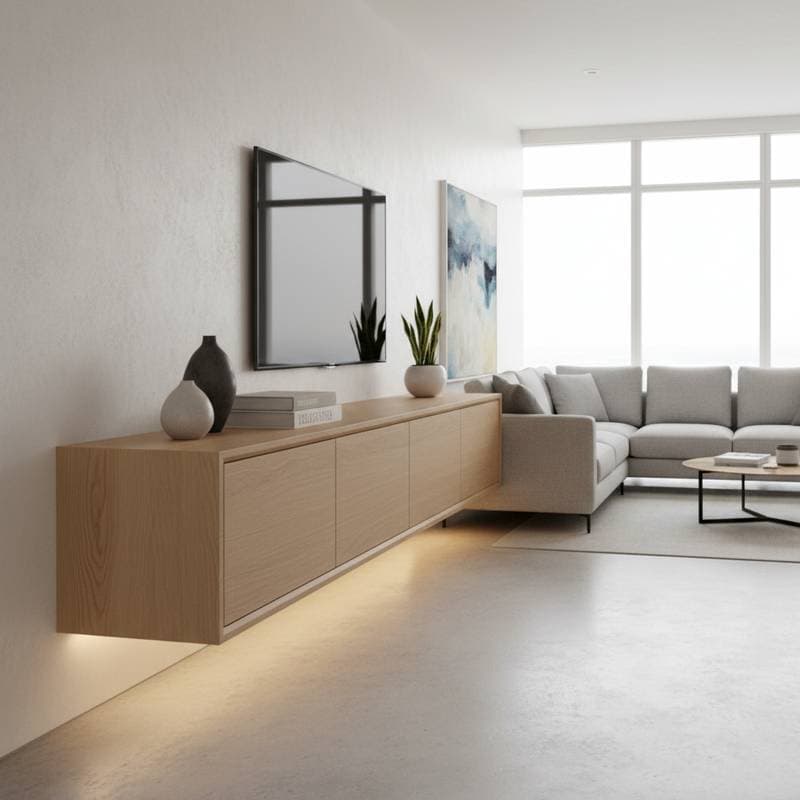
The Appeal of Floating Credenzas in Contemporary Homes
Floating credenzas have emerged as a pivotal element in modern interior design. These wall-mounted storage solutions offer a departure from traditional ground-level furniture, creating an illusion of levitation that draws the eye upward and expands perceived room dimensions. Homeowners appreciate their ability to maintain clean lines while providing essential storage for media devices, books, or decorative items.
The trend stems from a broader shift toward minimalist and multifunctional living spaces. In urban apartments and open-plan homes, where square footage commands a premium, floating credenzas deliver practicality without overwhelming the environment. Designers favor them for their adaptability across styles, from Scandinavian simplicity to industrial edge.
Defining Features of Floating Credenzas
At their core, floating credenzas consist of a shelf or cabinet system secured directly to the wall, eliminating visible legs or supports. This design choice not only saves floor space but also facilitates easier cleaning beneath the unit. Materials range from sustainable hardwoods like oak and walnut to engineered composites that mimic natural grains at a lower cost.
Many models incorporate advanced elements such as soft-close drawers and adjustable shelving. Integrated LED lighting highlights displayed objects, while channels for wiring keep electronics tidy and out of sight. Custom options allow for tailored depths and widths, ensuring a perfect fit for any wall niche or alcove.
Material and Finish Options
Selecting the right material influences both durability and aesthetics. Solid wood provides warmth and longevity, ideal for high-traffic areas like living rooms. For moisture-prone spaces such as kitchens, lacquered or sealed surfaces resist wear and simplify maintenance.
Finishes play a crucial role in harmonizing with existing decor. Matte blacks offer a sleek, modern vibe, while natural oils enhance wood's inherent beauty. Powder-coated metals add a contemporary twist, particularly in fusion styles that blend wood with metallic accents.
Space-Saving Benefits and Practical Applications
One primary advantage of floating credenzas lies in their capacity to reclaim floor space. By mounting at varying heights, they avoid obstructing pathways and allow for under-unit storage solutions like baskets or low stools. This vertical orientation proves especially valuable in small homes or multi-use rooms.
In living areas, a floating credenza serves as a media console, housing televisions and sound systems while concealing cables. Bedrooms benefit from bedside versions that store nighttime essentials without encroaching on walking space. Even entryways gain organization through slim profiles that hold keys, mail, and shoes.
Enhancing Room Flow
These units contribute to better traffic flow by positioning storage off the ground. Designers recommend aligning them with eye level to create focal points that guide visual movement. In open kitchens, they double as serving buffets, freeing counters for meal preparation.
Design Tips for Seamless Integration
To incorporate a floating credenza effectively, start by assessing wall strength and load capacity. Professional installation ensures secure mounting, particularly for heavier units. Measure the space twice to confirm dimensions align with room proportions.
Balance the design by considering surrounding elements. Pair a light wood credenza with dark walls for contrast, or match tones for a cohesive look. Add personal touches through curated displays: stack books horizontally, intersperse with vases, or layer textiles for texture.
Styling for Different Rooms
-
Living Room: Position at sofa height for a console effect. Integrate ambient lighting to accent artwork above.
-
Dining Area: Mount behind the table to store serveware. Opt for extendable sections that pull out during gatherings.
-
Home Office: Use as a desk extension with cable management. Adjustable shelves accommodate files and monitors.
-
Bathroom: Select water-resistant models for towel and toiletry storage, enhancing spa-like serenity.
Considerations for Homeowners and Fabricators
Homeowners should evaluate budget alongside functionality. Entry-level options start affordably, while bespoke pieces from local woodshops command investment for superior craftsmanship. Look for warranties covering hardware and finishes to protect long-term value.
Fabricators find opportunities in customization. Employ CNC routing for precise cuts and joinery techniques like dovetails for drawer strength. Experiment with eco-friendly finishes, such as low-VOC sealants, to appeal to environmentally conscious clients.
Sourcing materials responsibly supports sustainability trends. Reclaimed woods add character and narrative, while FSC-certified lumber ensures ethical harvesting. Collaborate with clients early to translate visions into feasible builds.
Bringing Floating Credenzas into Your Space
Adopting a floating credenza elevates daily living by merging form and function. These pieces not only organize belongings but also infuse interiors with sophistication and ease. Whether updating a single room or overhauling an entire home, they represent a smart investment in versatile storage.
Consider starting small with a single unit to test the impact. Observe how it transforms the area's feel and adjust as needed. Ultimately, floating credenzas empower creative expression while addressing practical needs in evolving home environments.