
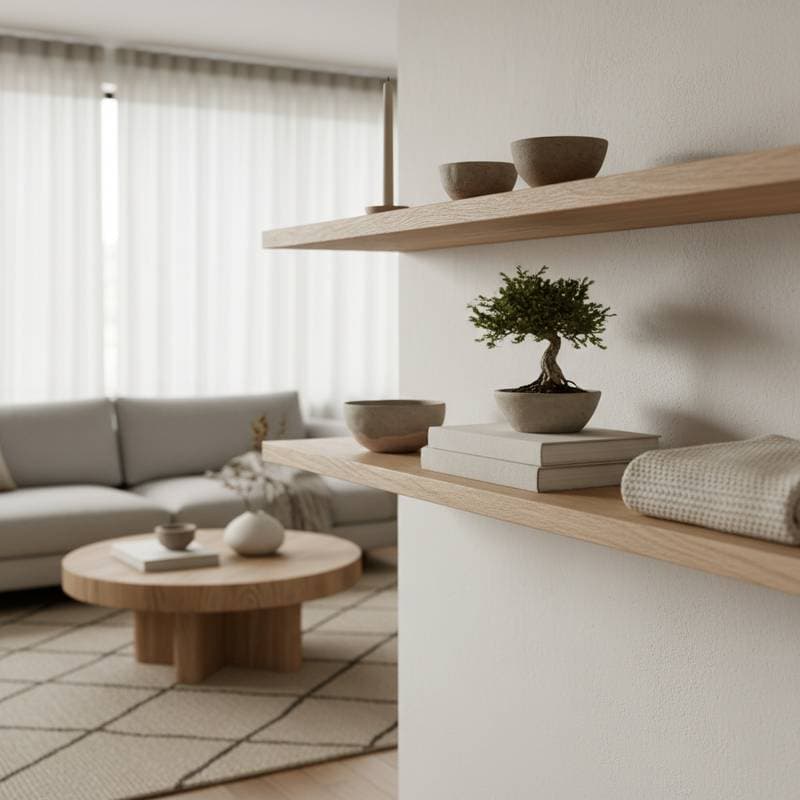
Japandi Shelves: 2025's Essential Minimalist DIY Project
Clean lines, warm wood grains, and serene balance characterize contemporary home interiors. Japandi shelves integrate Japanese simplicity with Scandinavian comfort into a straightforward woodworking endeavor. These floating shelves extend beyond mere storage; they embody intentional design and skilled execution. Individuals who perceive their walls as cluttered or their arrangements as disjointed will find Japandi shelving provides a soothing solution.
The aesthetic features pale oak hues, non-glossy surfaces, and uncluttered arrangements. This approach suits compact urban dwellings as readily as expansive residences. Materials remain economical, tools require no specialization, and outcomes appear bespoke and enduring. The following sections detail planning, construction, and mounting techniques to achieve Japandi shelves that exude personalization and longevity.
Selecting Materials and Tools
Standard woodworking equipment and supplies from local lumber suppliers suffice for Japandi shelves. The design's straightforward nature renders it suitable for novice and experienced builders alike.
Essential Materials
- Wood planks: Select solid oak, birch, or maple in 1-inch thickness. A 36-inch shelf demands approximately 3 board feet, priced between $25 and $45 based on the wood variety.
- Concealed brackets: Opt for floating shelf supports rated to bear 50 pounds or greater per pair, costing $20 to $30.
- Protective coating: Employ clear matte polyurethane or hardwax oil, available for $10 to $20 per pint.
- Fasteners and anchors: Utilize robust wall anchors suitable for drywall or masonry, budgeted at $10 to $15.
Key Tools
- Circular saw or table saw for precise cuts.
- Orbital sander equipped with 120-grit and 220-grit abrasives.
- Power drill accompanied by a bubble level and stud detector.
- Clamps and a retractable measuring tape.
- Applicator brush or lint-free cloth for the finish.
The total expense for a single 36-inch shelf ranges from $65 to $110, assuming possession of fundamental tools. Constructing a trio of shelves in coordinated wood elevates the investment to $200 to $300, encompassing brackets and coatings.
Practical tip: Prior to purchasing lumber, verify moisture levels. Readings under 10 percent on a moisture meter minimize the risk of post-installation distortion.
Step-by-Step Construction Guide
Assemble Japandi shelves through methodical preparation and execution. This process ensures structural integrity and aesthetic harmony.
1. Measure and Cut the Wood
Determine shelf dimensions based on intended use; standard lengths span 24 to 48 inches, with depths of 8 to 12 inches. Mark cuts accurately on the plank using a pencil and square. Employ the saw to create straight edges, aiming for tolerances within 1/16 inch.
2. Shape and Sand the Surfaces
Round over exposed edges with a router or sandpaper for a softened profile that aligns with wabi-sabi imperfection. Progressively sand from 120 grit to 220 grit, removing imperfections while preserving the wood's natural texture. Wipe away dust thoroughly to prepare for finishing.
3. Apply the Finish
In a well-ventilated area, brush or wipe on thin layers of polyurethane or oil. Allow each coat to dry fully, typically 4 to 6 hours, before lightly sanding and recoating. Two to three applications yield a durable, matte sheen that enhances the wood's warmth without overpowering subtlety.
4. Prepare for Mounting
Drill pilot holes in the shelf's rear for bracket insertion, ensuring alignment. Test-fit components to confirm even weight distribution. This preparation facilitates seamless installation.
Practical tip: Work in a dust-free space during finishing to avoid contaminants that could mar the surface.
Budgeting and Cost Management
Japandi shelves prove more economical than bespoke cabinetry yet surpass inexpensive particleboard alternatives due to premium solid wood and refined detailing. Expenditures vary with scale, material choices, and support specifications.
Detailed Cost Analysis
- Single shelf, self-built: $65 to $110.
- Three-shelf arrangement: $200 to $300.
- Expert mounting services: $400 to $600 for a three-shelf unit.
- Exotic options like walnut or elm: Additional $40 to $80 per shelf.
Influencing Variables
- Lumber variety: Oak and birch offer balanced pricing and tonal compatibility with Japandi principles. Walnut increases expense but introduces richer depth.
- Coating method: Hardwax oil demands higher initial outlay yet provides a tactile, repairable surface.
- Surface preparation: Stone or ceramic walls necessitate specialized anchors.
- Professional assistance: Carpenters charge $50 to $70 hourly for labor.
Strategies for Savings
- Procure rough-cut boards and mill them personally to reduce costs.
- Incorporate ready-to-use floating brackets rather than fabricating custom supports.
- Distribute finishing products across several undertakings.
- Consolidate installations within a single area to streamline planning.
Practical tip: Sequence your shelf layout prior to material acquisition. Deriving multiple pieces from a single broad board maintains uniform coloration and reduces scraps.
Installation Essentials
Secure Japandi shelves to achieve stability and visual poise. Proper placement amplifies the design's calming influence.
Locate wall studs using the detector for optimal anchorage. Position the lowest shelf at least 48 inches from the floor, spacing subsequent ones 12 to 18 inches apart. Insert brackets into pre-drilled holes, level meticulously, and fasten with anchors. Slide the finished shelf onto the supports, securing from behind if required.
For uneven surfaces, employ shims beneath brackets to ensure plumb alignment. This adjustment prevents sagging over time.
Practical tip: Outline shelf positions with painter's tape prior to drilling. Observe the arrangement for 24 hours to refine balance.
Pitfalls to Sidestep
Woodworking ventures, though uncomplicated, demand vigilance toward detail and finesse. Japandi shelves thrive on precise proportions and understated elegance.
1. Neglecting Surface Evenness
Irregular walls cause floating shelves to appear skewed. Employ an extended level or ruler to assess flatness before attachment. Adjust brackets with thin shims where necessary.
2. Exceeding Load Limits
A 36-inch shelf supported by two brackets accommodates 40 to 50 pounds securely. Position denser items, such as volumes or vessels, proximate to the wall rather than extremities.
3. Omitting Thorough Sanding
Raw textures absorb finishes inconsistently, resulting in lackluster visuals. Sand progressively to 220 grit or beyond prior to coating application.
4. Exposing Hardware
Japandi's allure resides in minimalism. Hidden fixtures preserve unadulterated lines; eschew overt L-brackets unless intentionally contrasting.
5. Inadequate Spacing
Overly dense arrangements undermine minimalism. Maintain a minimum of 12 inches of exposed wall between shelves. Empty areas contribute to the overall harmony.
Practical tip: Visualize the configuration by affixing tape mockups to the wall. Allow time for contemplation before committing to holes.
Preserving Shelf Longevity
Japandi shelves demand little maintenance yet gain from consistent care regarding environmental factors, coatings, and burdens.
Upkeep Practices
- Clean surfaces weekly using a dry microfiber cloth.
- Refresh oil applications annually to sustain color vibrancy and hydration.
- Inspect bracket fasteners biannually for firmness.
- Shield darker finishes from prolonged solar exposure to avert discoloration.
Enduring Advantages
Well-protected solid wood endures for generations. In contrast to composite boards, these shelves defy drooping and permit repeated refinishing. Their subdued style transcends fleeting fashions, remaining pertinent amid evolving interiors.
Why it endures: Authentic wood responds organically to climatic shifts. Periodic oiling revitalizes cellular structure and averts fissures. Over time, the developed patina deepens allure.
Practical tip: Store excess finish in an airtight container for minor repairs. Address superficial marks by abrading with fine steel wool followed by oil application.
Realizing Tranquil Spaces with Japandi Shelves
Integrate Japandi shelves to foster environments of repose and utility. These elements not only organize belongings but also cultivate mindfulness through their restrained beauty. Builders derive satisfaction from crafting pieces that harmonize daily life with artistic intent. Embrace this trend to infuse homes with lasting serenity and sophisticated functionality.