
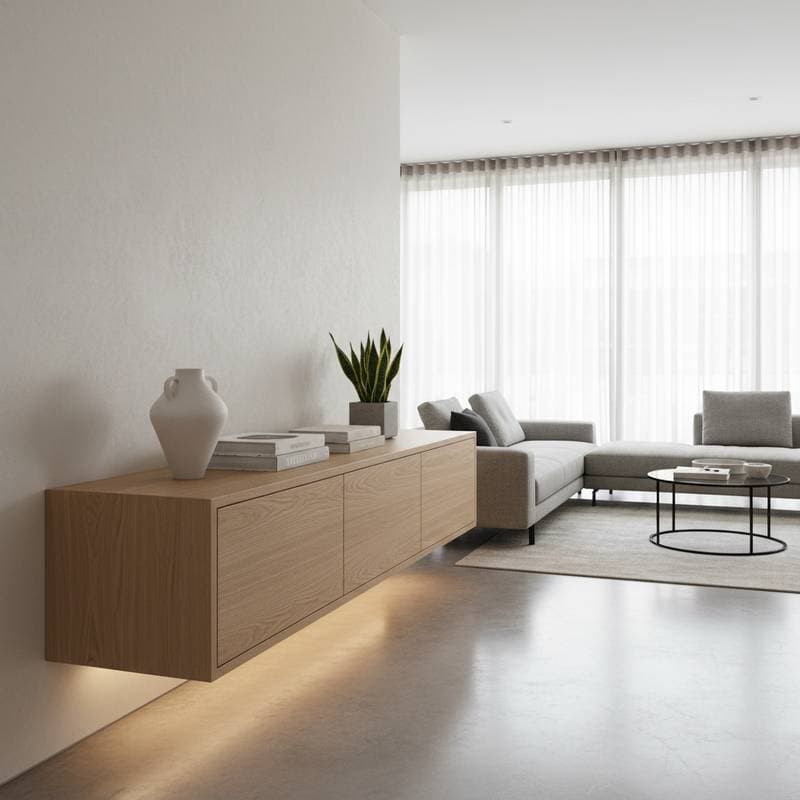
The Appeal of Floating Storage
Floating credenzas provide an effective approach to modern home storage. These wall-mounted units raise cabinetry off the floor, which generates a sense of lightness and openness. Such designs improve both function and visual appeal across different living areas.
Visual Clarity
Floating credenzas reduce the visual bulk in any room. The open space below directs attention to the floor, which expands the perceived size of the area. Choose finishes that blend with surrounding wall tones to establish smooth transitions and a peaceful setting.
Practical Cleaning
The gap under the unit makes upkeep straightforward. Vacuums and mops reach the space without obstruction, which limits dust buildup. In homes with pets, this design keeps pet hair from collecting in hard-to-reach spots.
Flexible Placement
Attach these credenzas firmly to wall studs or masonry anchors for secure support. This technique permits exact positioning alongside features such as windows or artwork. In open layouts, the adaptability aids in arranging multifunctional furniture setups.
Modern Character
The raised form projects a fresh, current style. It pairs effectively with minimalist, midcentury modern, or Scandinavian influences. Combine natural wood tops with neutral backgrounds to highlight grain patterns and quality construction.
Custom Craftsmanship
Artisans value the precision required to build floating credenzas. Accurate joinery maintains equilibrium, and even door fittings sustain the levitated look. Builders must focus on the back panel, including cleats and anchors, to ensure long-term strength.
Cabinetmaker Daniel Ruiz noted, "You have to treat the back as carefully as the front. The cleat and anchor points carry everything. A small error in alignment shows up across the whole wall."
How Floating Credenzas Enhance Daily Life
These storage options reshape room interactions in meaningful ways. In living rooms, they replace standard media stands, which allows wall-mounted televisions and hidden components inside. Dining areas gain from sideboards that hold dishes without blocking baseboards.
Entryways become tidy hubs for keys and mail, while keeping paths free for shoes. Many users report that spaces feel calmer and easier to manage. Without legs, the design avoids low-level clutter and supports clear floor sightlines.
Architectural photographer Nina Carter observed, "The shadow line is what makes the shot. It gives dimension even when the rest of the space is minimal."
Selecting Materials and Finishes
Wood Veneer and Solid Panels
Oak, walnut, and ash stand out for their strength and visual interest. Veneers offer consistent patterns and lighter weight. Select pale solid woods to preserve design balance.
Painted MDF or Lacquer
Painted options create a smooth, contemporary finish. Matte versions handle fingerprints well, and glossy ones amplify light in darker rooms.
Mixed Materials
Pair wood bases with painted sections for textural contrast. Add stone or composite surfaces on top to endure frequent use in dining or bar setups.
Hardware and Movement
Use touch-latch or push mechanisms to eliminate visible pulls. Install soft-close hinges to protect against everyday impacts.
Choices in materials shape the room's overall mood. Warm woods build warmth, while lacquered parts convey sharp, built-in precision.
Key Specifications:
- Cabinet depth: 16 to 20 inches (41 to 51 centimeters) for balanced proportions
- Finish options: Natural oak, walnut veneer, painted MDF, or matte lacquer
- Lighting: LED strip or puck lights recessed underneath to emphasize the lift
- Storage layout: Three or four doors, sometimes with side drawers for media or utensils
- Cable management: Hidden channels at the rear to manage power and audio lines
These details turn a simple cabinet into a key room element. The suspended format invites creative choices in materials and dimensions that floor units cannot achieve.
Incorporating Lighting Layers
Under-cabinet lighting fulfills both utility and style needs. Fit narrow LED strips along the bottom to deliver soft glow or path guidance at night. In living areas, this replaces freestanding lamps with subtle, even light.
Place lights about two inches (5 centimeters) back from the front for even spread. Choose a 3000K warm tone to match wood finishes.
Interior designer Kyle Tran explained, "The light is not just about drama. It defines the float and keeps the wall from feeling flat."
Optimizing Internal Storage
Smart interior planning boosts the credenza's usefulness. Tailor the inside to handle routine items with ease.
- Adjustable shelves: Fit large platters or electronics
- Pull-out trays: Allow easy access without stretching
- Cord channels: Tidy wires for devices
- Drawer inserts: Divide tools or supplies
For electronics, add vents to prevent overheating. In dining use, cover drawers with felt to protect fabrics.
Prefer closed sections to keep the clean exterior. This method reduces visual noise and supports a minimalist vibe.
Mounting and Proportion Guidelines
Approach installation with care to handle the loaded weight. Use heavy-duty anchors or add wall blocking for extra hold.
- Ideal height: 30 inches (76 centimeters) from floor to surface top
- Base gap: 6 to 10 inches (15 to 25 centimeters) for a clear shadow effect
- Width range: 60 to 96 inches (152 to 244 centimeters) to match common walls
- Depth: 16 to 20 inches (41 to 51 centimeters) for reachable storage
Center the unit on wall segments, leaving space from edges. Generous margins around the sides strengthen the suspended effect.
Ideal Applications for Floating Credenzas
Living Rooms
Use them instead of low consoles to hide wall-run cables. Build in spots for speakers or modems behind panels.
Dining Areas
Store plates and glasses while freeing floor space for seating. Let wall decor take focus without interference.
Entryways or Hallways
Create spots for bags and shoes that do not block movement. Bottom lighting aids visibility in dim conditions.
Home Offices
Mount under windows or on blank walls for files and printers. The open floor suits rolling chairs.
In every space, the advantages hold: clear floors, direct views, and handy access to essentials.
Essential Considerations for Longevity
Floating credenzas merge storage with room expansion. Firm wall fixes create a light presence. Follow size guidelines to blend with architecture. Customize materials and lights to adjust mood and lessen visual heft. Closed fronts maintain polish.
Small height tweaks bring big changes to habits. Floors look continuous, cleaning stays simple, and mess stays out of sight.
Preserving Your Floating Credenza
Regular maintenance keeps the piece in top form. Check anchors once a year for firmness. Wipe surfaces with gentle cleaners and soft cloths, skipping harsh scrubbers.
For wood, add wax or oil lightly when dry. Brush dust from painted or lacquered parts to hold the sheen.
If lights are present, watch for dimming and swap LEDs as required to keep the glow steady.