
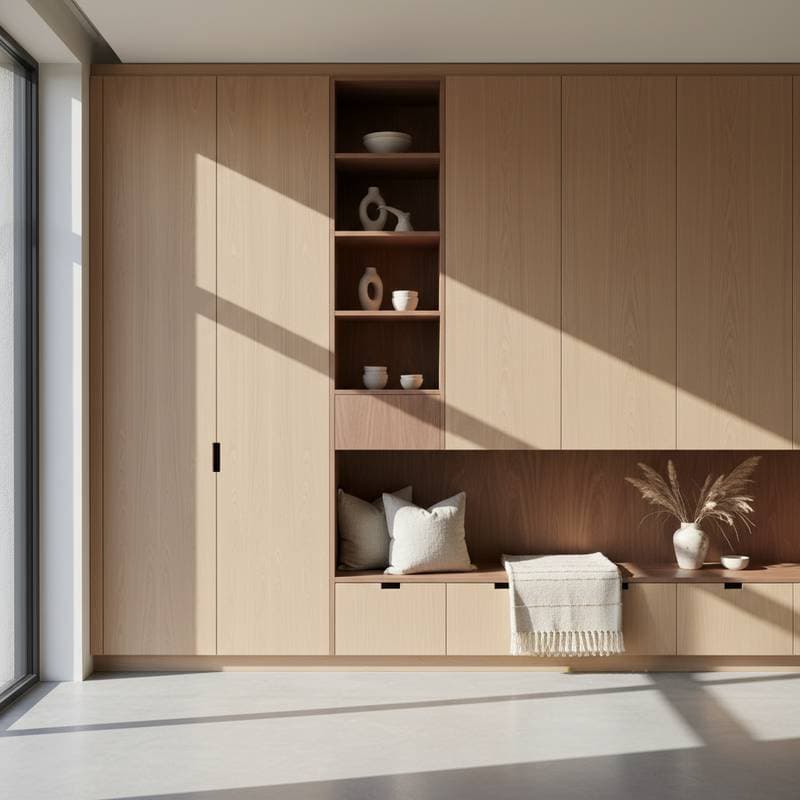
Japandi Built-Ins: Merging Serenity and Utility in 2026
Built-in cabinetry returns with a refined approach, emphasizing softness, tranquility, and purpose. Japandi built-ins integrate the precise lines of Scandinavian craftsmanship with the organic elements of Japanese aesthetics. This fusion produces storage solutions that anchor spaces while promoting peace. Homeowners seeking elegance without sacrificing coziness find ideal harmony in this approach.
At a Glance
Cost Range: $250 to $450 per square foot
Timeline: 3 to 6 weeks for custom fabrication
Skill Level: Intermediate woodworking or professional installation
Core Materials: White oak, ash, bamboo, or maple
Finish Preference: Matte oil, soap finish, or natural lacquer
Defining Elements of Japandi Built-Ins
Japandi emerges from the union of two traditions that champion restraint. Japanese design emphasizes harmony with nature and meticulous handiwork. Scandinavian principles highlight brightness, ease, and practicality. Together, these influences yield built-ins that achieve minimalism without austerity.
Essential characteristics encompass:
- Slim silhouettes and concealed mechanisms that allow cabinetry to merge seamlessly with walls.
- Combinations of exposed shelves and enclosed compartments to control disarray while facilitating access to essentials.
- Organic substances such as ash, oak, or bamboo that infuse warmth via visible patterns and subtle hues.
- Subdued color schemes including beige, off-white, and gentle gray that diffuse illumination and soothe vision.
Such a built-in accommodates volumes, kitchen utensils, or textiles, yet maintains an airy presence. Proportions adhere to exact standards, with each connection, pivot, and texture pattern receiving deliberate attention.
Rationale for effectiveness: This style minimizes distractions, expanding perceived room size and fostering relaxation. Surfaces serve functional roles, with components enhancing routine activities over mere ornamentation.
Practical recommendation: Prior to drafting plans, assess wall dimensions and identify essential storage zones. This strategy curbs excess construction and preserves the understated essence.
Selecting Materials and Finishes
Choices in materials establish the genuineness of Japandi built-ins. Scandinavian techniques frequently employ light timbers like birch or ash, whereas Japanese methods prefer resilient options such as cypress or cedar. Within North American workshops, white oak and maple offer robust performance alongside appealing shades.
Suggested finishes:
- Soap applications for a powdery, subdued appearance that evokes authenticity.
- Hardwax oils to accentuate natural patterns while preserving an unadorned feel.
- Satin-clear lacquers for protection against humidity in areas like kitchens or bathrooms.
Steer clear of high-gloss polyurethanes or colored varnishes. The intent centers on permitting wood to evolve naturally over time. Plan to refresh oil treatments biennially or triennially to sustain surface integrity and patina.
Rationale for effectiveness: These treatments enhance the sensory appeal of timber, a cornerstone of Japandi tranquility. They complement fabrics derived from nature and stone elements effectively.
Practical recommendation: Prepare a sample board prior to full application. Evaluate grain responses across varying lighting scenarios. Select the option that promotes ease rather than spectacle.
Estimating Costs and Allocating Budgets
Bespoke Japandi built-ins range from $250 to $450 per square foot, influenced by timber variety, assembly intricacy, and surface preparation. Ready-made modular units may reduce expenses to approximately $150 per square foot, although they typically sacrifice the nuanced details central to the aesthetic.
Budget allocation:
- Materials: 40 to 50 percent of overall expenditure.
- Labor and assembly: 30 to 40 percent.
- Surface treatment and setup: 10 to 20 percent.
Economies arise from personal application of finishes or streamlined interior configurations. Prioritize quality in connections; inferior bonds undermine stability and appearance.
Rationale for effectiveness: Clear financial outlines align projections with reality. Understanding expenditure distribution enables prioritization of key features.
Practical recommendation: Request a prototype or detailed blueprint from the fabricator prior to production. Validate intervals, compartment depths, and fixture positions to avert expensive alterations.
Opting for DIY or Expert Construction
Competent hobbyists manage modest Japandi built-ins, such as suspended ledges or integrated seating. Elaborate systems spanning entire walls demand specialized equipment and accurate gauging.
Projects suitable for DIY:
- Suspended ledges for literature or niche displays.
- Hallway benches featuring hinged compartments.
- Basic shelving units secured by hidden supports.
Projects requiring professionals:
- Units with embedded panels or gliding doors.
- Angular closets or entertainment partitions.
- Tailored compartments employing interlocking joints.
Expert woodworkers guarantee precise fits and flawless edges. Seek client endorsements, liability coverage, and examples of prior subdued commissions. Anticipate delays of four to six weeks following design confirmation.
Rationale for effectiveness: Accurate assembly and positioning distinguish polished outcomes from disordered results.
Practical recommendation: When engaging services, examine the workshop's portfolio of Japandi or Scandinavian executions. Execution must convey restraint and equilibrium, avoiding elaboration.
Pitfalls to Sidestep in Execution
Straightforward concepts falter through overlooked particulars. Guard against these issues:
- Excessively intricate arrangements that disrupt serene flow.
- Disregard for scale, where bulky or irregular intervals impose burden.
- Incorporation of artificial composites that diminish perceived value.
- Oversight of surface preparation, leading to voids and offsets.
- Failure to address upkeep, as organic treatments demand careful care and periodic renewal.
Rationale for effectiveness: Circumventing these errors sustains aesthetic cohesion and prolongs durability across years.
Practical recommendation: Examine assemblies progressively during assembly. Fine-tune panels, smooth borders, and confirm alignments before finalizing connections.
Integrating Japandi Built-Ins into Daily Life
Japandi built-ins enhance environments by promoting order and inviting interaction. They adapt to evolving needs, from displaying cherished objects to concealing necessities. Over time, the natural materials develop character, deepening the sense of personal sanctuary.
Homeowners report greater calm in spaces where storage feels integrated rather than imposed. This design encourages mindful use, reducing stress from clutter. Consider how these elements align with broader interiors, such as pairing with linen textiles or earthen pottery for amplified serenity.
Advancing your project: Compile images capturing Japanese subtlety and Scandinavian clarity. Outline measurements and functional objectives prior to consultations. Select timbers that harmonize with ambient light and existing floors, ensuring seamless cohesion.