
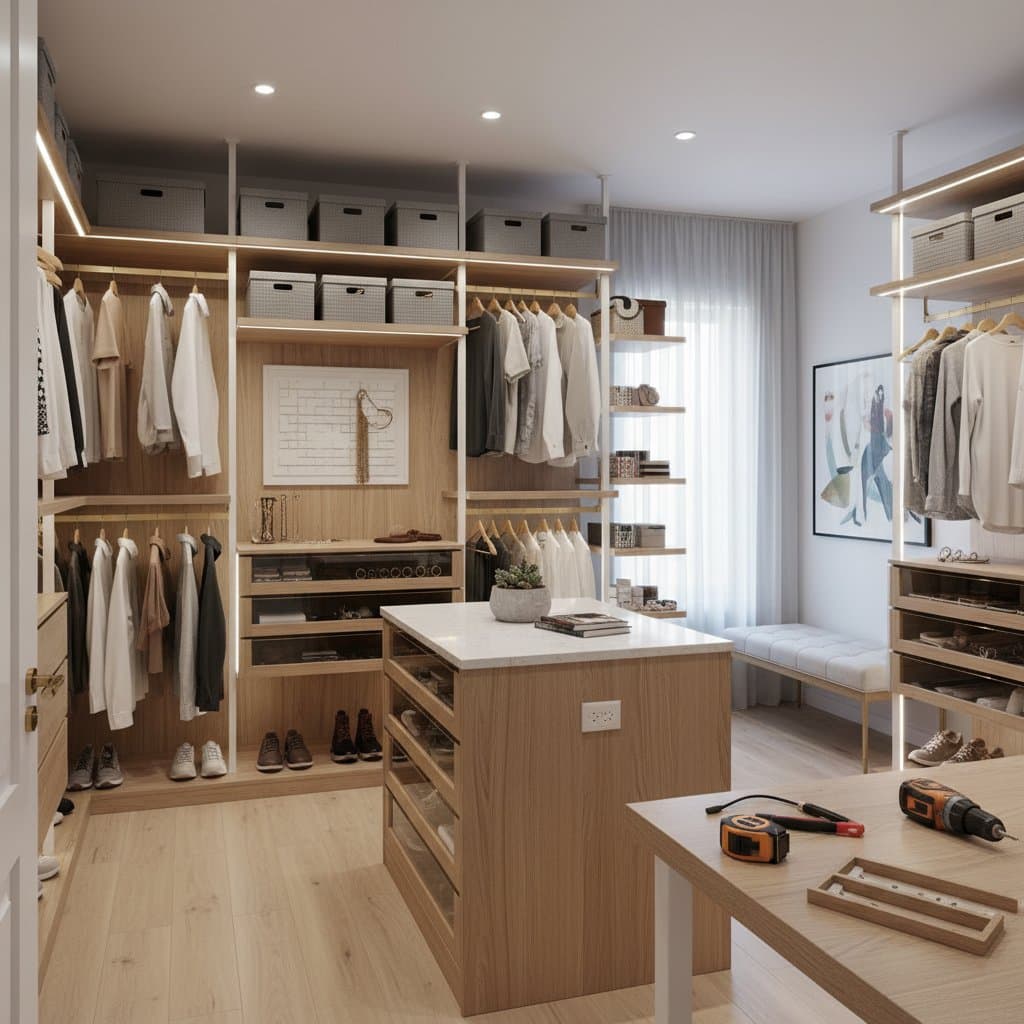
DIY Modular Closets Transforming Homes in 2026
A cluttered closet disrupts harmony in even the most orderly home. Homeowners increasingly choose DIY modular closet systems to restore order, enhance aesthetics, and introduce versatility to storage areas. These systems range in cost from $400 to $2,500 based on dimensions and materials, providing a budget-friendly alternative to custom millwork. Users gain full control over personalized designs without enduring lengthy professional installation timelines.
This guide examines the impact of modular closets on home organization, details the installation process, and outlines factors for selecting between a DIY approach and a professional build.
Why Modular Closets Excel in Home Storage
Modular closet systems consist of standardized panels, rods, and shelving units that connect via locks or screws. Individual components allow reconfiguration as requirements evolve. This versatility attracts homeowners and renters seeking a refined appearance without permanent fixtures.
Three primary advantages distinguish modular closets:
- Adjustability. Positions for shelves and rods shift vertically to accommodate varying wardrobes or storage containers.
- Expandability. Begin with a basic setup and incorporate additional units over time without discarding existing elements.
- User-friendly assembly. Pre-drilled panels paired with cam-lock hardware facilitate construction for novices equipped with essential tools.
Such flexibility enables one system to adapt from a child's bedroom to a guest room. The modular method minimizes environmental impact by promoting reconfiguration over demolition.
Action step: Assess wall dimensions, record ceiling elevations, and draft a layout incorporating hanging areas, drawers, and shelves. Effective modular planning utilizes every available space prior to any modifications.
Selecting Materials and Hardware
The choice of materials influences both the visual appeal and durability of the closet. Primary selections include:
- Melamine panels: Feature smooth surfaces for effortless cleaning and cost approximately $60 per linear foot.
- MDF (medium-density fiberboard): Offers paintability and solidity, common in moderate-priced assemblies.
- Plywood or solid wood: Provides robustness and personalization options, ranging from $90 to $150 per linear foot.
Hardware selections enhance functionality and endurance. Opt for full-extension drawer slides and soft-close hinges to improve usability. Metal rods outperform plastic in weight capacity and allow smoother garment movement.
Evaluate kits based on these specifications:
- Spacing of adjustable holes at one-inch intervals to enable precise shelf positioning.
- Concealed fasteners that mimic a seamless built-in finish.
- Protective edge banding to resist moisture damage.
Action step: Commit to a single brand for the entire system. Combining components from multiple sources risks compatibility problems.
Budgeting and Cost Considerations
A modular closet project empowers users to manage most expense elements directly.
Standard cost ranges:
- Compact reach-in closet (4 to 6 feet wide): $400 to $800
- Standard walk-in closet: $900 to $1,800
- Expansive tailored setup: $2,000 to $2,500
Savings on labor: Self-installation avoids fees of $40 to $60 per hour.
Cost-reduction tactics:
- Purchase flat-pack kits amid promotional periods.
- Employ melamine for primary panels while reserving wood upgrades for exposed surfaces.
- Repurpose existing drawer hardware or apply matching paint finishes.
Prioritize quality in wall anchors and hardware to prevent structural failures and subsequent expenses.
Action step: Allocate an additional 10 percent of the budget for unforeseen items such as trim or spare components.
Pitfalls to Sidestep in DIY Projects
Measurement inaccuracies and procedural oversights commonly undermine modular installations. Address these challenges:
- Overlooking stud positions. Drywall anchors alone insufficiently secure heavy configurations.
- Disregarding irregular floors or ceilings. Take measurements at multiple points and apply shims as required.
- Exceeding shelf capacities. Limit weight to 40 pounds per shelf unless specifications indicate otherwise.
- Neglecting protective equipment. Use eye shields during cutting or drilling operations.
- Hastening alignments. Secure hardware only after verifying overall squareness.
Remedy advice: For warped panels or misaligned drawers, release fasteners, level the framework, and retighten sequentially from the core outward.
Preserving Longevity
Modular closets represent enduring enhancements that require routine maintenance for stability. Annually inspect and secure cam locks along with support rails. In humid environments impacting wood elements, introduce a compact dehumidifier or absorbent silica packs.
Launching Your Modular Closet Initiative
Embark on this project by selecting a reputable kit aligned with your spatial constraints and aesthetic preferences. Gather tools including a drill, level, and stud finder to ensure precise execution. Upon completion, enjoy a transformed space that boosts daily efficiency and elevates home comfort for years ahead.