
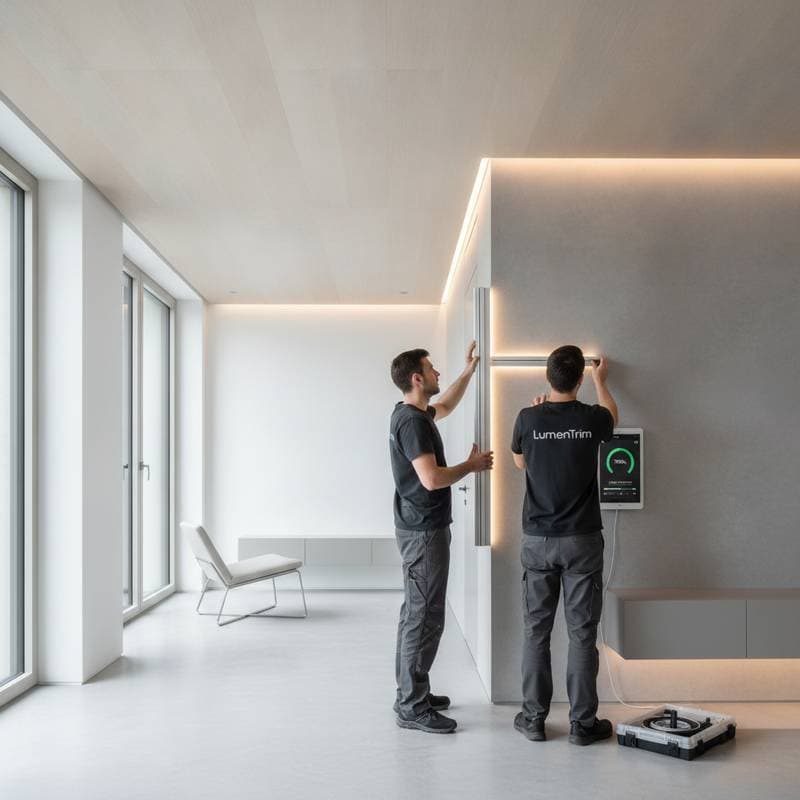
Smart LED-Embedded Molding Transforms Home Lighting
Imagine entering a hallway where soft light traces the ceiling trim. In the kitchen, crown molding shifts from bright task lighting to warm evening tones on command. Smart LED-embedded molding integrates illumination with architecture for refined residential design.
At a Glance
- Average cost: $12 to $35 per linear foot
- Installation time: 1 to 3 days for a mid-size room
- Skill level: Intermediate carpentry and wiring experience
- Energy savings: Up to 60 percent compared to traditional fixtures
Why Homeowners Choose Smart Molding
Traditional lighting often clutters ceilings with recessed cans or surface fixtures. LED molding places light directly in the trim. This approach creates a clean architectural line that appears both modern and timeless. The result eliminates bulky fixtures while casting even illumination across walls and ceilings.
Smart controls add automation to these design benefits. Lights can follow daily schedules or respond to motion sensors. Many systems link to standard smart-home platforms via Wi-Fi or Bluetooth. Users adjust brightness, color temperature, or hue through a phone or voice command.
Energy performance stands out as well. LED strips draw about 8 watts per foot versus 60-watt equivalents in older bulbs. Annual lighting costs in an average household can drop by $150 to $300.
Planning Your Layout
Identify rooms that gain most from indirect lighting. Hallways, kitchens, and media rooms often benefit first. Measure each wall and note power supply locations before purchase.
Installation Sequence
LED-integrated molding follows standard trim procedures with added focus on wiring and ventilation. Products typically arrive as lightweight PVC or aluminum channels that secure low-voltage LED strips.
- Measure walls and mark power access points.
- Run 18-gauge low-voltage wire along joists or behind drywall.
- Nail or clip channels to wall or ceiling edges.
- Mount drivers and controllers near an outlet.
- Verify even brightness and app connectivity.
An experienced installer completes a single room in one or two days. DIY projects may require three days when walls need retrofitting. Confirm that the power supply matches the 12- or 24-volt LED rating to prevent early failure.
Budget Considerations
Material and control choices determine final pricing. Basic kits with manual dimmers average $12 to $18 per linear foot. Premium smart systems with tunable white or RGB options reach $25 to $35 per foot. Professional installation adds $4 to $8 per foot.
Cost controls include selecting smart drivers only for primary rooms, purchasing longer LED rolls, and choosing PVC over aluminum to reduce expense by up to 20 percent. Quality drivers and connectors remain essential. Inferior parts often produce flickering or premature failure.
When to Hire Professionals
A licensed electrician becomes necessary for whole-house automation, new transformers, or uncertain local codes.
Installation Pitfalls
Common errors include omitting a diffuser lens, which creates harsh light bands. Drivers require adequate airflow to limit heat. Paint touch-ups should finish before mounting. Color temperature must match across all fixtures.
Daily Operation and Longevity
Once installed, the system allows precise brightness adjustments for reading, entertaining, or relaxation. It operates at low temperatures, consumes minimal power, and typically lasts 50,000 hours before replacement. Many homeowners find the lighting becomes the first detail guests notice.