
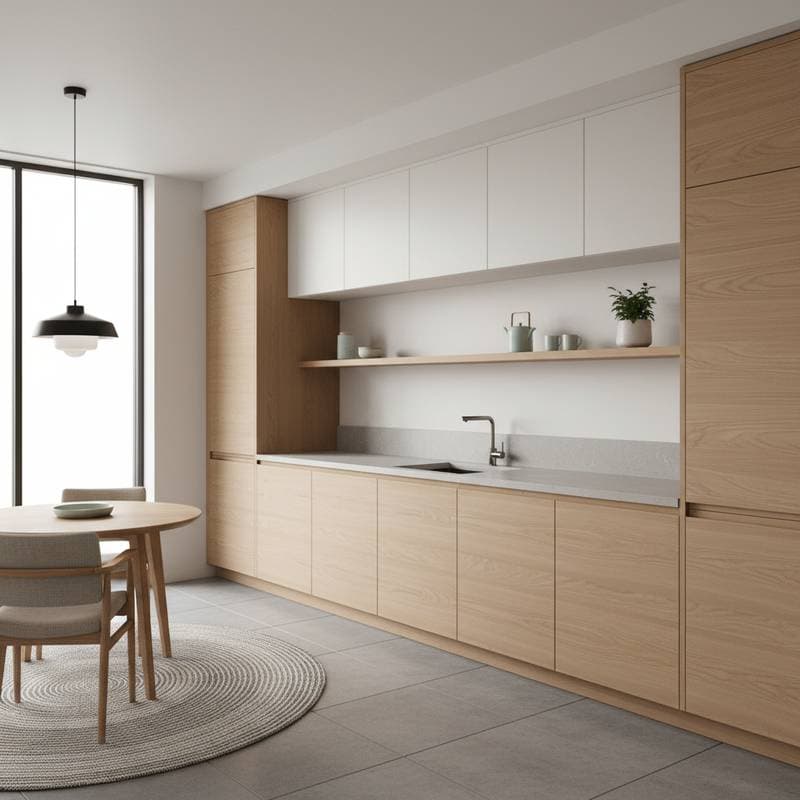
Why Japandi Cabinets Cut Clutter and Decision Fatigue
A cluttered kitchen or living space can drain energy, even when filled with items you cherish. Despite investments in attractive furnishings, disorganization often creates visual chaos. Japandi cabinets address this challenge by integrating Scandinavian warmth with Japanese precision, yielding storage solutions that promote serenity, conceal disorder, and endure for generations.
At a Glance
- Average cost per linear foot: $250 to $600
- Installation time: 2 to 4 days for a medium-sized kitchen
- Typical cabinet depth: 24 inches
- Best suited for: Small to medium homes requiring efficient organization
- Key style elements: Light-toned woods, streamlined profiles, concealed hardware, soft-close mechanisms
The Philosophy Behind Japandi Storage
Japandi cabinetry draws from two minimalist philosophies that prioritize equilibrium. Japanese design highlights simplicity and meticulous craftsmanship, whereas Scandinavian aesthetics emphasize natural light, practicality, and coziness. Together, these influences produce cabinets that eliminate excess while maintaining an welcoming atmosphere.
The core principle involves intentional storage solutions. Each drawer, shelf, and compartment serves a specific role, minimizing visible items and curating what appears on surfaces. This approach fosters order that enhances everyday activities rather than complicating them.
From a psychological perspective, Japandi cabinetry alleviates decision fatigue. Accessing essentials becomes straightforward, free from rummaging through piles. Homeowners frequently report that such environments feel rejuvenating, supporting relaxed daily rhythms.
Action step: Inventory your daily essentials versus infrequent items. Tailor drawer sizes, concealed bins, and pull-out units to align with your routines, ensuring practicality over aesthetics alone.
How Japandi Cabinets Enhance Functionality
Japandi kitchens and bathrooms appear expansive due to cabinetry that integrates appliances and utensils into a cohesive facade. Several technical features contribute to this seamless outcome.
- Uniform wood finishes: Options like birch, ash, or oak receive subtle treatments in neutral tones such as soft sand or muted gray.
- Seamless door alignment: Panels fit flush without visible frames or decorative moldings.
- Concealed mechanisms: Recessed channels substitute for protruding handles, preserving clean sightlines.
- Subtle illumination: Warm LED under-cabinet lighting accentuates wood textures without overwhelming brightness.
These components advance quiet efficiency. Mornings unfold smoothly, with coffee preparation requiring minimal effort and no disruptive searches.
Designers often incorporate soft-close glides capable of supporting 75 pounds or more, reducing noise and prolonging durability. Interior dividers, priced at $30 to $60 each, adapt to contents and effectively double storage potential.
Action step: Design your workflow around a compact triangle, positioning sink, cooktop, and refrigerator within 4 to 9 feet. This configuration in Japandi style promotes fluid motions that save time and effort.
Costs and Budget Considerations
Japandi cabinets occupy a moderate to premium pricing tier, reflecting superior materials and construction techniques. Breakdowns include the following ranges:
- Stock options: $250 to $350 per linear foot
- Semi-custom selections: $400 to $550 per linear foot
- Fully custom builds: $600 to $900 per linear foot
Installation labor typically spans $2,000 to $4,000 for average kitchens. Expenses increase with features like solid wood fronts, embedded pulls, or specialized coatings such as matte varnish. Opt for veneered plywood carcasses paired with solid exteriors to cut costs by up to 25 percent while retaining warmth.
For constrained budgets, focus investments on functional elements like drawer mechanisms and pivots over ornamental surfaces. Upgraded slides handling 100 pounds add roughly $20 per unit but resist warping over years, delivering superior longevity.
Action step: Request detailed material specifications covering wood types, finishes, and hardware origins. Obtain quotes from multiple providers using matching criteria to evaluate true value beyond initial figures.
DIY Versus Professional Installation
Determining whether Japandi cabinets lend themselves to self-installation hinges on available equipment and skill level.
Scenarios for DIY Success
- Possession of essential tools including a table saw, leveling tools, and a cordless drill set.
- Even room geometry with plumb walls and flat subfloors.
- Ability to handle and position components with accuracy.
Anticipate 20 to 30 hours for modest projects like a compact kitchen or utility area. Pre-assembled kits in Japandi aesthetics save approximately $2,000 compared to hired services. However, alignment errors as small as 1/8 inch compromise the sleek profile, attracting unwanted attention.
Reasons to Engage Professionals
Uneven architecture or integrated fixtures demand expert intervention. Qualified installers employ laser-guided tools and adjustable spacers for flawless uniformity. Hourly rates range from $80 to $120, offset by guarantees and exacting seams.
Action step: Verify that contractors hold liability coverage and provide references from three comparable installations. Inspect a completed project onsite to assess execution and precision.
Avoiding Pitfalls in Japandi Cabinetry
The apparent simplicity of minimalist designs belies the importance of fine details. Homeowners commonly encounter these oversights:
- Disrupting serenity: Ornate hardware or patterned tiles undermine the tranquil vibe.
- Mismatched illumination: Harsh white lighting conflicts with wood warmth; select 2700K to 3000K bulbs for harmony.
- Neglecting surface preparation: Irregular walls or fixture gaps fracture smooth contours.
- Overlooking airflow: Enclosed units require proper venting; adhere to specified clearances to prevent heat buildup.
- Inappropriate finishes: Glossy surfaces scatter light awkwardly; prefer matte or satin sheens to showcase natural patterns.
Proactive measures resolve these concerns. Digital simulations or sketches allow preemptive adjustments to dimensions and placements.
Action step: Insist on shop drawings depicting all measurements, fillers, and fittings prior to fabrication. Scrutinize them thoroughly to eliminate unforeseen issues.
Maintaining Your Japandi Investment
Japandi cabinets thrive under routine care. Clean surfaces with a moist cloth and gentle detergent, steering clear of abrasives. Reapply oil to unfinished woods quarterly to preserve vitality. Proper upkeep ensures 20 to 30 years of service, with finishes evolving into elegant patinas rather than showing wear.
Advancing Your Remodel
To initiate a comprehensive update:
- Establish a budget with a 10 percent buffer for unexpected costs.
- Select wood shades that complement existing floors and millwork.
- Incorporate lighting from the outset to eliminate exposed wiring or dark zones.
- Acquire finish samples to evaluate textures under your home's lighting.
- Time installation two weeks post-delivery, permitting materials to adjust to ambient conditions.
Resources and Visual Aids
- Diagram: Standard Japandi configuration featuring recessed pulls and vertical wood alignment.
- Chart: Pricing overview for stock, semi-custom, and bespoke Japandi options.
- Photo reference: Illustration of oak tones against pale walls for subtle contrast.