
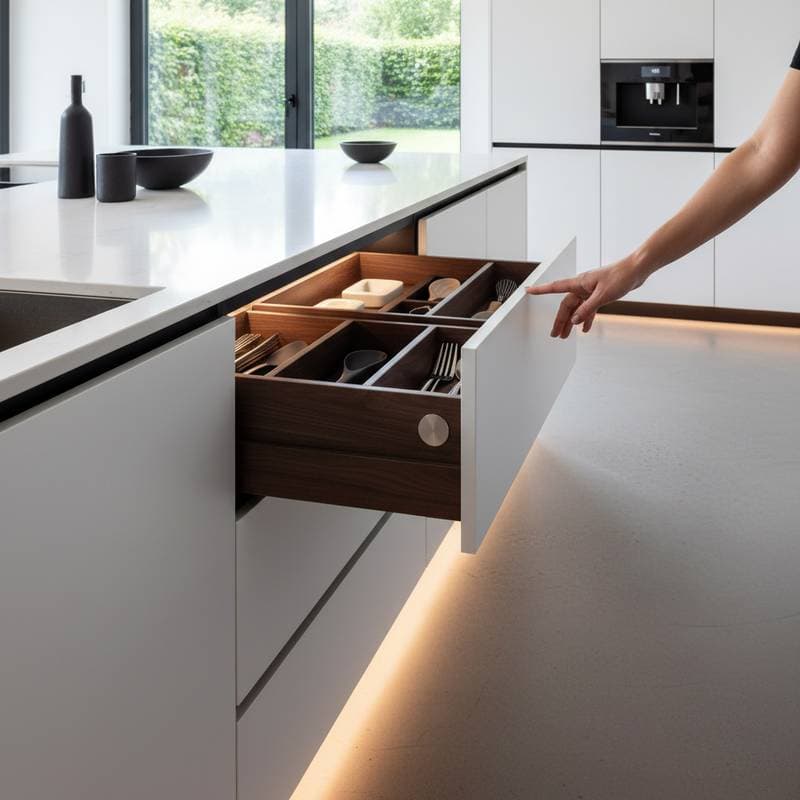
- Complementary Features: Integrate LED under-cabinet or internal strips to amplify the modern appeal.
Step-by-Step Retrofit Guide
Retrofitting demands accurate measurements to avoid complications. Begin by detaching existing hardware, patching voids with filler, and sanding surfaces level. Verify slide functionality, addressing any friction or offsets that could hinder the new setup.
Position the catch assembly inside the cabinet frame and secure the strike plate to the drawer rear. Adhere to provided templates for alignment. For spring models, tension the mechanism lightly to respond to minimal force; for electronic units, route cables prior to reassembly.
After installation, fine-tune the adjustment screw for uniform activation across the front. Verify responsiveness at multiple points, ensuring each press yields a consistent, whisper-quiet open and close.
In workshop applications, incorporate these into rolling benches by concealing wiring in structural elements and powering several units from a shared source. Include an on-off switch for portability.
Optimization Strategies
- Combine deep units with modular inserts for organizing cookware or tools.
- Incorporate dampened slides to mute closing sounds.
- Reserve shallow drawers for high-frequency items like cutlery or fasteners near active areas.
- Apply labels to interiors or undersides to preserve exterior simplicity.
These enhancements sustain the refined, unobtrusive style inherent to the system.
Investment and Installation Time
Basic mechanical kits cost 15 to 25 dollars each, while electronic variants span 120 to 200 dollars based on size and features. A full conversion of ten drawers typically requires a weekend commitment. The outcome justifies the effort through sustained usability and cohesive aesthetics.
Standard tools suffice: drill, screwdriver, tape measure, and framing square. Electronic installs benefit from rudimentary electrical familiarity, though plug-in options simplify the process without modifications.
Practical Advantages
These drawers merge artisanal techniques with subtle automation, empowering builders to incorporate premium elements affordably. The design promotes inclusivity, allowing operation via light contact for those with reduced hand strength.
Aesthetics shift focus to material textures and precise construction, free from hardware distractions. Illumination travels fluidly over planes, evoking serenity in images.
Homeowner Sarah Ortiz, after retrofitting her maple setup, shared, “The space operates with newfound ease. Fronts appear as solid panels until engaged, revealing silent motion.” This tranquility underscores the upgrade's enduring appeal.
Essential Installation Tips
- Prioritize Accuracy: Minor deviations impact activation reliability.
- Calibrate Evenly: Set mechanisms for consistent force across units.
- Route Power Thoughtfully: Position connections for easy access during upkeep.
- Safeguard Surfaces: Apply protective pads at contact points to avoid scratches.
- Facilitate Maintenance: Design for straightforward interior cleaning despite sleek exteriors.
Following these practices guarantees longevity and reliability.
Extending the Concept
Touch-open features align with broader trends in concealed integration, mirroring hidden lighting or flush appliances. Convenience emerges without fanfare, prioritizing performance.
For fabricators, the approach boosts productivity by eliminating snags on gear and enabling denser configurations. Workspaces evolve to match visual poise with operational grace.
Ongoing Care
Routine upkeep involves clearing slide tracks of particles and inspecting mechanisms annually. Disconnect power sources before interior wipes for electronic models. Components detach easily for targeted repairs without full disassembly.