
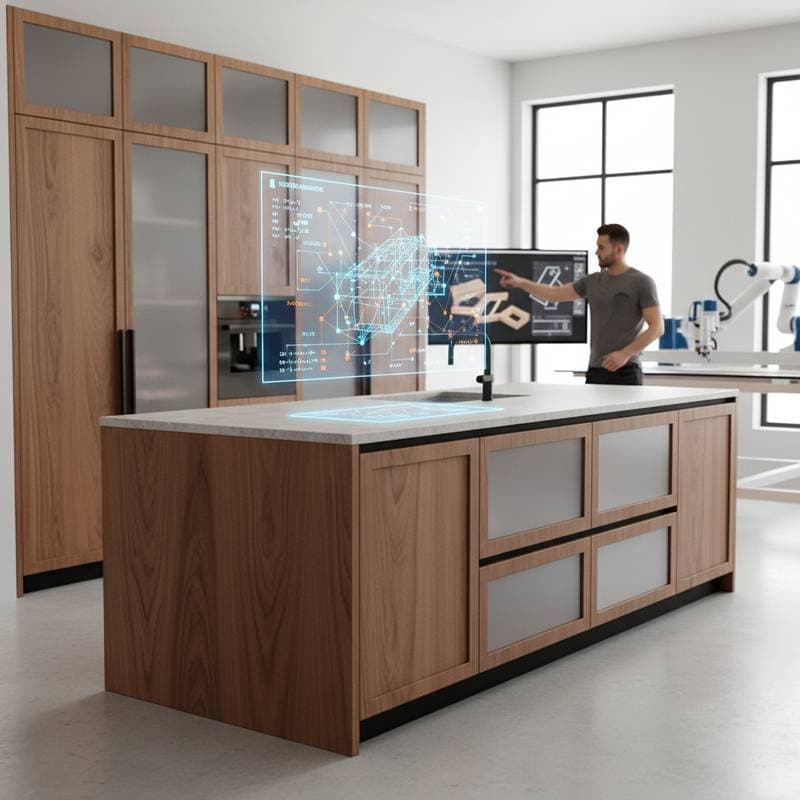
Introduction to Parametric Design in Cabinetry
Parametric design represents a significant advancement in woodworking and cabinetry production. Traditional methods rely on static blueprints that demand manual adjustments for every variation, leading to time-consuming revisions and potential errors. In contrast, parametric design employs software to create intelligent models governed by parameters and rules. These models automatically recalculate dimensions, ensuring consistency across changes in size, style, or components.
This approach proves particularly valuable in cabinetry, where custom orders often require frequent modifications. Designers define relationships between elements, such as shelf spacing or door alignments, once within the model. Subsequent alterations propagate through the entire design instantly, eliminating the need for redrawing. Woodworkers report substantial improvements in accuracy and efficiency, transforming complex projects into manageable tasks.
Adopting parametric design demands an initial learning curve, but the results justify the effort. Shops experience fewer production errors, as models generate precise cut lists and assembly instructions. Material waste decreases through optimized layouts, contributing to cost savings. For woodshops aiming to scale operations or handle bespoke requests, this technology offers a pathway to enhanced competitiveness.
Core Benefits of Parametric Design
One primary advantage lies in the reduction of design time. Manual drafting for a standard kitchen cabinet set might consume several hours per iteration. Parametric models, however, update in minutes, allowing designers to explore multiple configurations rapidly. This efficiency enables shops to respond quicker to client feedback and meet tight deadlines.
Error minimization stands as another key benefit. Human oversight in traditional drawings often results in misaligned parts or incorrect measurements, leading to rework and material loss. Parametric systems enforce rules that prevent such inconsistencies. For instance, if a cabinet height changes, related components like hinges and shelves adjust proportionally, maintaining structural integrity.
Material optimization further enhances cost-effectiveness. Parametric software includes nesting algorithms that arrange parts on sheets with minimal waste. Woodshops typically achieve savings of 10 to 15 percent on plywood and other materials. This not only lowers expenses but also supports sustainable practices by reducing scrap.
Beyond immediate savings, parametric design fosters scalability. Small operations can start with basic models for common cabinets, while larger shops integrate advanced features for mass customization. The result is a flexible workflow that adapts to growing demands without proportional increases in staff or time.
Implementation for DIY and Small-Scale Users
For individual makers or small woodshops, parametric design provides accessible entry points without overwhelming complexity. The timeline to develop the first parametric cabinet model ranges from two to four weeks. Beginners focus on simple projects, such as base cabinets with adjustable shelving, to build familiarity.
This method suits hobbyists comfortable with experimentation. Users gain full creative control, tweaking parameters to match unique visions. However, troubleshooting arises with intricate rule sets, where unexpected interactions may occur. Online tutorials and community forums offer guidance, though consulting an expert proves advisable for validation.
Software options abound for this scale, often with free or low-cost versions featuring intuitive interfaces. Start by modeling everyday items like wall-mounted units. Document parameters clearly to facilitate future adjustments. Over time, these efforts yield reusable templates, streamlining personal projects and small orders.
Challenges include the need for compatible hardware, such as a reliable computer. Initial setups require patience, but the empowerment of rapid prototyping outweighs these hurdles. DIY users discover a new level of precision, turning ideas into flawless builds with less frustration.
Professional Integration in Larger Shops
Larger operations find parametric design indispensable for high-volume production. Setup costs range from $1,000 to $3,000, covering software licenses and custom template development. These investments enable clean data transfer to CNC machines, ensuring accurate part libraries and automated fabrication.
Shops producing over 20 cabinets monthly or managing multiple machines benefit most. Parametric models generate shop drawings, cut lists, and even assembly sequences directly. Integration with CNC systems minimizes manual input, reducing setup times and enhancing throughput.
Training forms a critical component of successful adoption. Staff learn to define parameters for variables like cabinet depths or finishes. Once established, mature templates deliver 30 to 70 percent reductions in design time. This efficiency allows teams to handle diverse projects, from residential kitchens to commercial installations.
Cost considerations extend to ongoing maintenance, such as updating libraries for new materials. Yet, the return manifests in consistent quality and faster turnaround. Professional users report fewer client revisions, bolstering reputation and repeat business.
Building a Competitive Edge with Parametric Design
To leverage parametric design effectively, shops must approach implementation strategically. Begin by analyzing frequent cabinet types and identifying variable dimensions, such as widths or heights. This foundation informs rule creation, ensuring models remain practical.
Software selection depends on operational scale and budget. Entry-level tools suit small teams, while enterprise solutions offer robust integration for complex workflows. Prioritize platforms with strong support for woodworking specifics, like edge banding simulations.
Training investment proves essential, beyond mere software acquisition. Dedicate time to hands-on sessions, focusing on rule-building and error-checking. Total costs, including software and education, typically fall between $1,000 and $4,500.
Develop rule libraries incrementally to manage complexity. Start with core parameters and expand gradually. Algorithmic nesting tools integrate seamlessly, optimizing sheet usage and saving 10 to 15 percent on materials.
CNC integration streamlines production, from design to output. Test models thoroughly to verify accuracy before full deployment.
Key Takeaways
- Achieve 30 to 70 percent reduction in design time with refined templates.
- Budget $1,000 to $4,500 for software and training essentials.
- Construct rule libraries step by step to maintain simplicity.
- Apply nesting algorithms for 10 to 15 percent material savings.
- Link with CNC for uninterrupted manufacturing flow.
Practical Steps to Adopt Parametric Design
- Assess common cabinet configurations and pinpoint adjustable dimensions.
- Select software aligned with your shop's size and financial constraints.
- Commit resources to comprehensive training programs.
- Record all rules meticulously for ongoing application.
- Pilot a complete project to measure outcomes before full transition.
These steps guide shops toward integration, minimizing disruptions. Monitor metrics like error rates and production speed to refine processes.
Resources for Success
Visual aids enhance understanding of parametric benefits. Figure 1 presents a comparison chart of manual versus parametric update times, illustrating dramatic revision speed improvements. Figure 2 depicts a variable-driven cabinet model, highlighting linked dimensions in action.
Consult built-in software documentation for advanced techniques. Join woodworking communities to exchange parametric tips. With these tools, shops unlock efficiencies that elevate craftsmanship and profitability.
Realizing Long-Term Gains
Parametric design ultimately delivers sustained advantages in cabinetry. Shops enjoy streamlined operations, empowered creativity, and robust cost controls. Custom projects become feasible without sacrificing speed, while standard runs gain precision. This technology positions woodworkers to thrive in competitive markets, delivering superior results with confidence.