
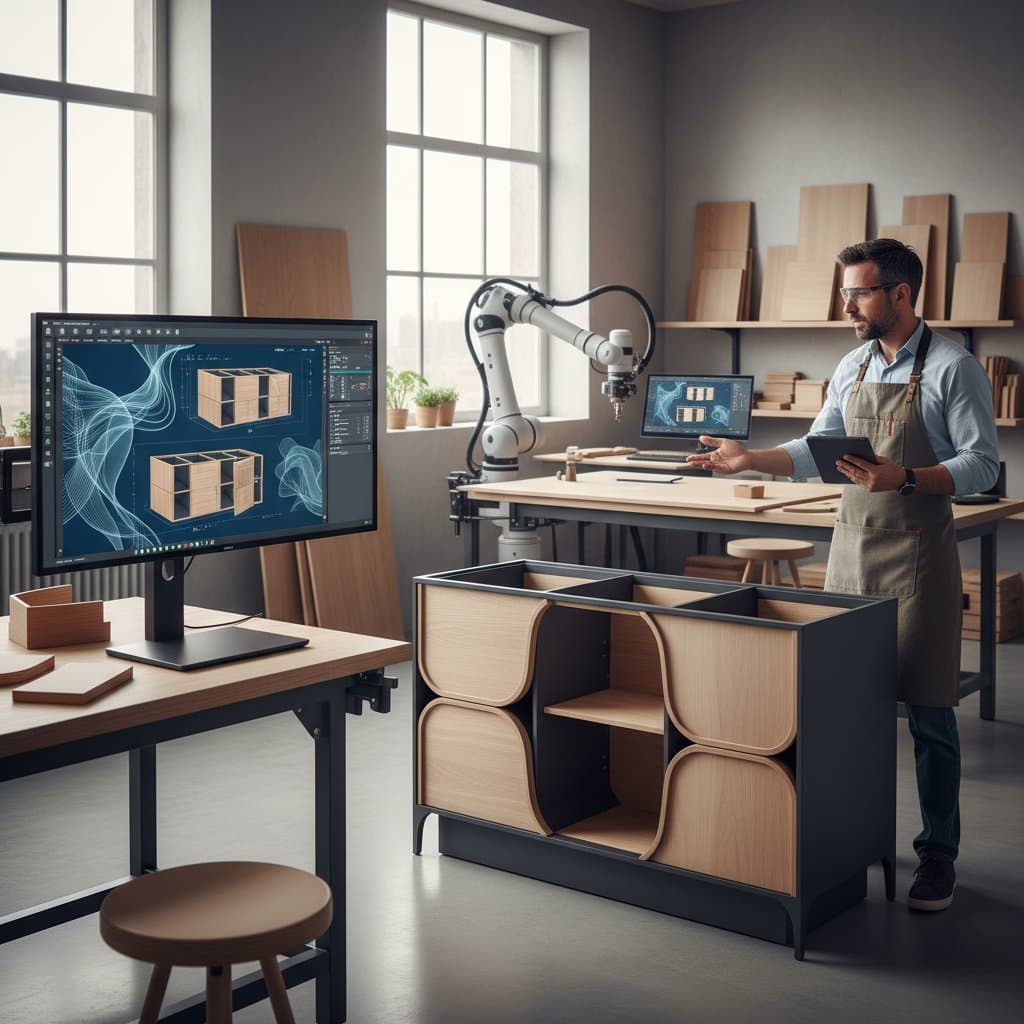
Understanding Parametric Design in Cabinetry
Parametric design represents a shift in how woodworkers approach cabinet creation. Traditional methods rely on fixed blueprints that demand manual adjustments for every variation. In contrast, parametric models use algorithms to generate adaptable designs, allowing changes in one parameter to ripple through the entire structure automatically.
This technology draws from computational principles, enabling cabinetmakers to input variables such as dimensions, materials, and joinery types. Software like Fusion 360 or Rhino with Grasshopper plugins serves as the backbone. The result is a workflow that anticipates modifications, saving hours that once went into redrawing plans.
For shops handling custom orders, this means moving from rigid sketches to fluid, iterative processes. Designers experiment with options swiftly, presenting clients with viable alternatives without starting over.
Challenges of Conventional Cabinet Design
Cabinetmakers face persistent hurdles with standard drafting techniques. Creating detailed plans for each project consumes significant time, often leading to overlooked details. A single dimension change requires redrafting entire sections, increasing the risk of inconsistencies.
Material estimation proves equally problematic. Manual calculations frequently result in overordering or shortages, contributing to waste and inflated costs. Quoting jobs becomes a lengthy exercise, delaying bids and frustrating potential customers.
Error rates climb as projects grow complex. Misalignments in drawings translate to on-site rework, straining labor resources and timelines. These issues compound in high-volume shops, where consistency across batches remains elusive.
Core Principles of Parametric Modeling
At its foundation, parametric design builds relationships between design elements. Users define parameters like cabinet height, depth, and shelf spacing as variables. The software then computes dependent features, such as door sizes or hardware placements, ensuring harmony throughout.
Algorithms handle geometric constraints, preventing impossible configurations. For instance, if a user increases drawer width, the model automatically adjusts adjoining panels to maintain structural integrity. This intelligence extends to material optimization, suggesting cuts that minimize scraps.
Integration with CNC machines amplifies efficiency. Parametric files export directly to fabrication tools, producing precise components with minimal setup. Cabinetmakers verify designs virtually before cutting, catching issues early.
Quantifiable Benefits: An 80 Percent Reduction in Workload
The most compelling advantage lies in time savings. Studies within the industry show parametric workflows cut design phases by 80 percent or more. What took days now resolves in hours, freeing teams for assembly and finishing.
Accuracy improves dramatically. Adaptive models eliminate propagation errors common in manual edits. Components fit seamlessly, reducing assembly time and returns.
Profit margins expand through waste reduction. Optimized nesting algorithms arrange parts efficiently on sheets, lowering material costs by 20 to 30 percent. Shops quote faster and more competitively, securing additional contracts.
Customization becomes a strength rather than a burden. Clients request unique features, like adjustable shelving or integrated lighting, and parametric tools accommodate them effortlessly. This flexibility attracts premium markets, differentiating shops from competitors.
Steps to Implement Parametric Design
Transitioning requires deliberate planning. Start by selecting appropriate software that aligns with existing tools. Evaluate options based on ease of learning and compatibility with CNC equipment.
- Assess current workflows to identify bottlenecks, such as repetitive drawing tasks.
- Invest in training for key staff, focusing on parameter setup and model manipulation.
- Begin with simple projects, like basic cabinets, to build familiarity.
- Integrate parametric outputs with production machinery, testing for seamless data transfer.
- Scale up gradually, incorporating feedback to refine templates for recurring designs.
Initial costs include software licenses and hardware upgrades, typically ranging from a few thousand dollars. Many shops offset this within months through gained productivity. Partnering with consultants accelerates adoption, providing tailored templates.
Case Examples from Woodworking Shops
Consider a mid-sized cabinetry firm specializing in kitchens. Before parametric adoption, designers spent 40 hours per project on plans. Now, that figure drops to eight hours, allowing the team to handle 25 percent more orders annually.
Another example involves a custom furniture maker. Parametric models enabled rapid prototyping of ergonomic cabinets for accessibility needs. Adjustments for client specifications occurred in minutes, leading to repeat business and positive referrals.
In production environments, batch consistency shines. One shop reported zero rework on a 50-unit run, thanks to verified parametric files. These outcomes highlight the technology's versatility across scales.
Unlocking Future Potential in Woodworking
Parametric design positions cabinetmakers for evolving demands. As sustainability pressures mount, its optimization features support eco-friendly practices by conserving resources. Integration with emerging tools, like 3D printing for prototypes, further streamlines innovation.
Shops embracing this approach gain a competitive edge. Enhanced capabilities attract skilled talent eager to work with advanced systems. Ultimately, the 80 percent workload reduction translates to sustainable growth, higher satisfaction, and redefined industry standards.