
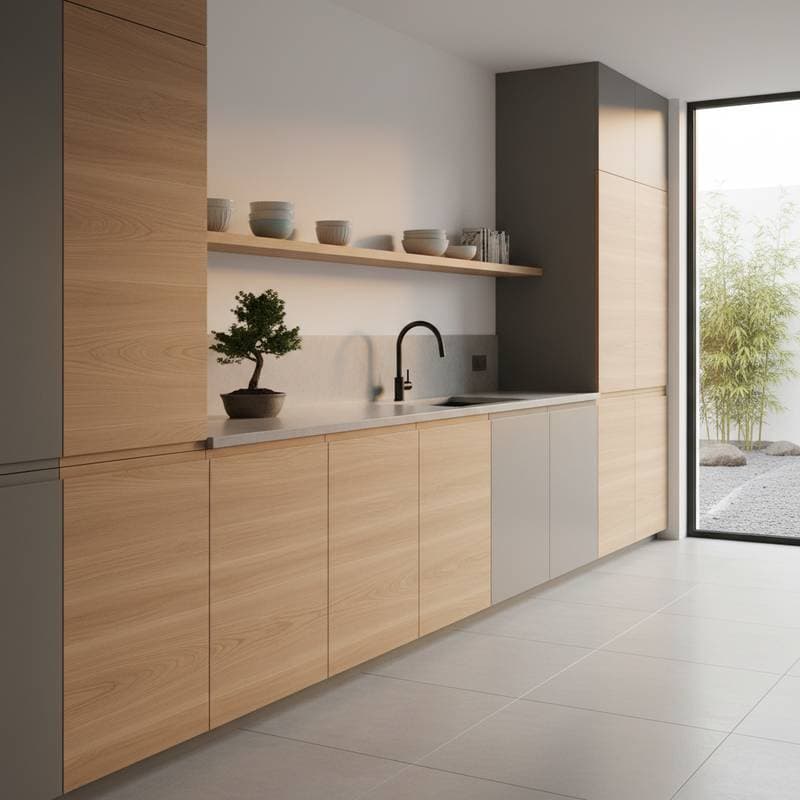
Handleless Japandi Cabinets: Streamlining Modern Kitchens
Japandi design blends the serene minimalism of Japanese aesthetics with the cozy functionality of Scandinavian influences. This fusion creates spaces that feel both tranquil and inviting. Handleless cabinets embody this philosophy by eliminating visible hardware, resulting in uninterrupted lines that enhance visual harmony.
In a kitchen setting, these cabinets transform the environment into a haven of simplicity. Traditional handles often draw attention and accumulate dust, but handleless versions use integrated push-to-open mechanisms. Such features maintain cleanliness while promoting a sense of openness.
Understanding Japandi Principles
Japandi emphasizes balance, natural elements, and purposeful design. Japanese minimalism focuses on wabi-sabi, which appreciates imperfection and transience. Scandinavian design adds warmth through light woods and soft textures.
Cabinets in this style typically feature flat panels with edge profiles that align seamlessly. The absence of handles contributes to a monolithic appearance, where each unit flows into the next. This approach reduces visual noise, allowing the eye to rest on the architecture of the space.
Homeowners appreciate how Japandi cabinets adapt to various room sizes. In compact urban kitchens, they maximize perceived space. Larger areas benefit from the style's ability to create focal points without overwhelming details.
The Advantages of Handleless Mechanisms
Handleless cabinets rely on soft-close hinges and push latches for operation. These systems provide smooth access without the need for knobs or pulls. Durability stands out, as there are fewer parts exposed to wear.
Maintenance proves straightforward. Surfaces remain free from grime buildup around hardware. Cleaning requires only a damp cloth, preserving the wood's natural patina over time.
Functionality extends beyond aesthetics. Integrated mechanisms support custom configurations, such as full-height units or island integrations. This versatility suits diverse lifestyles, from family cooking hubs to minimalist entertaining spaces.
Selecting Materials for Lasting Elegance
Natural woods form the backbone of Japandi cabinets. Oak and walnut offer warm tones that age gracefully. Sustainable sourcing ensures environmental responsibility, aligning with the style's ethos.
Finishes range from matte lacquers to oil treatments that highlight grain patterns. Light stains evoke Scandinavian brightness, while darker hues nod to Japanese depth. Precision milling ensures joints fit flush, preventing gaps that disrupt the clean silhouette.
Engineered options like bamboo composites provide eco-friendly alternatives. These materials resist humidity, ideal for kitchen environments. Pairing cabinets with stone or concrete countertops completes the grounded, organic look.
Implementing Handleless Japandi in Your Home
Planning begins with measuring the space accurately. Consult professionals to assess wall alignments and load-bearing needs. Custom fabrication allows for tailored dimensions that fit existing layouts.
Installation involves securing frames to walls with reinforced brackets. Hinges mount internally, ensuring stability for heavy loads. Test mechanisms post-installation to confirm even operation across all doors and drawers.
Budget considerations include upfront costs for quality materials. Expect investments in craftsmanship that yield long-term savings through reduced upkeep. Financing options from suppliers can ease the process for larger projects.
Long-Term Value of Timeless Design
Handleless Japandi cabinets transcend trends, offering enduring appeal. Their neutral palette complements evolving decor choices. Resale value increases as buyers seek serene, efficient homes.
Daily use reveals enhanced workflow. Streamlined access speeds meal preparation. The calming atmosphere supports mental well-being amid busy routines.
Ultimately, these cabinets represent a commitment to intentional living. They invite users to focus on experiences rather than excess, fostering spaces that nurture both body and spirit.